Eskom Faces R4bn Curtailment Bill as Solar Surges
Eskom Faces R4 Billion Curtailment Bill as Solar Power Surge Raises Electricity Tariff Concerns
By Ubuntu9Media Business Desk
JOHANNESBURG | Friday, 6 November 2026
South Africa’s growing reliance on solar power is creating a costly challenge for Eskom, with the state-owned electricity utility expected to pay approximately R4 billion during the current financial year for renewable electricity that it cannot use.
The projected expenditure relates to a process known as generation curtailment, in which the electricity system operator instructs solar and wind farms to reduce their output because the national grid cannot accommodate all the available power.
Under certain renewable energy procurement contracts, Eskom must compensate independent power producers for electricity they were available to generate but were instructed to withhold.
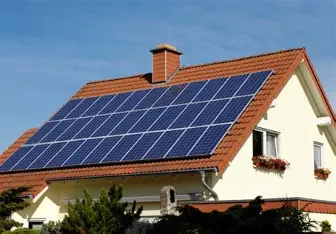
The development comes as increasing numbers of households and businesses install rooftop solar systems, reducing their dependence on electricity supplied by Eskom during daylight hours.
While the expansion of renewable energy offers important environmental and energy security benefits, it is also exposing weaknesses in the flexibility of South Africa’s electricity system.
Why Eskom Is Paying Solar Farms Not to Generate Electricity
The projected R4 billion bill was disclosed by Keith Bowen, senior manager for market operations at the National Transmission Company of South Africa (NTCSA).
Bowen participated in an industry discussion organised by consultancy Cresco and international law firm Fasken in Sandton.
The central challenge is that electricity supply and demand must remain balanced at all times.
During the middle of the day, solar generation can increase substantially while demand for electricity from Eskom declines.
However, Eskom cannot simply shut down all its coal-fired power stations whenever solar production increases.
Many coal-fired generating units require considerable time to shut down and restart, and the system must retain sufficient capacity to meet electricity demand after sunset.
When the available electricity exceeds what the grid can safely absorb, the system operator may instruct renewable energy facilities to reduce generation.
Under applicable contracts, Eskom must still compensate certain producers for the energy they could otherwise have supplied.
This is known as payment for deemed energy.
Curtailment Costs Could Continue Rising
Energy specialists warn that the R4 billion projection may not represent the peak of the problem.
As more rooftop solar installations and utility-scale renewable energy projects become operational, the difference between midday electricity demand and available generation could widen.
Electricity pricing expert Deon Conradie warned that curtailment expenditure could follow a pattern similar to Eskom’s historical diesel costs.
In the 2018 financial year, Eskom spent approximately R320 million on diesel for its open-cycle gas turbines.
By the 2024 financial year, that expenditure had risen to almost R24 billion as the utility increasingly relied on diesel generation to manage electricity shortages.
Conradie cautioned that a similar escalation in curtailment payments could place pressure on future electricity prices.
The R4 billion projection is relatively small compared with the approximately R383 billion that the National Energy Regulator of South Africa (Nersa) allows Eskom to recover through tariffs.
Nevertheless, the concern is that the cost could become a substantial recurring expense if the underlying system constraints remain unresolved.
South Africa’s Solar Expansion Is Changing Electricity Demand
Rooftop solar has become increasingly popular among South African households and businesses.
Many consumers initially installed solar systems to reduce their exposure to load shedding and rising electricity costs.
More recently, unreliable municipal distribution infrastructure has also encouraged investment in independent electricity supply.
Solar installations allow consumers to generate electricity during daylight hours, reducing the amount they purchase from Eskom or municipal electricity distributors.
However, these customers may still require grid electricity during the evening, overnight or during periods of poor weather.
This creates a challenging daily demand pattern.
Grid demand can decline during periods of strong sunshine and then increase rapidly as solar production falls.
The problem is not that solar electricity is inherently undesirable.
Rather, the electricity system needs sufficient flexibility, storage capacity and transmission infrastructure to accommodate renewable generation efficiently.
Renewable Energy Producers Face Growing Financial Uncertainty
Curtailment also creates financial challenges for companies investing in wind and solar projects.
Developers typically depend on long-term power purchase agreements to secure financing.
Banks and other lenders assess the expected electricity sales and revenue streams before committing funding.
If a renewable energy project is regularly instructed to reduce output, its income may become less predictable.
Olga Suchkova, associate director at Cresco, explained that the allocation of curtailment risk has become an important consideration in renewable energy financing.
For projects participating in the government’s Renewable Energy Independent Power Producer Procurement Programme, certain contractual arrangements provide compensation for curtailed generation.
However, private power purchase agreements do not necessarily provide the same protection.
The financial consequences depend on the terms negotiated between the electricity producer and the buyer.
Mamoso May, chief executive of Artemis Group Holdings, also highlighted the importance of establishing clear curtailment provisions over the lifetime of renewable energy projects.
Without predictable rules, investors may face greater uncertainty when assessing new projects.
Government Prioritises Battery Storage to Address Curtailment
The Department of Electricity and Energy has identified battery storage as an important part of South Africa’s response to increasing renewable energy curtailment.
In an announcement issued on 7 October 2026, Electricity and Energy Minister Kgosientsho Ramokgopa outlined plans to prioritise 4,600 megawatts of battery energy storage capacity.
The proposal also includes 5,000 megawatts of gas-to-power generation.
The combined 9,600 megawatts would support greater flexibility within the electricity system.
Battery storage can absorb surplus electricity during periods of strong renewable generation and release it when demand increases.
This could reduce the need to instruct solar and wind farms to limit production.
The government has indicated that storage facilities must be located and operated in ways that address actual grid constraints.
Simply installing batteries in unsuitable locations would not necessarily solve the problem.
Gas-Fired Power Stations Could Provide Flexible Generation
Gas-fired power stations are another proposed solution.
Unlike many coal-fired generating units, suitable gas-powered plants can respond more quickly to changing electricity demand.
They could provide electricity when renewable generation declines, reducing the need to keep as much inflexible coal capacity running throughout the day.
However, gas generation presents its own challenges.
South Africa must consider fuel availability, infrastructure requirements, generation costs and long-term supply arrangements.
The government’s proposed 5,000-megawatt gas-to-power programme is intended to support flexible and dependable electricity generation.
Gas generation does not itself absorb surplus solar electricity, but it can complement renewable energy by supplying power when needed.
Cheaper Midday Electricity Could Encourage Higher Demand
Another possible solution involves reducing electricity prices during periods when the grid has surplus generation.
Bowen has advocated a tariff structure that encourages consumers to move certain electricity-intensive activities into the middle of the day.
For example, industrial facilities could potentially schedule energy-intensive production processes during periods of abundant solar generation.
Commercial customers could also benefit from incentives to shift some electricity consumption away from evening peak periods.
This approach could help increase demand when renewable electricity is readily available.
However, changing electricity tariffs requires regulatory approval.
Bowen warned that the existing approval process could take years, potentially delaying the introduction of more flexible pricing arrangements.
Nersa previously confirmed that its transitional electricity market framework did not yet establish a specific mechanism for recovering curtailment compensation costs.
This creates additional questions about how such expenses should be allocated in South Africa’s evolving electricity market.
Will South Africans Pay More for Electricity?
The projected R4 billion curtailment bill raises concerns about future electricity tariffs.
Eskom recovers approved costs through regulated electricity pricing arrangements.
If curtailment expenditure becomes a significant recurring cost, it could influence future tariff applications and regulatory decisions.
However, the R4 billion estimate does not mean that consumers will automatically face a corresponding tariff increase.
Any recovery of costs through regulated tariffs would depend on the applicable regulatory framework and Nersa’s decisions.
Energy specialists nevertheless warn that failing to address curtailment could increase the overall cost of electricity supply.
This could affect households, commercial businesses and energy-intensive industries.
What This Means for South African Businesses
The growing curtailment challenge has implications for businesses considering investments in renewable energy.
Companies planning solar installations or entering private power purchase agreements should understand how their contracts allocate the risk of reduced generation.
Industrial businesses may also benefit from future tariff structures that reward electricity consumption during periods of surplus supply.
For renewable energy developers, storage integration and the ability to provide electricity during higher-demand periods could become increasingly important.
Businesses dependent on predictable electricity prices should monitor how Eskom, the NTCSA and Nersa respond to the changing generation mix.
South Africa Must Adapt Its Electricity System
The rapid growth of renewable energy is changing how electricity is generated, distributed and consumed across South Africa.
The challenge is no longer limited to producing enough electricity to avoid shortages.
The country must also develop the ability to manage periods when generation exceeds demand.
That requires a combination of battery storage, flexible generation, stronger transmission infrastructure and electricity tariffs that better reflect changing supply conditions.
The government’s proposed investment in battery storage and gas-to-power generation is intended to address some of these challenges.
However, implementation will determine whether the measures successfully reduce curtailment and associated costs.
Conclusion
Eskom’s projected R4 billion curtailment bill highlights an important challenge in South Africa’s energy transition.
As solar installations expand, the electricity system must become more flexible to avoid paying renewable energy producers for electricity that cannot be used.
Battery storage, transmission investment, flexible generation and revised electricity pricing could help reduce these costs.
Without effective intervention, increasing curtailment payments may place additional pressure on the electricity sector and ultimately influence the cost of electricity for consumers.