Ramaphosa Confident ANC Will Win Local Elections 2026
‘Moment of History’: Ramaphosa Confident ANC Will Come Out on Top in Local Government Elections
JOHANNESBURG, 4 November 2026 — President Cyril Ramaphosa says he is confident the African National Congress (ANC) will emerge victorious in South Africa’s local government elections, even as voters express growing dissatisfaction with failing municipal services across the country. Ramaphosa Votes at Hyde Park as Joburg Voters Demand Change
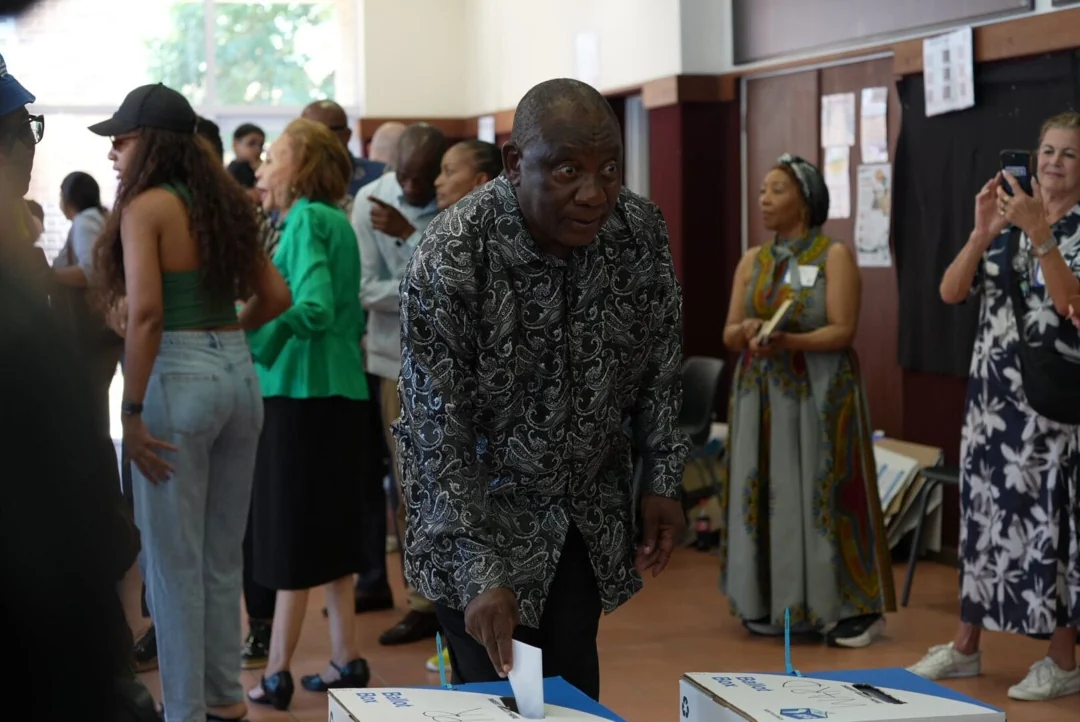
Ramaphosa made the remarks after casting his ballot alongside First Lady Dr Tshepo Motsepe at Hyde Park High School in Johannesburg on Wednesday morning.
The president described election day as a historic moment for South Africa, pointing to the queues forming at voting stations and the number of political parties contesting the elections.
His comments came as millions of registered voters headed to polling stations to elect municipal councillors who will serve their communities for the next five years.
Ramaphosa Calls Election Day a Historic Moment
Speaking to journalists after voting, Ramaphosa welcomed the participation of South Africans in the democratic process.
He said the enthusiasm displayed by voters demonstrated the importance of local government elections.
The president described the day as an important chapter in the country’s democratic history, noting that citizens were exercising their constitutional right to determine who governs their municipalities.
Ramaphosa said the election was particularly significant because of the large number of political parties competing for positions in local government.
He encouraged eligible voters to participate before voting stations closed.
For Ramaphosa, the election represents an opportunity for communities to influence decisions about essential services, infrastructure and municipal administration.
ANC President Confident His Party Will Win
Despite increasing political competition, Ramaphosa remained confident about the ANC’s electoral performance.
Speaking in his capacity as ANC president, he expressed the belief that the governing party would emerge ahead of its competitors.
His remarks echoed statements made during the ANC’s final election campaign activities.
At a rally in Mdantsane in the Eastern Cape, Ramaphosa dismissed opinion polls suggesting that the party could lose support in several municipalities.
He argued that the ANC’s engagement with communities had demonstrated continuing support for the organisation.
However, political confidence and campaign attendance do not establish electoral outcomes.
The ANC’s performance will only become clear once the Electoral Commission of South Africa (IEC) completes the counting and verification process.
President Acknowledges Municipal Service Delivery Failures
Although Ramaphosa expressed confidence in his party, he acknowledged that municipalities across South Africa face serious service delivery challenges.
Water shortages, deteriorating roads, unreliable electricity infrastructure and refuse collection problems have become prominent issues during the election campaign.
The president said citizens were justified in demanding reliable municipal services.
He acknowledged that government had not always met the expectations of communities and that significant improvements were required.
Ramaphosa said the next generation of municipal councillors would have a responsibility to improve governance and strengthen accountability.
His comments reflect the pressure facing political parties that have participated in municipal administrations affected by service delivery failures.
Water Shortages Dominate Election Concerns
Water supply emerged as one of the central issues in Ramaphosa’s remarks.
Johannesburg has experienced recurring water interruptions, with residents in several communities reporting prolonged outages and unreliable pressure.
The president acknowledged the frustration experienced by households when water is unavailable.
He said municipalities and water authorities were working to address infrastructure problems and improve supply.
However, many residents continue to question whether existing interventions are sufficient.
Water infrastructure maintenance, municipal financial management and reliable electricity supplies remain important factors in the delivery of water services.
For affected communities, the practical test of municipal leadership will be whether service reliability improves after the elections.
Ramaphosa Promises a New Chapter for Local Government
The president said the elections could mark the beginning of a new period of municipal governance.
He expressed hope that newly elected councillors, regardless of political affiliation, would demonstrate greater commitment to serving communities.
Ramaphosa also referred to government’s intention to strengthen local government structures and improve service delivery.
His remarks follow growing scrutiny of municipalities struggling with financial management, infrastructure maintenance and administrative capacity.
While the president outlined the government’s intentions, the effectiveness of these commitments will depend on implementation, funding, oversight and the decisions of newly elected councils.
Why Ramaphosa Voted in Hyde Park Instead of Soweto
Wednesday’s election also marked a change in the president’s voting arrangements.
Ramaphosa has traditionally voted at Hitekani Primary School in Chiawelo, Soweto, where he grew up.
For the 2026 local government elections, he cast his ballot at Hyde Park High School in Johannesburg.
The president explained that the change was connected to electoral requirements concerning the voting district where a person ordinarily resides.
The Presidency had confirmed the Hyde Park voting arrangements ahead of election day.
Ramaphosa’s appearance attracted considerable media attention as voters and journalists gathered at the school.
ANC Faces a Different Political Landscape
The 2026 local government elections are taking place in a political environment that has changed significantly in recent years.
The ANC lost its national parliamentary majority in the 2024 general elections, resulting in the formation of a Government of National Unity involving several political parties.
At municipal level, coalition governments have also become increasingly common.
Johannesburg, Tshwane and other metropolitan municipalities have experienced changes in governing arrangements as political parties negotiated alliances.
The local elections will determine the composition of municipal councils and whether individual parties secure majorities or need coalition agreements.
In municipalities where no party wins an outright majority, elected councillors will have to negotiate arrangements capable of sustaining local government.
Opposition Parties Challenge ANC’s Record
The ANC faces competition from parties including the Democratic Alliance, Economic Freedom Fighters, uMkhonto weSizwe Party, ActionSA and other political organisations.
Opposition parties have focused on various issues, including service delivery, municipal finances, corruption, unemployment and infrastructure maintenance.
Different parties have proposed different approaches to improving municipal administration.
Their electoral performance will be determined by voters rather than by campaign claims or pre-election predictions.
The IEC will publish official results after the necessary counting and verification procedures.
Local Elections Determine Everyday Services
Unlike national elections, local government elections directly determine the representatives responsible for many services that residents use every day.
Municipal councils oversee matters including water distribution, local roads, refuse collection, municipal planning and electricity distribution in areas served by municipal networks.
Voters elect ward representatives and political party representatives through the applicable electoral system.
The elected councils subsequently determine municipal leadership, including executive mayors where the relevant system applies.
The composition of these councils will influence municipal budgets, infrastructure priorities and the oversight of local administrations.
What Happens After Voting?
Once voting stations close, election officials will proceed with the counting and verification of ballots.
The IEC will release results as they become available and complete the formal declaration process.
Political parties will then assess their representation in municipal councils.
Where coalitions are necessary, negotiations may follow.
For residents, the next phase will involve watching how elected representatives respond to long-standing municipal problems.
Ramaphosa’s confidence in the ANC will be tested against the official results, while the promises made by all parties will face scrutiny during the next municipal term.
A Historic Election With Significant Expectations
Ramaphosa’s election-day message combined confidence in his party with an acknowledgment of the challenges facing local government.
He welcomed voter participation, recognised public frustration and called for a renewed commitment to municipal service delivery.
However, the final outcome remains in the hands of voters.
The 2026 local government elections will determine not only the political composition of municipal councils but also who takes responsibility for addressing the water, electricity, infrastructure and governance problems affecting communities.
As voting continues, South Africans await the results that will shape municipal leadership for the next five years.
Ubuntu9Media will continue covering the elections, official results, coalition negotiations and developments in municipal governance.