Dada Morero Reveals Who Decides Joburg Coalitions
Dada Morero Says ANC National Leaders Will Decide Johannesburg Coalitions After Elections
JOHANNESBURG, 3 November 2026 — Johannesburg Mayor Dada Morero has confirmed that decisions about the African National Congress’s future coalition partners in the city will be made by the party’s national leadership rather than its regional structures. Joburg Mayor Denies Water Crisis Amid Robertsham Outages
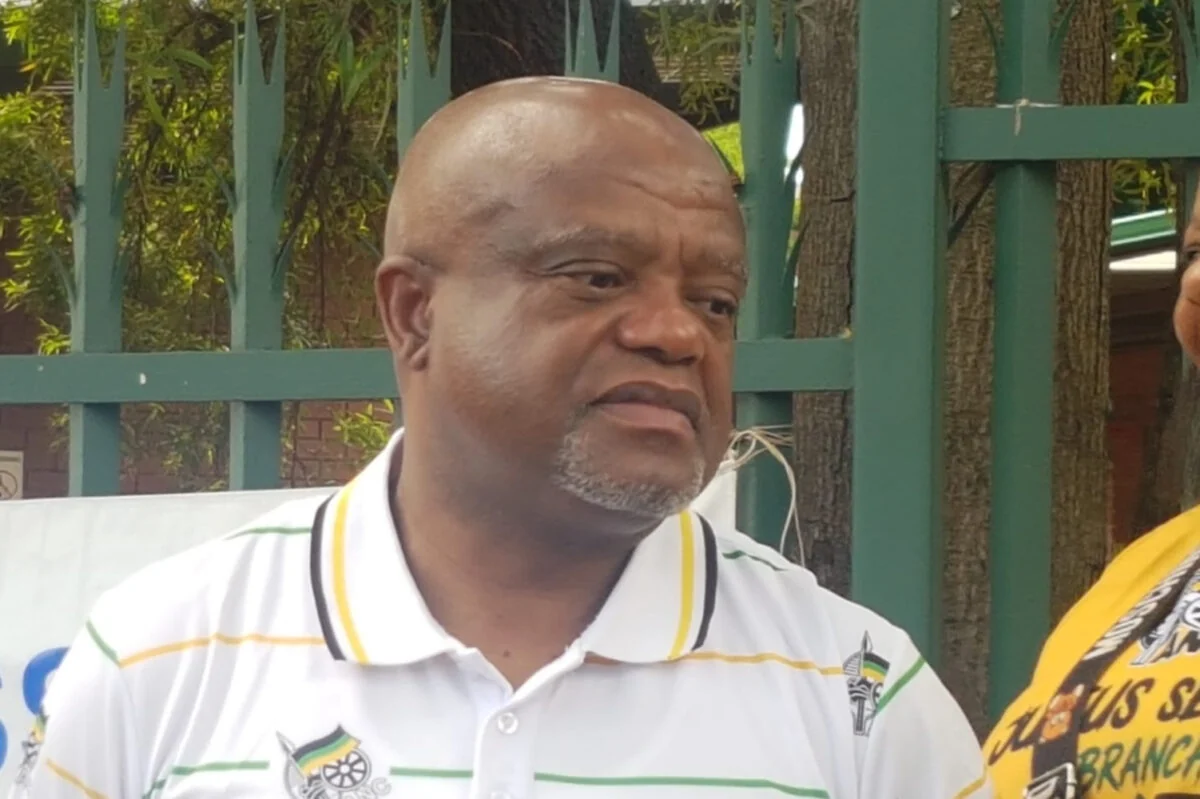
Speaking after casting his special vote at Laerskool Roodekrans in Roodepoort on Tuesday morning, Morero addressed questions about his political future, the ANC’s coalition strategy and suggestions that he could become Johannesburg’s last ANC mayor.
His comments come ahead of South Africa’s local government elections on Wednesday, 4 November, when voters will elect new municipal councils.
The election will determine the composition of Johannesburg’s next council, but the identity of the city’s next mayor could depend on negotiations between political parties.
ANC National Leadership Controls Coalition Decisions
Morero told journalists that Johannesburg’s ANC leadership had not yet received instructions identifying the party’s preferred coalition partners.
He explained that decisions about potential governing arrangements were the responsibility of ANC national officials.
This means the Johannesburg regional leadership cannot independently determine which parties will form part of a future ANC-led administration.
The mayor indicated that the direction of coalition negotiations would become clearer after election results were available.
The position reflects the importance of national party structures in determining political agreements at municipal level.
However, any proposed coalition would still need sufficient support among elected councillors to form a functioning municipal government.
Could Morero Be Johannesburg’s Last ANC Mayor?
Morero was also questioned about suggestions that he could become Johannesburg’s final ANC mayor.
The question reflects the changing political environment in the city, where no single party has enjoyed a stable governing majority in recent years.
Morero dismissed the suggestion that the ANC’s future in Johannesburg had already been decided.
He argued that the party had previously returned to the mayoralty after losing control and could do so again through coalition arrangements.
His response emphasised that the election results, rather than pre-election speculation, would determine the available political options.
The mayor did not claim that the ANC had already secured enough support to retain the position.
ANC Has Not Confirmed Its Mayoral Candidate
Another uncertainty concerns whether Morero himself will be nominated to continue as mayor.
The ANC has shortlisted three potential candidates for the Johannesburg mayoralty:
- Incumbent mayor Dada Morero.
- Deputy Mayor Loyiso Masuku.
- ANC veteran Frank Chikane.
The party has not yet announced which of the three it will put forward.
Morero has indicated that he is prepared to accept the party’s decision even if he is not selected.
Speaking to journalists on Tuesday, he explained that he occupies fourth position on the ANC’s proportional representation candidate list.
He said he would be willing to serve as an ordinary councillor, including from the opposition benches, if that was the outcome of the electoral and party selection processes.
His comments underline the distinction between winning a council seat and being chosen as mayor.
Why Coalitions Matter in Johannesburg
Johannesburg’s council has 270 seats, meaning a party or governing arrangement needs at least 136 seats for an outright majority.
The ANC entered the election with 91 seats, according to the ACCORD Coalitions Tracker.
Because the party did not hold a majority, its administration depended on cooperation with other political organisations.
Coalition arrangements have played a central role in Johannesburg’s municipal government since the ANC lost its outright majority in 2016.
The city has experienced several changes of mayor and governing alliances during this period.
Following the 2026 election, parties will need to consider the number of seats they hold and whether they can secure enough support to elect a mayor, approve budgets and govern effectively.
The final arrangements cannot be determined before the election results are known.
What Recent Polling Shows
An Ipsos survey published ahead of the elections measured support for major political parties in Johannesburg.
The survey placed the Democratic Alliance near 30%, with the ANC approximately two to three percentage points behind.
Other parties measured in the survey included the Economic Freedom Fighters, ActionSA and the uMkhonto weSizwe Party.
These are pre-election polling estimates, not official results.
Survey findings are subject to sampling uncertainty, turnout differences and changes in voter behaviour.
The actual distribution of seats will only be known after votes have been counted and the Electoral Commission has declared the results.
Morero Defends His Record as Mayor
Morero used the opportunity to highlight what he considers achievements during his time leading Johannesburg.
He pointed to municipal efforts to improve conditions in the central business district, enforce city by-laws and attract investment for infrastructure development.
The mayor also referred to projects involving biogas and waste-to-energy technology.
These initiatives are intended to reduce pressure on landfill facilities and introduce alternative approaches to waste management.
Morero said the projects and infrastructure interventions would form part of the legacy of his administration.
However, the city continues to face significant service-delivery difficulties.
Water Shortages Remain a Major Concern
Johannesburg entered election week with persistent water supply problems affecting several communities.
Residents in parts of the city have reported prolonged outages, reduced water pressure and unreliable supply.
Electricity interruptions and refuse collection failures have also attracted criticism.
Morero acknowledged the difficulties but maintained that the municipality had implemented measures to stabilise services.
He said some water systems in Soweto had recently shown signs of recovery.
The mayor also attributed certain disruptions to infrastructure problems, high consumption and incidents of vandalism.
These explanations are the administration’s account of the challenges and do not eliminate the need for independent assessment of municipal performance.
For affected residents, reliable access to water, electricity and waste collection remains an immediate concern.
Mayor Raises Concerns About Infrastructure Interference
In separate remarks on Tuesday, Morero said municipal infrastructure had experienced incidents involving damaged electrical equipment and unauthorised interference with water systems.
He described an incident in which electrical cables were cut at a central substation, requiring repairs to restore electricity.
He also said municipal investigations had identified water valves that had been closed without authorisation from Johannesburg Water.
Morero did not establish who was responsible for these incidents.
He also cautioned against advancing unsubstantiated conspiracy theories.
The reported incidents should therefore not be presented as proof of an organised campaign to disrupt services before the election.
Johannesburg’s Next Mayor Will Be Chosen by Council
Although political parties campaign with mayoral candidates, Johannesburg residents do not directly elect the executive mayor.
Voters elect ward councillors and political party representatives who make up the municipal council.
The newly constituted council then elects the mayor.
Where no party controls a majority, coalition negotiations and council voting become especially important.
This means the ANC’s internal decision about its preferred mayoral candidate is only one part of the process.
That candidate must still secure the necessary support in council.
Morero’s future therefore depends on both the ANC’s internal selection process and the political composition of the next municipal government.
What Happens After the Election?
Once voting concludes on Wednesday, the Electoral Commission will count votes and announce the official results.
The distribution of seats will establish which political parties have sufficient representation to negotiate governing arrangements.
The ANC’s national leadership will then have to decide which potential coalition agreements it is willing to pursue.
The party must also finalise its preferred mayoral candidate.
Morero could remain mayor, serve as an ordinary councillor or occupy another role depending on the outcome.
None of these possibilities has been confirmed.
Meanwhile, Johannesburg’s next administration will inherit ongoing challenges involving water supply, electricity infrastructure, municipal finances and refuse collection.
Morero’s message is that the ANC’s political future in Johannesburg remains undecided and that national party officials will control the coalition negotiations.
Whether he personally continues as mayor will depend on decisions taken after the election.
Ubuntu9Media will continue covering Johannesburg’s election results, coalition negotiations and the formation of the city’s next municipal government.