
Joburg Mayor Denies Water Crisis Amid Robertsham Outages
‘Not a Crisis’, Says Joburg Mayor as Taps Run Dry
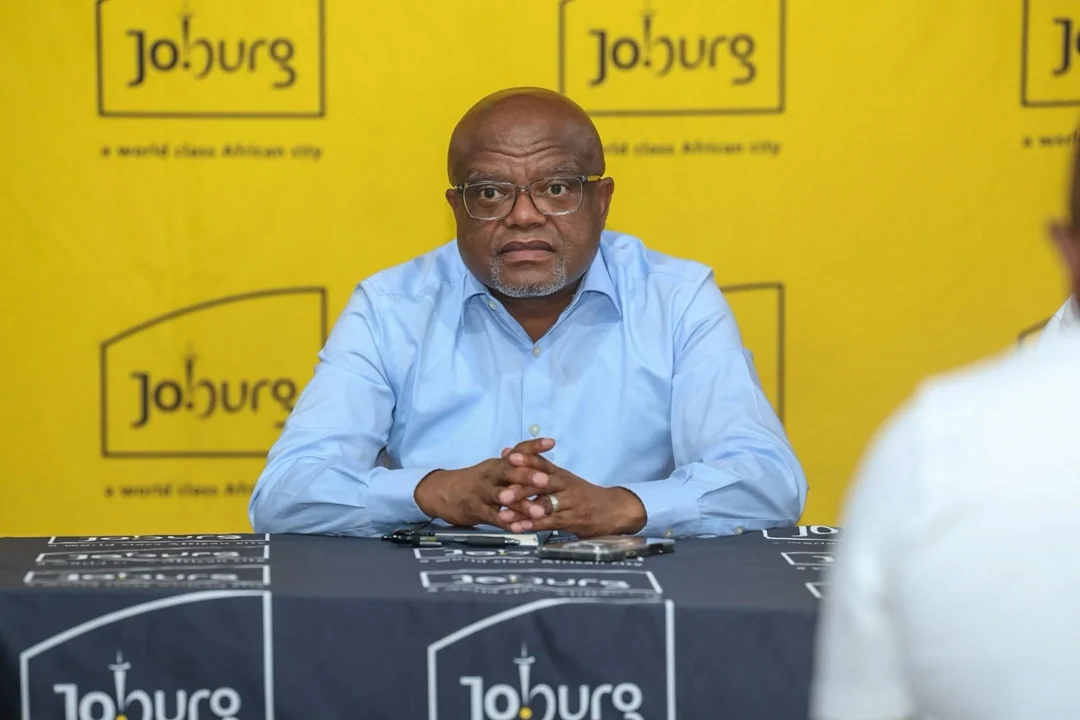
JOHANNESBURG, 28 October 2026 — Johannesburg Executive Mayor Dada Morero has insisted that the city’s ongoing water supply problems do not amount to a crisis, despite prolonged outages and low water pressure affecting communities across the metropolitan area.
His comments follow growing frustration among residents in Robertsham, Crown Gardens and other Johannesburg suburbs, where unreliable water supplies have disrupted daily life.
During a community engagement in Crown Gardens on Monday, 26 October, Morero acknowledged the challenges but argued that the term crisis should be reserved for a situation in which the entire city runs out of water.
The remarks have renewed debate about the scale of Johannesburg’s water problems and the urgency of the municipality’s response.
Mayor Rejects Description of Water Crisis
Morero’s comments were reported by Eyewitness News on Tuesday.
He explained that, in his assessment, Johannesburg would reach crisis conditions only when the entire municipality was without water.
The mayor also apologised to residents for the disruptions and said the city was working to improve reservoir levels.
He urged households to reduce non-essential consumption, including watering gardens and washing vehicles.
Morero attributed some of the supply challenges to Rand Water, the bulk water utility responsible for supplying treated water to Johannesburg.
However, the city’s difficulties involve several interconnected issues, including demand, infrastructure failures, reservoir levels and water losses within municipal distribution networks.
The mayor’s remarks do not mean that affected households have experienced only minor inconvenience.
For residents without running water, the consequences can be substantial regardless of how the municipality classifies the situation.
Robertsham Residents Face Repeated Outages
Robertsham, south of Johannesburg, is among the suburbs affected by recurring supply interruptions.
Residents in the broader area have experienced periods of dry taps and low water pressure, sometimes requiring alternative water sources for essential household activities.
The problems are not new.
Robertsham has appeared in reports about Johannesburg’s water difficulties for several years, including earlier periods when residents complained of prolonged interruptions and inadequate access to emergency water tankers.
Recent Johannesburg Water system records also indicate continuing pressure on infrastructure supplying the suburb.
According to water-supply tracking based on municipal notices, Robertsham receives water through the Crown Gardens Reservoir, Crown Gardens Tower and Forest Hill Tower.
The Crown Gardens Reservoir was recorded at a low level in the latest system update available through 22 October.
However, these records do not confirm the exact duration of water interruptions at every household.
Different streets can experience different conditions depending on elevation, network configuration and reservoir pressure.
Water Problems Extend Beyond Johannesburg South
Robertsham is not the only community experiencing unreliable water supply.
Recent reports have identified interruptions affecting parts of Greenside, Mayfair, Melville, Brixton, Crosby and other areas.
In several neighbourhoods, residents have complained that they have been unable to plan ordinary household activities because water may disappear without a reliable restoration time.
The interruptions affect cooking, bathing, laundry, cleaning and sanitation.
Businesses can also face additional costs when they need to purchase water or install storage systems.
For schools, healthcare facilities and other essential services, reliable water access is particularly important.
The wider pattern has increased pressure on municipal authorities to explain why supply remains unstable and what measures will provide lasting relief.
Rand Water Warns About High Consumption
The mayor’s remarks came as Rand Water warned that demand was placing substantial pressure on the bulk supply system.
The utility urged Johannesburg and other municipalities to reduce consumption.
Its warning highlighted the risk that continued high demand could lead to further interruptions.
Johannesburg Water also asked residents to comply with Level 1 water restrictions.
These restrictions include limits on watering gardens and filling swimming pools during specified daytime hours, as well as restrictions on washing vehicles and paved surfaces with hosepipes.
However, calls to reduce consumption have frustrated residents who say their taps have already been dry for days.
The contrast highlights the difficulty of applying citywide demand-management measures while some neighbourhoods experience much more severe shortages than others.
Ageing Infrastructure Adds to the Problem
Johannesburg’s water difficulties cannot be explained by consumption alone.
Infrastructure condition is another significant concern.
Reporting by TimesLIVE has highlighted ageing pipes, reservoir problems, leaks and funding constraints affecting Johannesburg Water.
A substantial proportion of the water purchased from Rand Water is lost or not billed through the municipal system.
Such losses can arise from leaking infrastructure, faulty meters, illegal connections and other distribution problems.
When water is lost before reaching paying customers, it reduces the effective supply available to households and businesses.
Repairing leaks and upgrading infrastructure are therefore essential alongside measures encouraging residents to conserve water.
Reservoir Levels Remain Critical
Water reservoirs and towers play a vital role in maintaining pressure across Johannesburg’s distribution system.
When storage levels fall, higher-lying properties can lose water before lower-lying areas.
This means some households may experience an interruption while nearby streets continue receiving limited supply.
Restoring reservoir levels can also take time, particularly when demand remains high.
The Crown Gardens system is important for several southern Johannesburg communities.
Problems within that system can therefore affect more than one suburb.
Technical improvements may restore supply temporarily, but reliable service requires the system to maintain sufficient pressure over time.
Residents Question the City’s Response
For affected communities, the debate is about more than terminology.
Residents want reliable restoration timelines, regular updates and access to emergency water when interruptions persist.
Repeated outages can make ordinary daily routines expensive and difficult.
Households may need to buy bottled water, store water in containers or travel to collection points.
These alternatives can place an additional burden on older residents, people with disabilities and households without private transport.
The Water Crisis Committee has previously called for greater transparency from government and water authorities.
Community representatives have argued that residents need clear explanations of both the immediate causes of outages and the longer-term plan to prevent them.
When Will Supply Improve?
Johannesburg Water has indicated that interventions are under way to improve the supply system.
According to reporting published on 27 October, the utility’s managing director, Ntshavheni Mukwevho, referred to an intervention expected to be completed within approximately three months.
However, the measures were described as offering short-term relief rather than a permanent solution to the city’s infrastructure problems.
The reported timeline should not be interpreted as a guaranteed date when water will return to every affected household.
Individual restoration times depend on local conditions, repairs, reservoir recovery and the performance of the wider distribution network.
Water Access Is a Constitutional Right
South Africa’s Constitution recognises the right of access to sufficient water.
The Water Services Act also provides a framework for the delivery of water services.
These obligations do not mean that every interruption automatically constitutes a legal violation.
However, persistent failures raise important questions about service delivery, infrastructure investment and the steps taken to protect vulnerable communities.
Municipal authorities are expected to manage their systems responsibly and communicate effectively with residents when services are disrupted.
Where outages become prolonged, access to alternative water supplies becomes particularly important.
A Citywide Debate Over the Meaning of Crisis
Morero’s position focuses on whether Johannesburg has reached a complete, citywide loss of water.
Residents experiencing repeated outages may judge the situation differently.
Both perspectives concern the same underlying problem: an unreliable supply system affecting daily life.
The practical measure of progress will not be whether officials adopt the word crisis, but whether water flows consistently through household taps.
For Robertsham and other affected communities, the immediate priorities remain restoration of supply, dependable emergency assistance and clear communication.
Johannesburg’s water difficulties remain unresolved, and residents continue to seek answers about when reliable service will return.


Pingback: Dada Morero Reveals Who Decides Joburg Coalitions - Ubuntu99Media