
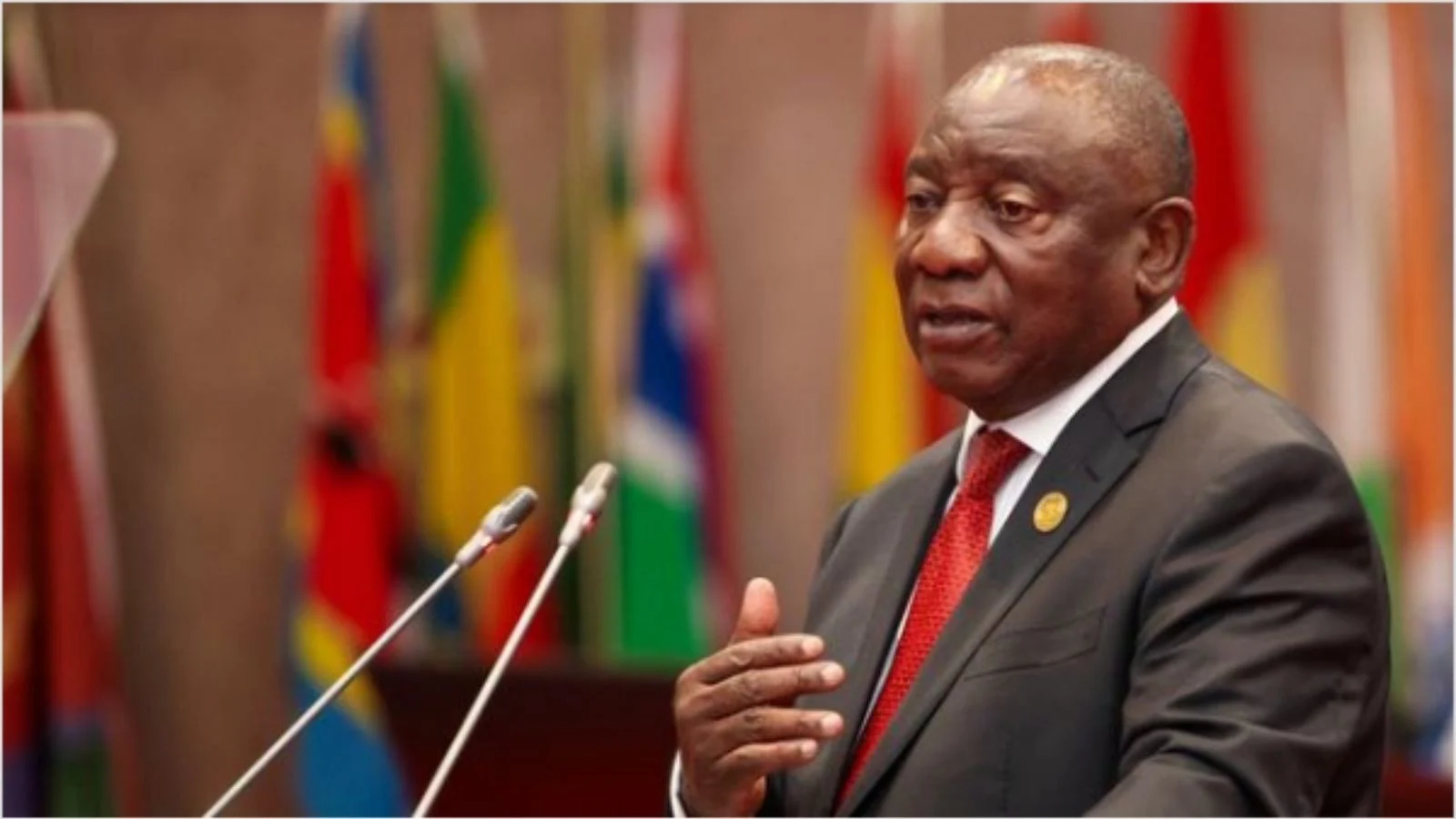
Ramaphosa AGOA warning
Ramaphosa Warns Of US Blow
PRETORIA, 20 October 2026 — President Cyril Ramaphosa has warned South Africans to prepare for the possibility of losing preferential trade access to the United States, saying the economic consequences could be severe if Washington removes the country from the African Growth and Opportunity Act (AGOA). Trump-Ramaphosa Oval Office Meeting Turns Tense Over ‘White Genocide’ Claims
The warning follows months of deteriorating diplomatic relations between Pretoria and Washington under US President Donald Trump’s administration.
Speaking during a media engagement on Monday, 19 October, Ramaphosa said the government was continuing discussions with American officials but could not guarantee that South Africa would retain its place in the trade programme.
The president acknowledged that losing AGOA benefits would threaten employment and disrupt export industries that have relied on preferential access to the world’s largest economy.
His comments come as South Africa seeks to strengthen commercial relationships with China, India and other international partners to reduce its exposure to potential US trade restrictions.
What Is AGOA And Why Does It Matter?
The African Growth and Opportunity Act is a United States trade programme that provides eligible sub-Saharan African countries with preferential access to the American market.
Under the programme, thousands of qualifying products can enter the United States without the ordinary customs duties that would otherwise apply.
South Africa has been one of the programme’s largest beneficiaries, particularly in industries such as vehicle manufacturing and agriculture.
The arrangement has helped South African exporters compete in the US market while supporting manufacturing investment, agricultural production and employment.
Preferential access is especially important in industries where relatively small differences in import costs can influence purchasing decisions.
If South Africa loses its eligibility, affected exporters could face higher trade costs and increased competition from producers in countries that retain preferential access.
However, the precise impact would depend on the products concerned, other applicable tariffs and the final US trade measures.
Ramaphosa Says South Africa Must Prepare
During Monday’s engagement, Ramaphosa said the possibility of South Africa’s removal from AGOA could not be ignored.
The president explained that other African countries had previously lost their eligibility, demonstrating that participation in the programme was not guaranteed.
He said his administration needed to prepare the country for that possibility rather than wait until a final decision was made.
Ramaphosa also acknowledged that the consequences for employment could be devastating.
His comments represent one of the government’s clearest public acknowledgements of the risks facing South African exporters as relations with Washington remain strained.
However, the president emphasised that South Africa was not abandoning diplomatic engagement with the United States.
Discussions between officials from the two countries are continuing.
Why Are Relations With The United States Deteriorating?
Relations between South Africa and the United States have become increasingly difficult during Trump’s second presidency.
The US administration has criticised several South African domestic and foreign policy positions.
These include South Africa’s land reform legislation, Black Economic Empowerment policies and diplomatic positions involving Israel and Iran.
Trump has also made allegations about the treatment of white South Africans, including claims of widespread race-based persecution.
The South African government has rejected allegations that its policies amount to systematic persecution of white citizens.
Pretoria maintains that its land reform and economic transformation measures operate within South Africa’s constitutional framework.
The United States has nevertheless taken several steps that have added pressure to the relationship.
These include restrictions on certain visa categories and broader changes affecting diplomatic and economic cooperation.
South Africa has repeatedly stated that it remains willing to engage Washington while defending its sovereignty and constitutional policies.
Thousands Of Automotive Jobs Could Be Affected
South Africa’s automotive industry is among the sectors most exposed to changes in preferential US market access.
Vehicle manufacturers export cars and components to international markets, including the United States.
AGOA has helped qualifying South African vehicles enter the American market under favourable tariff conditions.
Industry organisation Naamsa previously estimated that approximately 86,000 automotive manufacturing jobs were directly linked to the trade arrangement.
That figure rises to approximately 125,000 when related subcontractor employment is included.
These estimates indicate the scale of employment associated with the programme, but they should not be interpreted as a prediction that every job would disappear if South Africa lost AGOA benefits.
Actual employment losses would depend on manufacturers’ responses, alternative export opportunities and the trade conditions that apply.
Nevertheless, higher export costs could influence future investment decisions and production volumes.
South Africa’s automotive manufacturing sector supports extensive supply chains involving component suppliers, logistics businesses and industrial service providers.
Disruption to vehicle exports could therefore affect businesses beyond the major manufacturers.
Agricultural Exporters Also Face Risks
The agricultural sector is another important beneficiary of preferential trade access.
South African producers export products including fruit and wine to the United States.
These industries support employment in farming, packaging, processing, cold storage and transport.
For some exporters, the United States represents an important high-value market.
Losing preferential access could make South African products more expensive relative to competing imports.
That could place pressure on profit margins and make it harder to secure new orders.
The impact would differ between agricultural products because their tariff treatment, demand and available alternative markets are not identical.
Businesses with diversified export destinations may be better positioned to adjust than those heavily dependent on US customers.
South Africa Looks Towards China
Ramaphosa said his government was actively exploring alternative international markets.
China is one of the countries identified as offering opportunities for South African exporters.
Beijing introduced zero-tariff treatment for qualifying imports from African countries in May 2026, creating additional possibilities for trade.
South African agricultural products, including apples and wine, have featured among the goods benefiting from expanded market access.
China is already a major trading partner for South Africa, particularly in minerals and other commodities.
Greater access for agricultural and manufactured products could help broaden the relationship.
However, tariff-free access does not automatically guarantee export growth.
South African businesses must still meet product standards, logistical requirements and customer demand in the Chinese market.
India Could Become Another Important Market
India has also emerged as a potential destination for expanded South African exports.
The two countries have revived discussions about preferential trade arrangements after earlier negotiations stalled.
India’s large population and growing economy present opportunities for businesses seeking to diversify their international customer base.
Potential areas of cooperation include industrial products, agriculture, minerals and other traded goods.
However, the negotiations have not yet produced a comprehensive replacement for South Africa’s existing US trade benefits.
Expanding exports to India would require commercial agreements, competitive pricing and reliable transport links.
The government has therefore presented market diversification as a longer-term strategy rather than an immediate solution to the risks surrounding AGOA.
Can South Africa Be Removed From AGOA?
South Africa’s participation in AGOA depends on eligibility requirements established by US legislation.
The programme provides for periodic assessments of participating countries.
Eligibility can be withdrawn when the relevant US authorities determine that a country no longer meets the applicable conditions.
According to reporting by AFP, the programme has been renewed through the end of 2028, although South Africa’s continued eligibility remains a concern.
The US president reviews participating countries’ eligibility annually.
The process includes notification requirements before a country’s benefits are terminated.
This means that South Africa could face a decision affecting its eligibility even if the broader AGOA programme remains in operation.
As of 20 October 2026, no final decision removing South Africa from AGOA has been confirmed.
South African Exporters Already Under Pressure
The threat of losing AGOA comes at a time when some exporters are already struggling with higher US trade barriers.
South African businesses have faced additional tariffs introduced during the Trump administration.
These measures have affected the competitiveness of certain products entering the American market.
BusinessTech reported earlier in October that exporters in the Western Cape had experienced significant losses associated with deteriorating US trade conditions.
Exporters Western Cape chairman Terry Gale estimated that the province had lost approximately R2.8 billion in exports during 2025.
That figure was presented as an industry estimate rather than a national assessment of losses.
The experience illustrates how changes in trade policy can affect businesses before any formal withdrawal from AGOA.
What Would Losing AGOA Mean For The Economy?
A loss of preferential access could affect South Africa through several channels.
Exporters could face higher costs when selling qualifying goods to American customers.
Businesses might need to reduce margins, increase selling prices or find alternative markets.
Manufacturers could reconsider investment plans if access to the US market becomes less commercially attractive.
Workers in export-dependent industries could face increased uncertainty.
The wider economy could also be affected if reduced export earnings place pressure on production, investment and employment.
However, the size of any economic impact would depend on the specific trade measures introduced and how businesses respond.
South Africa would not automatically lose the ability to trade with the United States.
Exports could continue, although affected goods might no longer benefit from the same preferential tariff treatment.
Why Diversifying Trade Matters
Ramaphosa’s comments highlight a broader question about South Africa’s dependence on individual export markets.
International trade agreements can provide valuable opportunities, but their benefits can change when governments alter policies or diplomatic relations deteriorate.
Developing additional markets may reduce the economic consequences of disruptions involving a single trading partner.
However, replacing established export relationships is not straightforward.
Manufacturers often make long-term investments based on particular markets, product standards and supply-chain arrangements.
Agricultural exporters must also develop distribution networks and customer relationships.
Moving goods to different markets can involve new certification requirements, shipping routes and marketing costs.
Trade diversification therefore requires sustained cooperation between government and business.
What Happens Next?
The South African government is expected to continue diplomatic discussions with Washington while exploring additional export opportunities elsewhere.
Businesses will be watching for any formal announcement concerning South Africa’s eligibility under AGOA.
Automotive manufacturers, agricultural exporters and related industries have a particular interest in the outcome.
For workers and businesses that depend on exports to the United States, uncertainty surrounding the trade programme remains a significant concern.
Ramaphosa’s warning does not mean that South Africa has already lost its benefits.
It signals that the government believes the possibility is serious enough to require advance planning.
For South Africa, the challenge is to preserve existing trade relationships while building alternatives that can protect jobs, exports and future investment.


