South Africa mini budget 2026
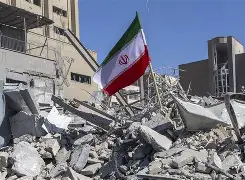
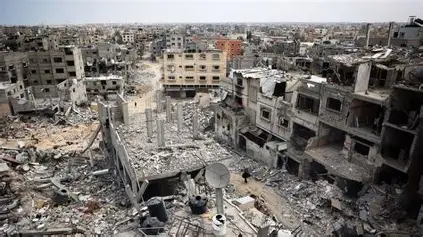
Middle East Crisis Threatens Budget
JOHANNESBURG, 20 October 2026 — The ongoing conflict in the Middle East is casting a shadow over South Africa’s economic outlook as Finance Minister Enoch Godongwana prepares to deliver the 2026 Medium-Term Budget Policy Statement on Wednesday. MTBPS 2026: R50bn Tax Windfall Boosts SA
The conflict has disrupted international energy markets, increased fuel prices and contributed to rising inflationary pressures at a time when South African households and businesses are already struggling with high living costs.
Although government tax collections have performed better than expected, economists caution that the additional revenue may not be enough to offset the economic risks associated with expensive fuel, weaker growth and increasing pressure on public spending.
Godongwana will deliver the mini budget in Parliament on 21 October at 14:00.
His address is expected to provide updated projections for government revenue, expenditure, economic growth and public debt over the medium term.
Middle East Conflict Raises Economic Risks
The Middle East conflict has created significant uncertainty in global oil and gas markets.
Disruptions to energy production, shipping routes and critical infrastructure have affected international supplies, contributing to higher prices for petroleum products.
The Strait of Hormuz, an important shipping route for global energy exports, has been particularly affected.
South Africa is vulnerable to these developments because it depends on international petroleum markets for much of its fuel supply.
When international oil prices rise, the impact is eventually felt by local motorists, transport operators, farmers and businesses.
The consequences extend beyond petrol stations.
Higher transport and production costs can feed into food prices, consumer goods and other essential services.
This creates additional pressure on household budgets and can weaken consumer spending.
Fuel Prices Put Pressure On Households
Fuel costs have become one of the most immediate economic concerns facing South Africans.
According to eNCA’s 20 October economic coverage, fuel prices have risen by approximately 43% over the past year.
These increases have placed pressure on motorists and businesses that rely heavily on road transport.
Taxi operators, logistics companies, agricultural producers and small businesses are particularly exposed to higher fuel expenses.
For households, the impact is often indirect.
Even consumers who do not own vehicles can face higher costs when businesses pass increased transport expenses on to customers.
Food distribution, public transport and delivery services are among the areas affected.
The rising cost of fuel has renewed questions about whether government can afford further temporary relief measures.
Will Government Reduce The Fuel Levy?
The possibility of additional fuel-price relief is expected to attract attention ahead of the mini budget.
Earlier this year, government introduced temporary fuel levy relief in response to the sharp increase in international oil prices.
National Treasury’s technical guidelines for the 2027 Medium-Term Expenditure Framework estimate that the earlier relief measures cost approximately R17.2 billion.
Treasury indicated that the measures were funded through lower-than-expected expenditure and higher-than-expected revenue.
It also stated that any further relief would need to be funded in a budget-neutral manner.
This means government would need to identify savings or other funding sources rather than simply increasing borrowing to finance additional relief.
Parliament has also considered a R10 billion fuel-price relief allocation intended to help stabilise fuel costs.
However, no new general fuel levy suspension has been confirmed ahead of Wednesday’s statement.
Inflation Remains A Major Concern
Higher fuel prices are adding to inflationary pressures across the economy.
The South African Reserve Bank has warned that the Middle East conflict, global supply disruptions and rising energy costs could keep inflation elevated.
In its September monetary policy statement, the central bank noted that relatively little oil was passing through the Strait of Hormuz and that conflict-related disruptions were affecting international supply chains.
The Reserve Bank increased its policy rate to 7.25% in September.
It also lowered its 2026 economic growth forecast from 1.4% to 1.2%.
Higher interest rates can make borrowing more expensive for households and businesses.
This affects mortgage repayments, vehicle finance, business investment and consumer spending.
The challenge for policymakers is that rising fuel prices can push inflation higher even while economic activity remains weak.
Stronger Tax Revenue Offers Some Relief
Despite the difficult economic environment, South Africa’s fiscal outlook has received some support from stronger tax collections.
Reuters reported on 19 October that corporate income tax receipts had increased by 22.8% during the first five months of the financial year.
Value-added tax and personal income tax collections have also performed relatively strongly.
Financial institutions including BNP Paribas and Goldman Sachs have suggested that government could receive a revenue windfall of approximately R40 billion to R50 billion.
However, these figures are forecasts rather than confirmed Treasury outcomes.
Economists expect the government to remain cautious about how much additional revenue it allocates to spending.
Some of the revenue gains may be used to reduce borrowing requirements and support fiscal consolidation.
This could improve confidence in South Africa’s public finances.
Government Debt Remains A Challenge
South Africa’s debt burden remains one of the biggest issues facing the National Treasury.
Government must balance funding for public services with the need to manage borrowing costs and stabilise debt.
Debt-service payments consume resources that could otherwise be used for infrastructure, education, healthcare and other priorities.
Economists expect Wednesday’s mini budget to provide updated projections for the budget deficit and government debt.
Reuters reported that analysts see scope for the deficit to narrow to between approximately 3.3% and 3.6% of gross domestic product, compared with an earlier projection of 3.7%.
These are market expectations, not final government forecasts.
The actual figures will only be confirmed when Treasury publishes its revised fiscal framework.
Economic Growth Remains Weak
South Africa continues to face challenges in generating strong and sustained economic growth.
The International Monetary Fund expects growth of approximately 1% in 2026.
The Reserve Bank’s September forecast is slightly higher at 1.2%.
Both projections point to an economy expanding too slowly to make rapid progress on unemployment and household incomes.
Higher energy costs could further weaken business activity by increasing operating expenses and reducing consumer demand.
The government will therefore need to explain how it intends to support investment and economic activity while maintaining fiscal discipline.
Infrastructure development, logistics improvements and reforms affecting electricity and transport remain important considerations.
Could Taxes Increase In 2027?
The mini budget does not usually introduce major changes to personal income tax, VAT or social grants.
Those decisions are generally announced during the main national budget in February.
However, Wednesday’s statement could provide indications of the government’s approach to revenue and spending in the 2027 fiscal year.
Economists and investors will examine whether Treasury expects tax collections to remain strong or whether additional revenue measures may eventually be required.
There is no confirmed announcement of a new tax increase at this stage.
Any suggestions about future tax changes should therefore be treated as expectations rather than government policy.
What South Africans Should Watch
Wednesday’s mini budget will provide an important indication of how government intends to respond to the difficult economic environment.
Key areas include:
- Fuel-price relief: Whether Treasury announces or signals additional measures to reduce the impact of high petrol and diesel prices.
- Economic growth: Whether government lowers its growth expectations because of the Middle East conflict and weak domestic demand.
- Inflation: How higher energy costs are reflected in Treasury’s economic forecasts.
- Public debt: Whether stronger tax revenue allows government to reduce borrowing and improve its debt outlook.
- Government spending: How Treasury intends to fund essential services, infrastructure and other priorities without weakening fiscal sustainability.
The statement will also be closely watched by investors, credit-rating agencies and financial markets.
Why The Mini Budget Matters
The Medium-Term Budget Policy Statement is an important part of South Africa’s annual budget process.
It provides updated economic forecasts and outlines government spending priorities over a three-year period.
It also gives Parliament an opportunity to scrutinise the government’s fiscal strategy.
Although the statement is less detailed than the February national budget, it can influence expectations about future taxation, public spending and economic policy.
This year’s statement comes at a particularly challenging time.
South Africa must manage domestic economic weaknesses while responding to international developments largely outside its control.
The Middle East conflict has demonstrated how global geopolitical events can quickly affect fuel prices, inflation and economic conditions in South Africa.
What Happens Next?
Godongwana will table the 2026 Medium-Term Budget Policy Statement in Parliament on Wednesday, 21 October, at 14:00.
The National Treasury is expected to release the accompanying fiscal documents on the same day.
Parliament’s finance committees will subsequently examine the revised fiscal framework and consider public submissions.
The coming statement will show whether stronger tax collections are sufficient to improve South Africa’s fiscal position despite the economic consequences of the Middle East conflict.
For millions of South Africans, the most immediate concern will be whether government can ease the pressure of rising fuel prices and living costs without creating additional financial problems.