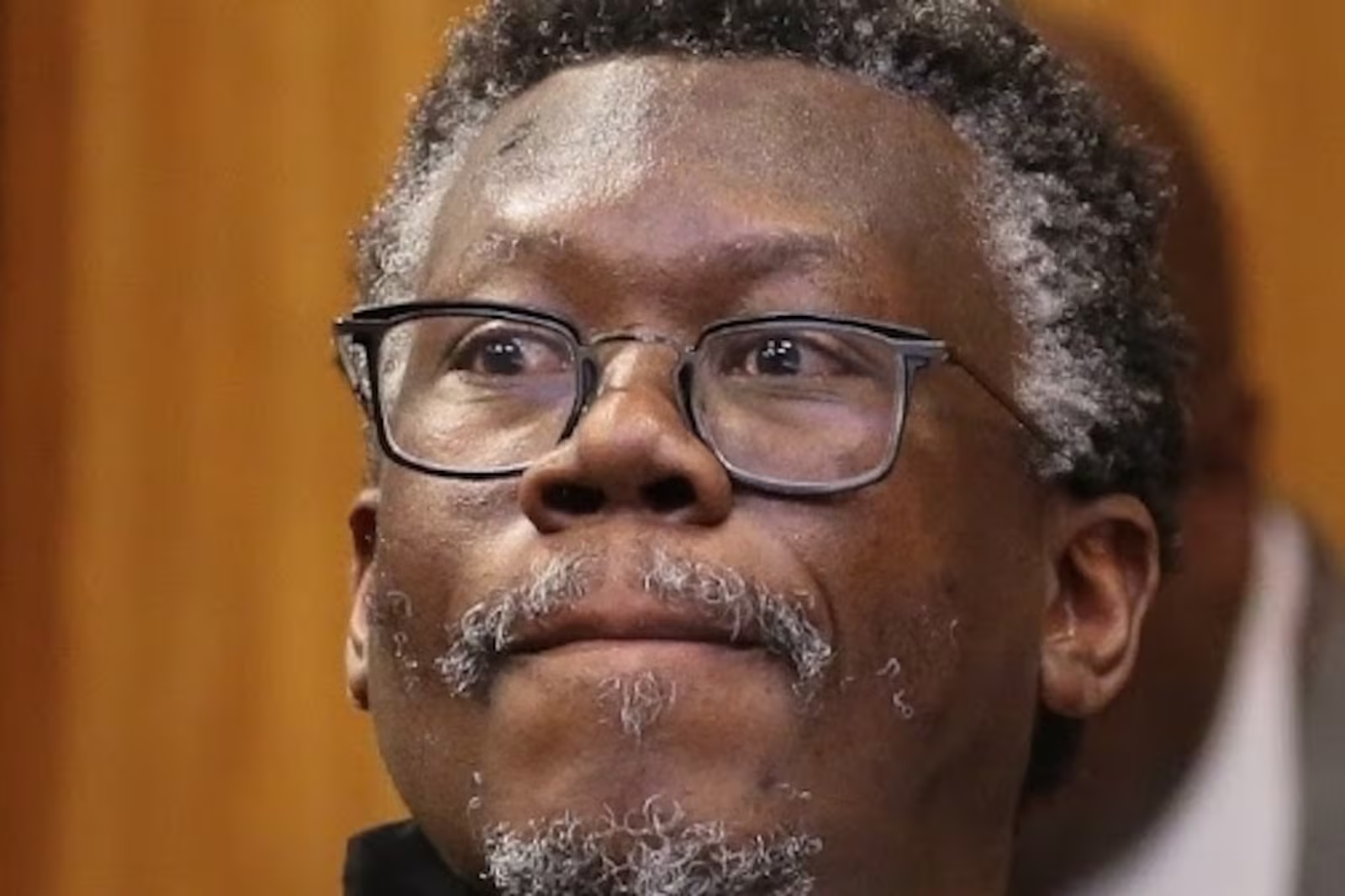
Tembeka Ngcukaitobi WhatsApp scam
Fake Judge Sparks Warning
JOHANNESBURG, 14 October 2026 — The Office of the Chief Justice (OCJ) has issued a public warning after discovering that an individual is impersonating Acting Constitutional Court Justice Tembeka Ngcukaitobi through WhatsApp.
The impersonator allegedly created an account using the judge’s name and a profile photograph resembling him, raising concerns about fraudulent communications falsely presented as coming from South Africa’s judiciary.
In an official statement dated 13 October 2026, the OCJ urged South Africans to remain vigilant and verify suspicious messages before responding.
The warning follows another recent impersonation incident involving a senior judicial officer.
Tembeka Ngcukaitobi WhatsApp Scam Exposed
According to the Office of the Chief Justice, the impersonator has been sending WhatsApp messages while pretending to be Acting Justice Ngcukaitobi.
The suspicious account was registered under the name “Justice T Ngcukaitobi” and used the mobile number 079 139 2620.
The account also displayed a photograph resembling the judge, potentially giving recipients the false impression that the messages were genuine.
The OCJ has made it clear that members of the public should not treat communications from the identified account as authentic messages from Justice Ngcukaitobi.
The office warned that impersonating another person in a manner intended to deceive others could constitute fraud.
Office Of Chief Justice Issues Fraud Warning
The OCJ cautioned South Africans against engaging with the impersonator or acting on suspicious instructions.
The judiciary’s administrative office stressed that falsely presenting information to another person’s prejudice can amount to criminal conduct.
It also indicated that the matter would be referred to the relevant authorities for further handling.
The warning applies not only to WhatsApp messages but also to communications, directives, articles and social media posts that claim to originate from a judge.
Members of the public and journalists have been encouraged to verify the authenticity of such communications directly with the OCJ.
Another Senior Judge Recently Targeted
The warning comes shortly after a similar incident involving Supreme Court of Appeal Deputy President Justice Dumisani Zondi.
On 7 October 2026, the OCJ warned that an individual had created a WhatsApp account using Zondi’s name and photograph.
That account was reportedly registered under the name “Justice Dumisani Zondi” and associated with the number 076 208 2834.
The latest incident involving Ngcukaitobi marks another reported attempt to impersonate a senior member of South Africa’s judiciary.
However, authorities have not established publicly whether the two incidents are connected or involve the same individual.
Why Judicial Impersonation Is Dangerous
Messages that appear to originate from judges or court officials may carry an impression of legal authority.
Recipients could mistakenly believe that instructions, requests or documents sent through such accounts are official.
Criminal impersonation schemes can potentially be used to obtain money, personal information or confidential documents.
They can also spread misinformation and damage public confidence in institutions.
In the Ngcukaitobi incident, the OCJ has confirmed the impersonation warning, but the publicly available statement does not establish that anyone has lost money or disclosed personal information.
It is therefore important not to assume that financial losses have occurred.
How To Identify A Fake Judge WhatsApp Account
South Africans are advised to exercise caution when receiving unexpected messages claiming to come from judicial officers.
Warning signs may include:
- Unsolicited WhatsApp messages claiming to come from a judge or senior court official.
- Requests for money, confidential information or identity documents.
- Messages demanding immediate action without independent verification.
- Accounts relying on an official-looking name or profile photograph as proof of identity.
- Suspicious links, attachments or requests to move conversations to other platforms.
A photograph and display name are not reliable proof that an account belongs to the person it claims to represent.
What To Do If You Receive A Suspicious Message
Anyone receiving a message purportedly from Justice Ngcukaitobi or another judicial officer should avoid responding until its authenticity has been established.
Recipients should not send money, provide passwords or share sensitive personal information based solely on an unsolicited message.
Screenshots and message details can be preserved as evidence.
Suspicious accounts can also be reported through WhatsApp’s reporting tools.
Most importantly, the OCJ has requested that members of the public and media contact its office directly to verify communications claiming to originate from judicial officers.
Official contact details should be obtained independently from the South African judiciary’s website.
Who Is Tembeka Ngcukaitobi?
Tembeka Ngcukaitobi is a prominent South African legal practitioner and Senior Counsel who has served as an Acting Justice of the Constitutional Court.
He is widely known for his work in constitutional law and significant legal proceedings.
His appointment to serve as an acting judge places him among the judicial officers responsible for hearing matters before South Africa’s highest court on constitutional issues.
The reported impersonation involves the unauthorised use of his identity and does not suggest that Ngcukaitobi himself was involved in any fraudulent conduct.
OCJ Calls For Public Vigilance
The Office of the Chief Justice has reiterated the importance of verifying information attributed to members of the judiciary.
The latest warning highlights the ease with which a person’s identity can be imitated on messaging platforms through the use of a name and photograph.
As digital communication becomes increasingly common, verifying the source of official-looking messages remains essential.
The OCJ has indicated that the matter will be referred to the relevant authorities.
No arrest or identification of the impersonator was confirmed in the reports available at the time of publication.
Ubuntu9Media will continue following developments and provide updates if authorities release further information about the impersonation investigation.