Transnet Rail Restoration: R8.9bn Upgrade
Transnet Launches R8.9bn Rail Restoration
JOHANNESBURG, 14 October 2026 — South Africa has launched a major R8.9 billion railway restoration programme aimed at improving the movement of iron ore from the Northern Cape to international markets through the Port of Saldanha in the Western Cape.
The investment, led by Transnet Rail Infrastructure Manager (TRIM), will focus on restoring reliability, addressing maintenance backlogs and increasing the capacity of the country’s strategically important Sishen–Saldanha Iron Ore Export Line.
The 861-kilometre railway is one of South Africa’s most important mineral export corridors, connecting iron ore producers to global buyers.
Transport Minister Barbara Creecy confirmed the investment during an inspection of the railway on Monday, 12 October 2026.
The restoration programme is expected to continue until 2030.
R8.9 Billion Transnet Rail Upgrade Explained
The Ore Line Restoration Programme forms part of government’s broader strategy to improve freight rail infrastructure and strengthen South Africa’s mining competitiveness.
The programme is designed to address infrastructure deterioration and maintenance backlogs that have affected the reliability of freight transportation.
The railway carries iron ore from mining operations around Sishen in the Northern Cape to the Port of Saldanha, where the commodity is loaded onto vessels for export.
Reliable rail transportation is essential for mining companies because large volumes of bulk minerals must be moved efficiently over long distances.
When railway capacity is constrained, mining companies can face additional logistical costs, reduced export opportunities and uncertainty over production planning.
The R8.9 billion programme aims to improve these conditions through sustained maintenance and infrastructure renewal.
Sishen-Saldanha Railway Undergoes Major Repairs
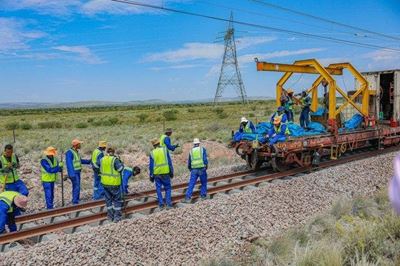
Transnet’s annual Iron Ore Line maintenance shutdown began on 6 October and is scheduled to continue until 16 October 2026.
During this period, technical teams are conducting intensive maintenance work that would be difficult to complete while trains are operating.
The work includes replacing worn rails and sleepers, screening ballast, repairing railway turnouts and rehabilitating track formations.
Teams are also installing culverts and maintaining electrical and signalling infrastructure.
These interventions are intended to improve operational safety, reduce infrastructure failures and make freight services more predictable.
Transnet has emphasised that improving infrastructure reliability is essential to increasing the railway’s future carrying capacity.
Government Allocates Billions To Rail Infrastructure
Government has allocated R3.4 billion through the Budget Facility for Infrastructure over the current and following financial years to support the restoration programme.
During the current financial year, TRIM expects to spend approximately R2.2 billion on restorative maintenance along the Ore Corridor.
Of that amount, R1.5 billion will come from the infrastructure facility allocation.
Further investment is being directed towards maintaining the locomotives and wagons operating on the route.
Transnet has allocated approximately R1.47 billion for rolling stock maintenance.
This includes:
- R752.3 million for wagon maintenance.
- R721.9 million for locomotive maintenance.
Similar rolling stock maintenance expenditure is planned for the following financial year.
The investments are expected to help address maintenance backlogs and improve the availability of operational equipment.
These allocations relate to different components and periods of the restoration effort and should not automatically be added together as separate costs beyond the announced programme total.
Saldanha Port Receives R750 Million Upgrade
Rail infrastructure improvements are being supported by additional investment at the Port of Saldanha.
The Transnet National Ports Authority is commissioning a Bulk Power Upgrade Project valued at approximately R750 million.
The project is intended to increase electricity supply capacity at the port, allowing Transnet Port Terminals to operate its third tippler.
A tippler is specialised equipment used to unload bulk commodities from railway wagons.
Improved unloading capacity can help reduce congestion and support higher volumes of iron ore moving through the export terminal.
The combined rail and port improvements are designed to strengthen the efficiency of the entire export logistics chain.
More Than 1,300 Jobs Created
The October maintenance shutdown has created approximately 1,300 fixed-term employment opportunities.
Government also expects more than 600 additional indirect opportunities through associated economic activity.
The programme provides potential business opportunities for small and medium-sized enterprises operating in several sectors.
These include civil construction, railway maintenance, logistics, transportation, equipment support, material supply and accommodation services.
Local businesses may also benefit through procurement and subcontracting opportunities involving larger contractors.
However, the temporary jobs created during the shutdown should not be confused with permanent employment commitments.
The longer-term employment impact will depend on the programme’s implementation and the performance of the broader mining and logistics sectors.
Why The Iron Ore Railway Matters To Mining
South Africa’s iron ore industry relies heavily on efficient freight transportation to remain competitive in international markets.
Mining operations in the Northern Cape are located hundreds of kilometres from the country’s export terminals.
Transporting large quantities of ore by rail is generally more practical than relying exclusively on road freight.
For companies such as Kumba Iron Ore, railway performance influences production planning, export volumes and operating costs.
Kumba CEO Mpumi Zikalala has previously explained that logistics constraints forced the company to adjust production plans to reflect available rail capacity.
The mining company expects production of approximately 31 million to 33 million tonnes in 2026, with an increase to 35 million to 37 million tonnes projected for 2027.
However, the ability to achieve higher volumes depends partly on continued improvements in railway performance.
The restoration programme therefore has implications for mining investment, employment and South Africa’s mineral export competitiveness.
Private Rail Operators Could Benefit
The investment also supports South Africa’s ongoing freight rail reform programme.
Government intends to allow approved private train operating companies to access the national railway network while retaining state ownership of the infrastructure.
TRIM is responsible for managing and maintaining the railway infrastructure and administering access arrangements.
Private operators would be able to invest in their own trains and services while using the network under approved conditions.
However, successful implementation depends on reliable infrastructure, clear operating rules and sufficient network capacity.
The restoration of the Sishen–Saldanha corridor is therefore important not only for existing mining companies but also for potential new participants in the freight rail industry.
South Africa Targets Higher Rail Freight Volumes
Government has set ambitious targets for increasing the amount of freight transported by rail.
The restoration programme contributes to broader efforts to improve network performance and shift suitable bulk cargo away from road transportation.
Transporting larger quantities of minerals by rail could help reduce pressure on roads and improve logistics efficiency.
However, the benefits will depend on whether infrastructure improvements translate into sustained increases in operational capacity.
Mining companies and exporters will be watching closely to see whether the investment delivers more reliable train services and improved access to ports.
What Happens Next?
The current maintenance shutdown is scheduled to conclude on 16 October 2026.
Work under the broader R8.9 billion restoration programme will continue through 2030.
The immediate priorities include completing the scheduled maintenance safely, restoring the line to service and improving equipment reliability.
Over the longer term, the programme will be assessed by its ability to reduce disruptions, increase freight capacity and support mineral exports.
For South Africa’s mining industry, the investment represents an important opportunity to address infrastructure constraints that have affected operations and international competitiveness.
Ubuntu9Media will continue monitoring Transnet’s railway restoration programme, mining logistics developments and their impact on South Africa’s economy.