Mark Burke Saga Tests DA Governance
Mark Burke saga puts DA governance under scrutiny
CAPE TOWN – The Mark Burke saga is becoming a significant test of the Democratic Alliance’s long-standing claim to be South Africa’s party of good governance.
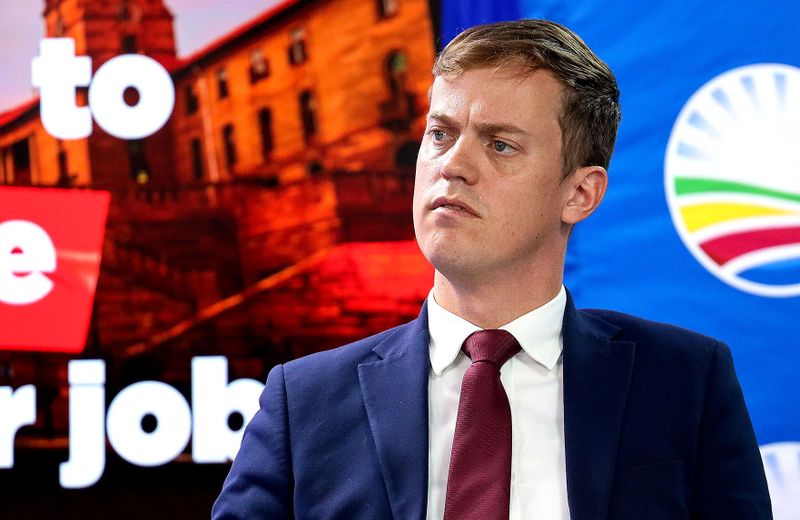
Burke, the DA’s federal finance chairperson and a Member of Parliament, is facing political scrutiny after the South African Reserve Bank launched an investigation into Kastelo, a fintech company he founded and previously chaired. The investigation concerns alleged exchange-control breaches involving approximately R4 billion in offshore transfers. ANC Blames DA for Joburg
Importantly, Burke has said that Kastelo has not been found guilty of wrongdoing by a court, and he has indicated that he is no longer the company’s chairperson.
The distinction between an allegation, an investigation and a finding of wrongdoing is central to the political debate.
Why the Mark Burke saga matters
The controversy is particularly damaging politically because the DA has built much of its identity around accountability, clean government and institutional oversight.
Burke himself has been a vocal critic of governance failures at other public institutions, including the Public Investment Corporation.
That makes the questions surrounding his own former business interests particularly sensitive.
The issue is therefore not simply whether an offence has been established. It is also whether the DA’s internal standards require its leaders to step aside when serious allegations are being investigated.
What is the Reserve Bank investigating?
The South African Reserve Bank’s Financial Surveillance Department is investigating Kastelo over alleged breaches of South Africa’s exchange-control regulations.
According to reporting based on a SARB affidavit, the regulator suspects that Kastelo used clients’ foreign-exchange allowances in connection with offshore transfers. The allegations involve transactions estimated at around R4 billion.
Kastelo has disputed the allegations and maintains that it acted in its clients’ interests and did not contravene the regulations.
The Johannesburg High Court has also dealt with the company’s attempt to have frozen bank accounts unfrozen, with the application dismissed.
Burke says he has not been found guilty
Burke has pushed back against suggestions that the investigation establishes wrongdoing on his part.
His position is significant because an investigation by a regulator is not the same as a final finding of liability or criminal guilt.
Any assessment of Burke’s conduct must therefore distinguish between the allegations contained in the investigation and what may ultimately be established through the appropriate legal or regulatory processes.
That does not, however, prevent political parties or Parliament from considering questions about ethics, conflicts of interest and public confidence.
The DA faces a governance dilemma
This is where the Mark Burke saga becomes more complicated for the DA.
The party has long positioned itself as an alternative to the governance failures it associates with other political organisations.
Its credibility therefore depends not only on whether its members are eventually found guilty of wrongdoing, but also on how the party responds when allegations arise.
The DA must decide whether its standards should require a higher level of caution from senior office bearers facing serious regulatory scrutiny.
Sarupen’s defence attracts attention
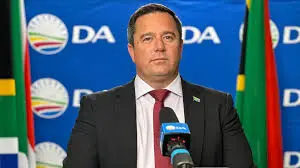
DA federal chairperson and Deputy Finance Minister Ashor Sarupen has defended Burke, arguing that there has been no finding of wrongdoing that would justify treating him as guilty.
That position is legally understandable.
However, politically, it opens another question: Does the DA’s good-governance standard begin only after a court or regulator has made a final finding?
That question could prove difficult for a party that has frequently demanded accountability before investigations reach their final stages.
Opposition parties see an opportunity
The controversy has already attracted criticism from opposition parties.
The ANC and EFF have called for Burke to be removed from Parliament’s finance committees while the allegations surrounding Kastelo are investigated.
For political opponents, the controversy provides an opportunity to challenge the DA’s reputation for clean governance.
They can argue that the party should apply the same standards to itself that it demands from other political organisations.
Good governance means more than avoiding corruption
The wider lesson from the controversy is that good governance is not limited to preventing proven corruption.
It also involves managing conflicts of interest, ensuring transparency and protecting public confidence in institutions.
For an MP serving in parliamentary finance structures, those expectations become even more important.
The question is therefore whether Burke’s current political responsibilities can be comfortably separated from the regulatory scrutiny involving a company he founded.
Parliament’s role is also important
The controversy has implications beyond the DA.
Burke serves in Parliament and has responsibilities relating to public finance.
That makes questions about potential conflicts of interest particularly relevant to Parliament’s own ethical framework.
Parliamentary accountability should not depend on party affiliation.
If there are legitimate concerns about a member’s interests, the appropriate mechanisms should be used to establish the facts.
The DA cannot control the outcome
The Reserve Bank investigation will ultimately have to follow its own regulatory process.
Neither the ANC, EFF, DA nor any other political party should determine the outcome.
The facts must be established through the relevant legal and regulatory channels.
The DA can, however, control its own response.
It can demonstrate transparency, explain its standards and show South Africans that its governance principles apply internally as well as when criticising opponents.
The real test is consistency
The Mark Burke saga is ultimately a test of consistency.
If the DA argues that political leaders should be held accountable when credible concerns emerge, South Africans will expect the party to apply that principle to its own leadership.
If it argues that no action should be taken until wrongdoing has been conclusively established, it will need to defend that position consistently across political cases.
Either way, the party’s response will become part of its governance record.
Why this matters ahead of local elections
The timing is also important.
South Africa is heading towards the 2026 local government elections, giving political parties a strong incentive to protect their reputations on governance.
The DA will want to campaign on its record of administration and financial management.
A controversy involving its federal finance leadership therefore creates an uncomfortable distraction.
The party’s opponents are likely to use the issue to challenge its claim that it represents a fundamentally different approach to governance.
What happens next?
The immediate focus will remain on the Reserve Bank’s investigation and any further legal developments involving Kastelo.
At the same time, the DA will face questions about whether Burke should continue occupying senior parliamentary and party positions while the investigation remains unresolved.
Those are political and ethical questions that are separate from determining whether the underlying allegations are ultimately proven.
The bottom line
The Mark Burke saga has created an uncomfortable test for the DA’s reputation as a champion of good governance.
The Reserve Bank investigation into Kastelo involves allegations concerning approximately R4 billion in offshore transfers, while Burke maintains that the company has not been found guilty of wrongdoing and says he is no longer its chairperson.
The crucial issue for the DA is therefore not simply whether Burke is eventually cleared or found responsible.
It is whether the party can demonstrate that its principles of accountability, transparency and good governance apply equally to its own leaders.
That is the standard against which the DA’s response to the Burke controversy will ultimately be judged.