
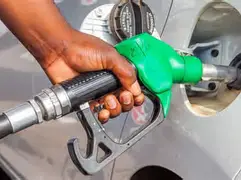
SA Fuel Price Hike
SA fuel price hike expected in September
JOHANNESBURG – South African motorists are facing the prospect of another SA fuel price hike in September 2026, with the latest Central Energy Fund (CEF) data pointing to increases across petrol and diesel.
The latest figures show that international petroleum product prices are putting significant upward pressure on the country’s fuel price.
While the rand has provided some relief, it has not been enough to offset the increase in international fuel costs.
Petrol and diesel prices could rise
The latest CEF data published on 17 August indicates an under-recovery across the major fuel grades.
Current estimates point to increases of approximately:
| Fuel | Current estimated increase |
|---|---|
| Petrol 93 | 68 cents/litre |
| Petrol 95 | 79 cents/litre |
| Diesel 0.05% | R2.73/litre |
| Diesel 0.005% | R2.90/litre |
These are not final September prices. They are estimates based on the fuel price data available during August and can change before the official adjustment is announced.
Diesel faces the biggest increase
The biggest concern for consumers is diesel.
Current CEF figures indicate that diesel could increase by roughly R2.73 to R2.90 per litre if the current market conditions persist.
That would have consequences beyond motorists who drive diesel-powered vehicles.
Diesel is widely used by the transport, logistics, agricultural, mining and construction sectors.
Higher diesel costs can therefore increase the cost of transporting goods and operating heavy machinery.
Petrol price pressure is also building
Petrol motorists are not immune from the September increase.
The latest estimates indicate an increase of around 68 cents per litre for 93 octane and 79 cents per litre for 95 octane.
However, these numbers are still subject to change.
The final adjustment will depend on international petroleum prices and the rand-dollar exchange rate during the remainder of August.
What is causing the fuel price increase?
South Africa’s monthly fuel price is heavily influenced by international petroleum prices and the rand’s performance against the US dollar.
When international fuel prices rise, South Africa’s import costs increase.
A weaker rand can make the situation worse because petroleum products are priced internationally in US dollars.
The latest data shows that international fuel prices have been the main source of the current under-recovery.
What is an under-recovery?
An under-recovery means that the regulated fuel price is currently below what the underlying market conditions indicate it should be.
In simple terms, fuel companies are paying more for the product than the amount reflected in the current regulated pump price.
If the under-recovery remains in place when the monthly calculation is finalised, it creates upward pressure on the following month’s fuel price.
That is why the latest CEF figures are being closely watched by motorists and businesses.
A 50-litre tank could cost more
Even a relatively modest petrol increase can add to household costs.
At an estimated increase of 79 cents per litre, filling a 50-litre tank with 95 petrol would cost approximately R39.50 more than under the current price.
For diesel, a potential increase of R2.90 per litre would add approximately R145 to a 50-litre tank.
These calculations are based on the projected increase and do not represent the final September pump price.
Transport costs could rise
The biggest economic concern is the impact of higher diesel prices on transportation.
Trucks, buses and other commercial vehicles consume large quantities of diesel.
An increase approaching R3 per litre could therefore significantly increase operating costs for logistics companies.
Those higher costs can eventually be passed on through the prices of goods and services.
Mining and agriculture could feel the pressure
South Africa’s mining and agricultural sectors are also heavily dependent on diesel.
Mining companies use diesel for heavy machinery, haulage, generators and other equipment.
Farmers use diesel for tractors, harvesters, irrigation equipment and transportation.
Another significant diesel increase could therefore add pressure to production costs across several important sectors of the economy.
Fuel prices already rose sharply in 2026
The expected September increase comes after a volatile year for South African fuel prices.
Official August adjustments saw petrol prices decrease by 52 cents per litre, while diesel increased by more than R1.38 per litre.
The August adjustment also included a slate levy of 61.38 cents per litre for petrol and diesel.
That levy reflected the accumulated negative balance in the industry’s slate account.
Government has already changed the slate levy system
The government recently proposed changes to how the slate levy mechanism operates.
The proposed changes would allow certain fuel importers and wholesalers to retain part of the levy under specific circumstances where they have significant verified under-recoveries.
The proposal does not itself change the slate levy paid by motorists or directly alter pump prices.
The development comes as the fuel industry continues to deal with volatility in international petroleum markets.
When will September fuel prices be confirmed?
The figures currently circulating are forecasts rather than final prices.
South Africa adjusts fuel prices monthly after considering the average movement in international petroleum prices and the rand-dollar exchange rate.
The CEF data will continue changing as market conditions move.
The final September adjustment is therefore likely to differ from today’s estimate.
Motorists should prepare for higher costs
Although the final increase is not yet known, the current direction is concerning.
Motorists should therefore avoid treating the current estimates as guaranteed prices but should prepare for the possibility of higher fuel costs in September.
Businesses that rely heavily on fuel should also factor potential increases into their September budgets.
This is particularly important for logistics, construction, agriculture and mining companies.
The bottom line
The latest data points to another SA fuel price hike in September 2026, with petrol and diesel both currently showing under-recoveries.
The latest estimates indicate possible increases of around 68 cents for 93 petrol, 79 cents for 95 petrol, R2.73 for 0.05% diesel and R2.90 for 0.005% diesel.
However, these figures are projections, not the final September 2026 prices.
The remaining weeks of August will be crucial. Changes in international petroleum prices and the rand could either increase or reduce the current projected hikes.
For now, South African motorists and fuel-intensive businesses should prepare for more pain at the pumps in September.


Pingback: September Petrol Price Increase Confirmed - Ubuntu99Media