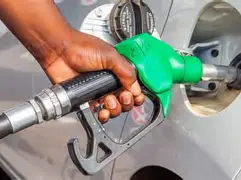
September Petrol Price Increase Confirmed
September Petrol Price Increase
South African motorists will pay substantially more for petrol and diesel from Wednesday, 2 September 2026, after the government confirmed steep increases across all regulated fuel products. SA Fuel Price Hike
The official September petrol price increase is R1.34 per litre for both 93 and 95 unleaded petrol. Diesel users face an even larger increase of between R2.94 and R3.15 per litre at wholesale level.
Official September fuel adjustments
The Department of Mineral and Petroleum Resources announced the following changes:
| Fuel product | September change |
|---|---|
| Petrol 93 | Increase of R1.34/litre |
| Petrol 95 | Increase of R1.34/litre |
| Diesel 0.05% sulphur | Increase of R2.94/litre |
| Diesel 0.005% sulphur | Increase of R3.15/litre |
| Illuminating paraffin, wholesale | Increase of R2.13/litre |
| Illuminating paraffin, maximum retail | Increase of R2.84/litre |
| LPGAS | Increase of R0.69/kg |
| LPGAS in applicable Western Cape market | Increase of R0.79/kg |
The new prices take effect at 00:01 on Wednesday, 2 September.
Official inland petrol prices
Motorists in Gauteng and other inland regions will pay the following regulated petrol prices:
| Fuel | August price | September price |
|---|---|---|
| Petrol 93 | R25.42/litre | R26.76/litre |
| Petrol 95 | R25.58/litre | R26.92/litre |
| Diesel 0.05% wholesale | R26.17/litre | R29.11/litre |
| Diesel 0.005% wholesale | R26.90/litre | R30.05/litre |
| Illuminating paraffin | R18.76/litre | R20.89/litre |
| LPGAS | R36.70/kg | R37.39/kg |
The diesel figures are wholesale prices. Unlike petrol, diesel’s retail pump price is not regulated and may vary between filling stations.
Official coastal fuel prices
Coastal motorists will continue paying less than inland users because of lower transport and distribution costs.
| Fuel | August price | September price |
|---|---|---|
| Petrol 93 | R24.63/litre | R25.97/litre |
| Petrol 95 | R24.71/litre | R26.05/litre |
| Diesel 0.05% wholesale | R25.30/litre | R28.24/litre |
| Diesel 0.005% wholesale | R25.64/litre | R28.79/litre |
| Illuminating paraffin | R17.70/litre | R19.83/litre |
| LPGAS | R33.44/kg | R34.13/kg |
The maximum retail price of imported LPGAS supplied through Saldanha Bay will rise from R35.81 to R36.60 per kilogram.
How much more will motorists pay?
The R1.34 petrol increase will add the following amounts to a full tank:
- A 40-litre tank will cost R53.60 more.
- A 45-litre tank will cost R60.30 more.
- A 50-litre tank will cost R67 more.
- A 60-litre tank will cost R80.40 more.
- An 80-litre tank will cost R107.20 more.
A motorist filling a 50-litre tank with inland 95 petrol will pay approximately R1,346, compared with R1,279 in August.
Diesel businesses face a much heavier increase. At wholesale level, 100 litres of 0.05% diesel will cost approximately R294 more, while the same volume of 0.005% diesel will cost about R315 more.
Why fuel prices increased
The government attributed the sharp increases mainly to higher international oil and petroleum-product prices.
Average Brent crude oil prices increased from $82.37 to $87.88 per barrel during the fuel-price review period.
The Department of Mineral and Petroleum Resources linked the increase to continued tension between the United States and Iran, uncertainty surrounding oil movements through the Strait of Hormuz and higher international shipping costs.
Supply disruptions associated with the Russia–Ukraine conflict and lower global fuel inventories also increased international prices for petrol, diesel and illuminating paraffin.
These international movements contributed:
- 127.79 cents per litre to the petrol Basic Fuel Price;
- 321.29 cents per litre to diesel; and
- 239.06 cents per litre to illuminating paraffin.
Stronger rand provides limited relief
The rand strengthened from an average of R16.46/$ to R16.21/$ during the review period.
This reduced the Basic Fuel Price by approximately 21.07 cents per litre for petrol, 29.06 cents for diesel and 26.69 cents for illuminating paraffin.
However, the stronger exchange rate was not enough to offset the effect of rising international oil and fuel-product prices.
Slate levy rises sharply
The cumulative slate balance for petrol and diesel stood at a negative R9.519 billion at the end of July 2026.
As a result, the slate levy will increase from 61.38 cents to 83.28 cents per litre—a rise of 21.90 cents.
The slate account is used to compensate fuel companies when actual daily fuel-price movements differ from the monthly regulated price.
The petrol-price structure also includes a 4.9-cent-per-litre margin adjustment to accommodate wage increases for forecourt employees under the Motor Industry Bargaining Council agreement.
Consumers face wider price pressure
The September petrol price increase will affect more than private motorists.
The particularly steep diesel increase is likely to raise operating costs for trucking companies, mines, farms, construction businesses and companies using diesel generators or heavy machinery.
Higher transport costs can eventually feed into food, retail and construction prices because most goods in South Africa are transported by road.
Households using illuminating paraffin will also face additional pressure after the wholesale price rises by R2.13 per litre.