
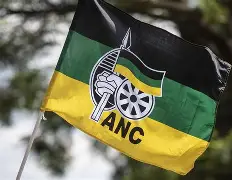
ANC Blames DA for Joburg
JOHANNESBURG – The African National Congress (ANC) has blamed the Democratic Alliance (DA) for contributing to the deterioration of the City of Johannesburg, while asking residents to give the governing party another opportunity to turn the metro around.
The ANC’s latest pitch comes as political parties intensify their campaigns ahead of the 2026 local government elections, with Johannesburg emerging as one of the country’s biggest electoral battlegrounds.
ANC local government intervention task team chairperson Stella Ndabeni-Abrahams told journalists in Johannesburg that the city’s deterioration began after the DA took over the metro in 2016.
ANC points to 2016
Ndabeni-Abrahams argued that Johannesburg’s decline accelerated after the DA’s first period in charge of the city.
She specifically pointed to the DA’s cooperation with the EFF during its administration, arguing that the political arrangements that followed the ANC’s loss of outright control contributed to the city’s problems.
The ANC’s argument is likely to become a central feature of its campaign as it seeks to persuade voters that it can restore stability and improve service delivery.
ANC asks voters for another chance
The party says it has the experience and capacity needed to fix Johannesburg.
That message comes at a difficult time for the ANC, which has lost substantial electoral support in the metro over the past decade.
The party is effectively asking voters to look beyond the city’s current difficulties and give it another opportunity to govern.
But the ANC will have to convince residents that it can deliver a fundamentally different administration from previous periods of ANC-led governance.
DA rejects the ANC’s argument
The DA has consistently blamed the ANC-led coalition government for Johannesburg’s current financial and service-delivery crisis.
In June, DA spokesperson Patrick Atkinson argued that the city was suffering from poor financial management, an infrastructure backlog, water losses, blackouts and other service-delivery failures.
The DA has also argued that Johannesburg’s problems include an unfunded budget and a R10.3 billion wage agreement, alongside concerns about infrastructure spending and irregular expenditure.
The competing narratives mean the city’s condition is likely to become one of the defining issues of the election campaign.
Johannesburg’s financial crisis
The political fight is taking place against the backdrop of serious financial pressure facing the metro.
National Treasury has previously raised concerns about Johannesburg’s financial position, while the city has faced pressure over its ability to meet its obligations.
The DA has used the situation to argue that the current ANC-led coalition administration has failed to manage the city’s finances effectively.
The ANC, however, is seeking to shift part of the blame to the period when the DA controlled the city and to the unstable coalition politics that followed.
A history of coalition instability
Johannesburg has experienced considerable political instability since the ANC lost its outright majority.
The city has been governed through changing coalitions and political arrangements involving several parties.
That instability has made it difficult for administrations to maintain consistent political direction.
It has also created an environment where parties frequently blame one another for failures in service delivery and financial management.
For residents, however, the political explanations matter less than whether basic services actually work.
The service-delivery test
Johannesburg’s next administration will inherit significant challenges.
Water supply, electricity infrastructure, roads, waste management, municipal finances and infrastructure maintenance are among the issues likely to dominate voters’ concerns.
The DA has pointed to a reported R220 billion infrastructure backlog, while arguing that infrastructure spending has fallen below required levels.
These problems cannot be fixed through political messaging alone.
The next government will need a credible financial and infrastructure recovery programme.
The DA wants to take control
The DA is campaigning aggressively to take control of Johannesburg after the November elections.
The party has argued that it has the management experience needed to reverse the city’s decline and has positioned itself as the alternative to ANC-led governance.
DA deputy federal chairperson and campaign manager Ashor Sarupen previously said the party believed none of the ANC’s potential mayoral candidates could rescue Johannesburg.
The DA has also promoted Helen Zille as its preferred mayoral candidate for the city.
ANC faces a difficult electoral battle
The ANC’s challenge is reflected in recent polling.
A Social Research Foundation poll reported by News24 put the ANC on 18% in Johannesburg, compared with 42% for the DA.
If those numbers translate into actual votes, the ANC could face another major setback in the country’s economic capital.
The party therefore needs to convince voters not only that it can govern Johannesburg, but also that it deserves another opportunity after years of declining support.
Who takes responsibility?
The argument over who is responsible for Johannesburg’s decline is likely to become increasingly heated.
The ANC points to the DA’s 2016 takeover and subsequent coalition arrangements.
The DA points to the current ANC-led coalition administration and its management of the city’s finances and infrastructure.
Both sides will attempt to use the city’s condition to make their electoral case.
But ultimately, voters will decide whether they accept either explanation.
What residents want
For many Johannesburg residents, the central issue is straightforward: they want a city that works.
They want reliable electricity and water, functioning roads, efficient waste collection, safer communities and a municipality that responds when problems are reported.
Political parties can debate who caused the city’s problems, but voters will ultimately judge them on whether they have a credible plan to solve them.
The 2026 election battle
Johannesburg is expected to be one of the most closely contested metros in the 2026 local government elections.
The ANC is attempting to rebuild its support, while the DA is campaigning to take control.
Other parties, including ActionSA and the EFF, will also seek to benefit from voter dissatisfaction with the established political players.
That could make coalition negotiations decisive once the votes are counted.
The bottom line
The ANC blames DA for Joburg’s decline, arguing that the city’s deterioration accelerated after the DA took control in 2016 and entered into political arrangements with the EFF.
The DA strongly disputes that narrative and has instead blamed the current ANC-led coalition for Johannesburg’s financial and service-delivery problems.
With the local government elections approaching, the battle is no longer simply about who is responsible for Johannesburg’s problems.
It is about who voters believe can fix them.
For the ANC, asking Johannesburg residents for another chance will require more than promises. The party will have to convince a sceptical electorate that it has both the political stability and management capacity to restore South Africa’s biggest metro.


Pingback: Reserve Bank Probes Burke Firm Over R4 Billion - Ubuntu99Media