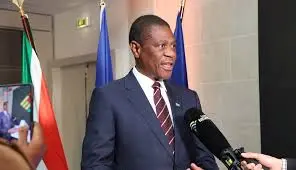
Deputy President Mashatile’s France Visit: Strategic Investment or Diplomatic Misstep?
Deputy President Paul Mashatile’s recent official working visit to France from May 19 to 24, 2025, has sparked a multifaceted debate within South Africa’s political and public spheres. While the visit aimed to strengthen bilateral ties and attract foreign investment, it also raised questions about South Africa’s foreign policy direction and its alignment with broader African interests.
Economic Diplomacy and Strategic Engagement
The primary objective of Mashatile’s visit was to participate in the South Africa-France Investment Conference, themed “SA-France: A Partnership for Mutual Prosperity.” The conference focused on attracting foreign direct investment, public-private partnerships, and financial resources in key sectors such as energy, infrastructure, transport, finance, tourism, agriculture, mining, and information and communication technology.
During his visit, Mashatile met with French President Emmanuel Macron at the Élysée Palace, where discussions centered on boosting bilateral trade, investment opportunities, and multilateral cooperation . Mashatile emphasized the significance of enhancing trade and promoting investment between the two nations, noting that over 400 French companies operate in South Africa, employing more than 65,000 South Africans.
Controversy and Criticism
Despite the economic rationale, the timing of the visit has been criticized by some political analysts and opposition figures. Critics argue that strengthening ties with France may be at odds with the current geopolitical climate in Africa, particularly in the Sahel region, where countries like Mali, Burkina Faso, and Niger have expelled French forces and distanced themselves from Paris, citing exploitation of mineral resources and neo-colonial tendencies.
Vuyo Zungula, leader of the African Transformation Movement, questioned whether focusing on France aligns with Africa’s broader strategic interests, suggesting that the ANC should be amplifying African voices instead of deepening ties with a country accused of exploiting Africa’s resources.
However, others, like Bantu Holomisa of the United Democratic Movement, defended the visit, emphasising South Africa’s diplomatic rights and the importance of seeking investors to boost the economy.
Balancing National Interests and Continental Solidarity
Mashatile’s visit underscores the delicate balance South Africa must maintain between pursuing national economic interests and demonstrating solidarity with other African nations. While attracting foreign investment is crucial for economic growth and job creation, it’s equally important to consider the broader implications of foreign policy decisions on continental unity and perceptions of neo-colonialism.
As South Africa continues to navigate its role on the international stage, it must weigh the benefits of bilateral engagements against the potential risks of alienating fellow African nations. Developing a coherent, independent regional agenda that guides international relations will be essential in ensuring that South Africa’s foreign policy aligns with both national and continental aspirations.
In conclusion, Deputy President Mashatile’s visit to France highlights the complexities of modern diplomacy, where economic imperatives intersect with historical legacies and geopolitical dynamics. As South Africa seeks to position itself as a leader in Africa, it must carefully calibrate its foreign engagements to reflect both its national interests and its commitment to African unity.