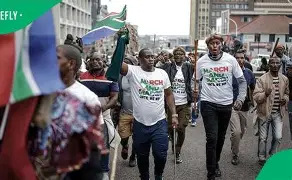
March and March SADC Summit Protest Over Immigration
March and March targets SADC Summit over undocumented immigration
DURBAN – The March and March SADC Summit protest is set to put South Africa’s immigration debate directly in front of regional leaders as the anti-illegal immigration movement targets the Southern African Development Community (SADC) Summit in Durban. Youth Jobs at SADC
The movement plans to demonstrate outside the summit under the theme “It’s time to fetch your people”, calling on SADC member states to take responsibility for their citizens living in South Africa without valid documentation.
The planned protest comes as South Africa hosts regional leaders for a summit focused on economic development, regional integration, industrialisation and cooperation.
March and March targets SADC Summit
March and March has announced plans to picket outside the SADC Summit, using the gathering of regional leaders as an opportunity to raise concerns about undocumented immigration.
The organisation wants SADC leaders to address the presence of undocumented foreign nationals in South Africa and has called for their repatriation.
The movement’s campaign has become part of a wider and increasingly heated national debate about immigration, employment, public services, border management and South Africa’s relationship with neighbouring countries.
Why March and March is protesting
March and March argues that undocumented immigration is placing additional pressure on South Africa’s economy and public services.
The movement has also linked illegal immigration to concerns around employment, crime, housing and access to government services.
However, the causes of South Africa’s unemployment, poverty and service-delivery problems are complex, and immigration remains a politically sensitive issue.
The debate has also raised concerns about the risk of xenophobia and attacks against foreign nationals.
SADC Summit takes place in Durban
The SADC Summit brings together leaders from countries across Southern Africa to discuss issues affecting the region.
South Africa’s leadership of the regional bloc comes at a crucial time as member states seek greater economic integration, infrastructure development and industrialisation.
The summit is therefore intended to strengthen cooperation between SADC countries.
The March and March SADC Summit protest introduces a highly sensitive domestic issue into that regional environment.
Migration creates diplomatic pressure
Migration is particularly sensitive within SADC because many foreign nationals living and working in South Africa come from neighbouring countries.
Countries such as Zimbabwe, Mozambique, Lesotho, Eswatini and Malawi have longstanding economic and social links with South Africa.
Large numbers of people move across the region for employment, education, business and family reasons.
The presence of undocumented migrants therefore affects not only South African domestic politics but also diplomatic relations between SADC member states.
Ramaphosa faces a difficult balancing act
President Cyril Ramaphosa and his government face the challenge of enforcing South Africa’s immigration laws while maintaining good relations with neighbouring countries.
The government has repeatedly stressed the importance of legal immigration and stronger border management.
At the same time, South Africa remains committed to regional integration and cooperation through SADC.
The two objectives can sometimes create political tension.
SADC Summit security tightened
Security around the summit has been significantly increased because of the presence of regional heads of state and other senior officials.
South African security authorities have warned that demonstrations and other activities around the summit venue must comply with the law.
The heightened security is aimed at protecting delegates and ensuring that the summit proceeds without disruption.
The planned March and March protest will therefore be closely monitored by authorities.
Immigration was not the main summit focus
The SADC Summit’s broader agenda is centred on regional development and integration rather than immigration.
Key areas include economic growth, infrastructure, industrialisation, energy security and regional value chains.
However, the March and March SADC Summit protest could force migration further into the political conversation.
Even if immigration is not a central formal agenda item, regional leaders are unlikely to be completely insulated from the issue while they are in South Africa.
The economic debate over undocumented migrants
Immigration has become increasingly connected to South Africa’s economic challenges.
Supporters of stricter immigration controls argue that undocumented migrants compete for jobs and place pressure on limited public resources.
Opponents of anti-immigration campaigns argue that migrants are frequently blamed for problems caused by deeper structural issues, including unemployment, inequality, weak economic growth and inadequate government planning.
This disagreement has made immigration one of South Africa’s most divisive political issues.
Risk of xenophobia
One of the biggest concerns surrounding anti-illegal immigration protests is the potential for legitimate concerns about immigration enforcement to spill over into hostility towards foreigners generally.
There is an important distinction between enforcing immigration law and targeting people because of their nationality.
South Africa has experienced deadly xenophobic violence in the past, making responsible political messaging particularly important.
Authorities will therefore have to ensure that the protest remains peaceful and lawful.
South Africa and its SADC neighbours
South Africa’s economy is closely connected to neighbouring countries.
Millions of people across Southern Africa depend on cross-border trade, employment and remittances.
South African businesses also benefit from regional markets, while neighbouring economies depend heavily on South African investment and trade.
This economic interdependence means that migration policies can have consequences beyond South Africa’s borders.
What March and March wants
March and March has positioned its campaign around the removal of undocumented foreign nationals and stronger enforcement of immigration laws.
The organisation wants SADC governments to take responsibility for their citizens who are living in South Africa illegally.
Its decision to target the summit is significant because it takes the message beyond South Africa’s domestic political arena.
The movement is effectively asking regional leaders to become part of the conversation.
A test for South African leadership
The March and March SADC Summit protest comes at a sensitive moment for South Africa’s regional leadership.
As host and chair of the regional bloc, South Africa is expected to promote cooperation and regional integration.
At the same time, the government faces growing domestic pressure to strengthen immigration enforcement.
How authorities manage the protest could therefore have implications for both domestic politics and South Africa’s diplomatic standing.
What happens next?
The planned demonstration will be closely watched as SADC leaders gather in Durban.
Authorities will focus on maintaining security around the summit while ensuring that protesters’ lawful rights are respected.
The bigger question is whether the protest will lead to meaningful discussions about migration, border management and undocumented immigration across the SADC region.
For South Africa, finding a sustainable solution will require more than enforcement alone.
It will also require cooperation with neighbouring countries, effective border management and policies that address the economic conditions driving migration.
The bottom line
The March and March SADC Summit protest puts undocumented immigration at the centre of attention as Southern African leaders gather in Durban.
The movement wants SADC countries to take greater responsibility for their citizens living in South Africa without legal documentation and is using the summit to amplify its message.
The protest comes amid a broader national debate about immigration, unemployment, crime, public services and border control.
For the South African government, the challenge is to enforce immigration laws while preventing tensions from escalating into xenophobia and maintaining strong relationships with its SADC neighbours.
The SADC Summit could therefore become more than a discussion about regional economic integration. With March and March taking its protest to the event, migration and South Africa’s immigration crisis are likely to remain firmly in the spotlight.