Shadrack Sibiya Accuses Madlanga Task Team of Abuse
Shadrack Sibiya Accuses Madlanga Commission Task Team of Abuse of Power in Bail Appeal
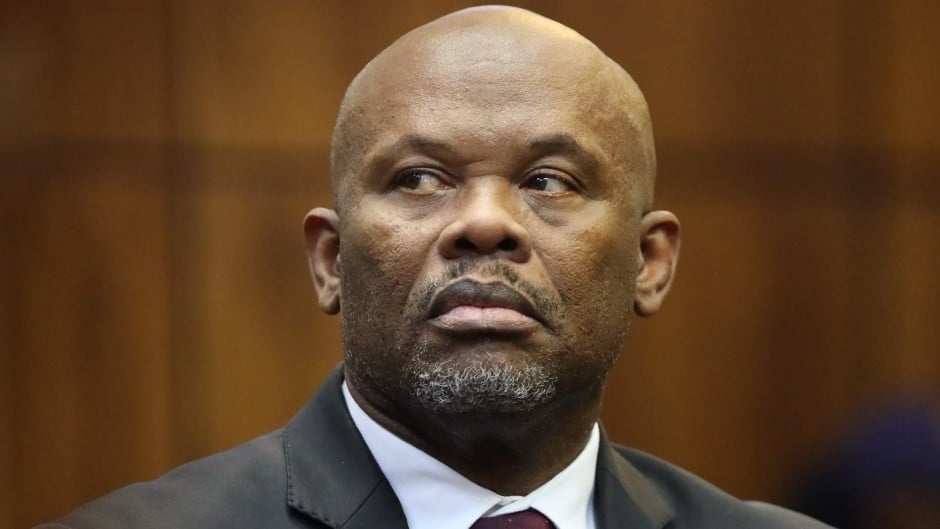
Former deputy national police commissioner Shadrack Sibiya has accused investigators attached to the Madlanga Commission’s referral task team of abusing their authority, conducting unlawful searches and manipulating criminal proceedings as he seeks to overturn a court decision denying him bail.Shadrack Sibiya denied bail
Sibiya’s legal representatives have approached the Johannesburg High Court, arguing that the investigation leading to his arrest was affected by serious procedural irregularities and that the magistrate who refused bail failed to properly consider the evidence presented by the defence.
According to a notice of appeal reported by TimesLIVE on Friday, Sibiya alleges that investigators exceeded their lawful powers and pursued an operation that was not connected to the Madlanga Commission’s investigative mandate.
The allegations form part of his legal challenge and have not been established as findings of misconduct against the investigators.
Sibiya Challenges Randburg Magistrate’s Court Decision
Sibiya’s notice of appeal was filed at the Johannesburg High Court on 5 November 2026.
It challenges the Randburg Magistrate’s Court’s decision of 20 October, when Magistrate Hleziphi Mkhasibe refused to release him on bail.
The magistrate found that Sibiya had failed to demonstrate the exceptional circumstances required for bail under Schedule 6 of the Criminal Procedure Act.
The court also considered concerns about possible witness interference, interference with evidence and the administration of justice.
Sibiya’s lawyers argue that the magistrate incorrectly assessed the evidence and failed to give sufficient weight to their objections about the investigation.
They want the High Court to reconsider the refusal of bail.
Former Police General Faces Serious Criminal Charges
Sibiya was arrested on 21 September 2026.
He faces charges relating to rape, human trafficking and the alleged sexual grooming of a minor.
The rape allegation concerns an 18-year-old woman and an alleged incident at The Grand nightclub in Sandton during May 2026.
Prosecutors allege that the woman was sexually assaulted after consuming alcohol and losing consciousness.
Sibiya denies the allegation and maintains that the sexual encounter was consensual.
He also faces allegations relating to electronic communications with a 16-year-old girl between July and August 2026.
The human trafficking allegations involve three individuals.
Sibiya has denied wrongdoing in relation to the charges.
The criminal allegations remain subject to court proceedings, and he is presumed innocent unless proven guilty.
Defence Accuses Investigators of Acting Outside Their Mandate
A central argument in Sibiya’s appeal concerns the authority of the investigative team.
The task team was established to investigate criminal matters arising from the Madlanga Commission’s work.
Sibiya’s lawyers argue that the sexual offences investigation did not fall within the scope of the commission’s mandate.
They contend that the investigators improperly involved themselves in a matter unrelated to the commission’s original purpose.
The defence also alleges that the operation against Sibiya was driven by prosecutorial objectives rather than a legitimate referral arising from the commission.
These claims have not been independently established.
The High Court will have to consider the arguments presented in the appeal and determine whether any alleged procedural defects are relevant to the bail decision.
Allegations of Unlawful Arrest and Search Warrants
Sibiya’s legal team has challenged the circumstances surrounding his arrest.
According to the appeal, investigators allegedly arrested him at premises different from the address specified in the arrest warrant.
The defence argues that this formed part of an unlawful operation.
It also questions the validity of an additional search-and-seizure warrant.
Sibiya’s lawyers allege that investigators obtained authority to search for evidence relating to offences that were not connected to the charges against him.
They further claim that investigators sought to seize items using substantially the same factual basis while a separate High Court application concerning the original search remained pending.
The defence describes these actions as evidence of investigative overreach.
However, the existence of these allegations does not establish that the warrants were invalid or that investigators acted unlawfully.
Those questions require judicial determination.
Defence Questions Evidence Used to Oppose Bail
Sibiya’s appeal also challenges the handling of evidence presented during the bail proceedings.
His lawyers dispute allegations that he interfered with exhibits and argue that the magistrate accepted the prosecution’s version without adequately examining the defence’s objections.
One disputed item is identified as Exhibit L.
The defence alleges that an affidavit presented as having been made on 18 September 2026 was not actually in the state’s possession on that date.
Sibiya’s lawyers claim this raises questions about the document’s authenticity and reliability.
The allegation is serious, but it remains a defence contention.
No court finding establishing fabrication of the affidavit has been identified in the available reporting.
Sibiya Disputes Alleged Threats Against Complainant’s Father
Another issue raised in the appeal concerns allegations that Sibiya threatened the father of one of the complainants.
The prosecution relied on concerns about possible witness intimidation when opposing bail.
Sibiya’s lawyers reject the allegation and argue that the available evidence does not support the state’s account.
They refer to testimony from Sibiya’s son, Ofentse Mgwenya, police Sergeant Matome Rasekgokgoba and Sizakele Dlamini.
The defence contends that their evidence supported a different account of the confrontation.
It also argues that the alleged threat was not reflected in the relevant audio recording or transcript.
The magistrate’s assessment of these competing accounts forms part of the challenge before the High Court.
Questions Raised About IPID’s Role
Sibiya’s lawyers have also questioned why the Independent Police Investigative Directorate, known as IPID, was not involved in the investigation.
IPID is responsible for investigating specified criminal allegations involving members of the South African Police Service and municipal police services.
The defence argues that rape allegations involving police officers fall within IPID’s statutory responsibilities.
It therefore questions whether the referral task team was legally entitled to investigate the allegations without IPID’s involvement.
Sibiya’s lawyers also challenge the powers allegedly exercised by an investigating officer identified as Sergeant Ndlovu.
The appeal argues that the magistrate should have examined whether the investigative arrangements complied with the IPID Act.
The appropriate interpretation of the legislation and its application to the circumstances remain legal questions for the courts.
Detention Conditions Also Challenged
The appeal raises concerns about Sibiya’s detention following his arrest.
His lawyers allege that he was placed in a high-security section of the Kgosi Mampuru Correctional Centre’s C-Max facility.
The defence claims that the detention conditions were intended to place psychological pressure on him.
These allegations have not been independently verified.
Correctional detention arrangements are governed by applicable legislation and administrative procedures, and any claim of improper treatment would require supporting evidence.
Defence Disputes Schedule 6 Bail Classification
A major legal issue concerns the classification of the charges for bail purposes.
The Randburg Magistrate’s Court treated the application as falling under Schedule 6 of the Criminal Procedure Act.
This placed a higher burden on Sibiya to establish exceptional circumstances justifying his release.
His lawyers argue that the magistrate incorrectly applied that classification.
They particularly dispute whether the evidence presented in relation to the human trafficking charge justified the Schedule 6 approach.
The defence maintains that the court failed to properly consider the legal requirements associated with the offence.
The High Court’s assessment of this argument could be important to the outcome of the bail appeal.
However, a successful challenge to a bail classification would not automatically resolve the criminal charges.
Defence Accuses Magistrate of Procedural Errors
Sibiya’s appeal also criticises the conduct of the bail hearing.
His lawyers allege that the magistrate intervened in the proceedings in a manner that prejudiced the defence.
They further argue that the court admitted or relied on evidence that should not have been considered.
The appeal refers to the Regulation of Interception of Communications and Provision of Communication-related Information Act, commonly known as RICA.
The defence contends that the magistrate did not adequately consider the legal requirements governing certain communications evidence.
These arguments will form part of the matters requiring judicial consideration.
They should not be interpreted as established findings against the magistrate.
Why the State Opposed Bail
The prosecution opposed Sibiya’s release because of the seriousness of the charges and concerns about the administration of justice.
The state argued that releasing him could create risks involving witness intimidation, interference with evidence or failure to attend future proceedings.
The magistrate accepted that the circumstances did not justify bail under the applicable legal test.
Sibiya’s lawyers dispute that conclusion.
They argue that the court failed to properly consider his personal circumstances, the defence evidence and the alleged weaknesses in the investigation.
The appeal therefore presents competing positions on whether continued detention is justified while the criminal case proceeds.
Madlanga Commission Background
The Madlanga Commission was established to investigate allegations of criminality, corruption and political interference within South Africa’s criminal justice system.
The inquiry followed allegations made by KwaZulu-Natal police commissioner Lieutenant-General Nhlanhla Mkhwanazi in July 2025.
The allegations raised concerns about relationships between police officials, political figures and individuals linked to organised crime.
The commission’s proceedings have placed several senior law enforcement officials under scrutiny.
A specialised task team was subsequently established to investigate criminal matters associated with the inquiry.
Sibiya has previously challenged aspects of the commission-related investigations and has questioned the circumstances surrounding his arrest.
His current bail appeal raises a separate legal question about whether the investigative team’s actions were lawful and whether the magistrate properly considered the evidence.
What Happens Next?
The Johannesburg High Court must consider Sibiya’s application to overturn the refusal of bail.
The court may assess whether the magistrate correctly applied the relevant legal test and whether any alleged errors justify interfering with the decision.
The appeal does not itself determine whether Sibiya is guilty or innocent of the charges.
Those matters remain for the criminal proceedings.
The filing of the appeal also does not automatically result in his release.
At the time of the latest reporting, Sibiya remained in custody.
No outcome of the appeal had been confirmed.
Conclusion
Shadrack Sibiya’s bail appeal has introduced further allegations about the conduct of investigators attached to the Madlanga Commission’s referral task team.
The former deputy national police commissioner accuses investigators of exceeding their authority, conducting unlawful searches and relying on disputed evidence.
His lawyers also challenge the magistrate’s treatment of the charges, the assessment of witness-interference risks and the legal basis for his continued detention.
The allegations remain contested and have not been established as judicial findings.
The Johannesburg High Court will determine whether the refusal of bail should stand, while the underlying criminal charges continue through the justice system.