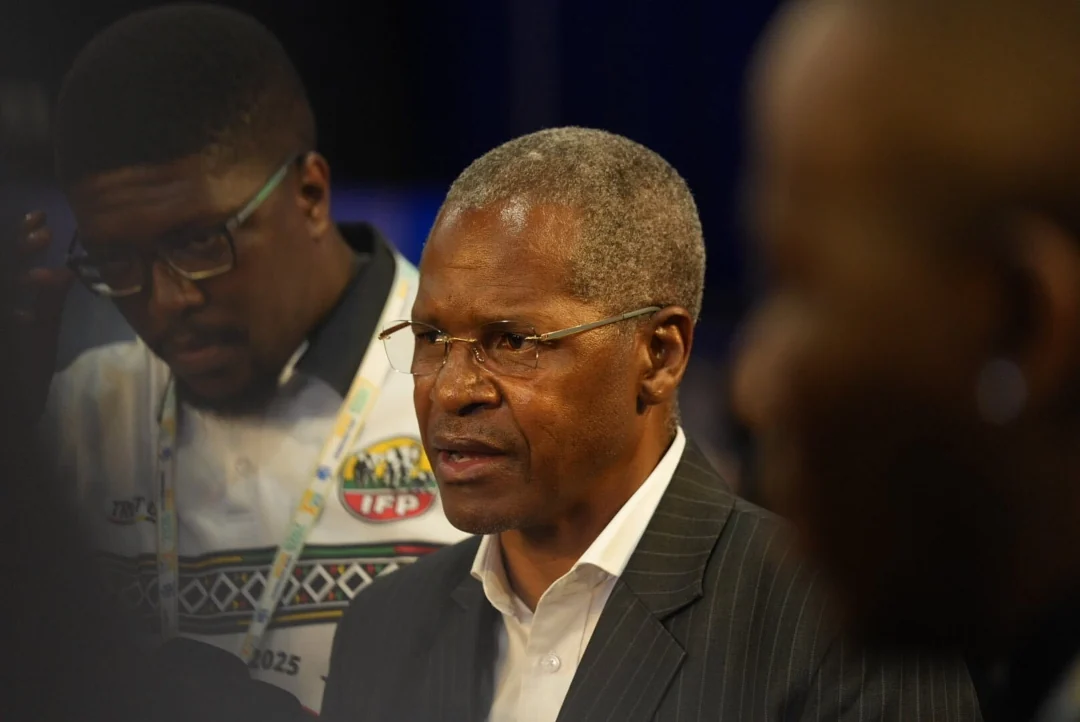
DA Urges CoGTA to Halt Rushed Council Meetings
DA Urges CoGTA Minister to Halt ‘Hurried’ Council Meetings Amid Coalition Talks
The Democratic Alliance (DA) has called for urgent intervention by Cooperative Governance and Traditional Affairs (CoGTA) Minister Velenkosini Hlabisa over the scheduling of inaugural municipal council meetings following South Africa’s 2026 local government elections.
The party claims that some municipal managers are moving too quickly to convene newly elected councils while political parties are still negotiating coalition agreements.
In a statement issued on Monday, 16 November, DA Federal Council chairperson Ashor Sarupen said the party was concerned that the timing of certain meetings could undermine negotiations aimed at establishing stable municipal governments.
The DA has written to Hlabisa requesting his intervention and an examination of meeting notices allegedly issued before the Electoral Commission of South Africa (IEC) officially gazetted the names of elected councillors.
The dispute comes after the 4 November elections left approximately 138 municipalities without a single party holding an outright majority.
DA Raises Concerns About Rushed Council Meetings
According to Sarupen, municipal managers in several hung municipalities have reportedly moved to convene inaugural council meetings before political parties have completed negotiations.
He argued that the timing of these meetings could affect the formation of stable administrations.
The DA is particularly concerned about reports that notices were issued before the IEC published the names of elected councillors in the Government Gazette on 13 November 2026.
The party believes those notices should be examined to determine whether they complied with applicable legal and procedural requirements.
However, the issuing of a notice before publication of the councillor list does not automatically establish that a meeting was unlawfully convened.
The legal validity of any notice would depend on the applicable legislation, the relevant dates and the circumstances in which it was issued.
DA Writes to Minister Velenkosini Hlabisa
The DA has formally requested that Hlabisa engage provincial Members of the Executive Council responsible for local government and municipal managers.
The party wants the minister to help ensure that inaugural meetings are scheduled lawfully, fairly and without political interference.
Sarupen argued that municipal managers should remain impartial public officials rather than become involved in political manoeuvring.
The DA maintains that political parties should be given a reasonable opportunity to conclude coalition negotiations within the statutory timeframe.
However, the party has not called for the legal deadline itself to be suspended indefinitely.
Its central request is that municipalities avoid unnecessarily early meetings and comply with the relevant procedural requirements.
What Does the Law Say About Council Meetings?
Section 29(2) of the Municipal Structures Act provides a 14-day period for convening the first meeting of a newly elected municipal council.
The DA argues that this creates a deadline rather than a requirement to hold the meeting immediately.
In other words, municipal managers have a limited period within which to arrange the inaugural sitting.
However, the legislation does not allow political parties to delay council meetings indefinitely because coalition negotiations remain unresolved.
CoGTA has emphasised that the statutory timetable must be respected.
The department’s coalition guidelines, published on 11 November, also state that negotiations do not suspend or extend the legal requirements for constituting councils.
The practical dispute therefore concerns how municipal managers exercise their scheduling responsibilities within the legally permitted period.
Nearly 65% of Municipalities Face Coalition Negotiations
South Africa’s local government elections produced a large number of councils without outright majorities.
According to CoGTA, approximately 138 metropolitan and local municipalities, representing about 65% of councils, require coalition arrangements, minority governments or other forms of cooperation.
This means political parties must negotiate to establish workable administrations in many municipalities.
The negotiations may involve agreements over mayoral candidates, speakers, committee leadership, budgets and service delivery priorities.
In municipalities where several parties hold significant numbers of seats, securing enough support to elect municipal leaders can be difficult.
These challenges have become particularly important in major metropolitan areas, where political instability can affect substantial populations and municipal budgets.
Gauteng Coalition Talks Remain Unresolved
The DA’s concerns come as coalition negotiations continue in Gauteng’s three major metros: Johannesburg, Tshwane and Ekurhuleni.
The DA emerged as the leading party in all three municipalities but failed to secure outright majorities.
The African National Congress (ANC), ActionSA and other political parties are exploring possible governing arrangements.
ActionSA leader Herman Mashaba has been involved in discussions with both the ANC and DA.
The outcome could determine which parties control the mayoral positions in Gauteng’s largest municipalities.
However, no final arrangement can be treated as confirmed until the relevant parties conclude agreements and councils elect their leadership.
The DA’s request for more time must therefore be understood in the context of ongoing negotiations, although its public statement addresses municipalities across South Africa rather than Gauteng alone.
Eastern Cape Municipalities Prepare for First Sittings
The issue has also emerged in the Eastern Cape, where inaugural meetings are scheduled in municipalities including Nelson Mandela Bay and Buffalo City.
Coalition discussions in these municipalities remain underway.
Reports indicate that several councils are expected to meet during the week beginning 16 November.
The DA believes that convening meetings before parties have had sufficient time to negotiate could make it more difficult to establish durable governing arrangements.
However, municipal managers also have an obligation to ensure that councils are constituted within the required legal period.
Any change to a scheduled meeting must therefore remain consistent with the law.
KwaZulu-Natal Gives Parties More Time
KwaZulu-Natal has taken steps to provide additional time for coalition negotiations.
CoGTA authorities in the province have instructed certain hung municipalities to move inaugural meetings to the week of 23 November.
The decision affects municipalities where parties are still working to establish governing arrangements.
The revised timetable is intended to allow further negotiations while keeping meetings within the applicable statutory period.
The development illustrates how meeting schedules can be adjusted without necessarily suspending legal obligations.
However, the approach adopted in KwaZulu-Natal does not automatically apply to every municipality in other provinces.
Political Analyst Says Parties Have Enough Time
University of KwaZulu-Natal political analyst Zakhele Ndlovu believes political parties have had sufficient time to prepare for coalition negotiations.
Speaking to Daily News, Ndlovu argued that parties have become increasingly familiar with coalition politics.
He noted that negotiations sometimes begin even before elections are held.
Ndlovu also warned that disagreements over political positions and municipal resources can complicate the formation of administrations.
He urged parties to prioritise good governance and service delivery rather than allowing negotiations to become dominated by disputes over positions.
His assessment provides a different perspective from the DA’s concern that meetings are being convened too quickly.
The disagreement reflects the competing pressures of allowing meaningful political negotiations and ensuring that municipal governments begin functioning without unnecessary delays.
CoGTA Publishes New Coalition Guidelines
On 11 November, Minister Hlabisa issued guidelines intended to support stable coalition governance in municipalities.
The guidelines encourage political parties to conclude written coalition agreements setting out their shared priorities.
They also address political responsibilities, decision-making procedures, standards of conduct and dispute-resolution mechanisms.
Importantly, the guidelines emphasise that coalition agreements must not interfere with decisions legally reserved for municipal councils, authorised office-bearers or professional administrators.
Municipal procurement, tender awards and administrative appointments must remain subject to the applicable legal processes.
The department has also called on provincial governments to monitor compliance and intervene where instability threatens municipal operations.
Why Inaugural Council Meetings Matter
The first meeting of a newly elected council is an important stage in establishing municipal government.
Councillors are sworn in and key leadership positions are filled.
Depending on the municipality’s governance system, these processes include the election of a speaker and executive mayor.
The decisions taken at these meetings determine which political formations will exercise leadership responsibilities.
In hung councils, a party may have won the largest share of votes without controlling enough seats to elect its preferred candidates independently.
This makes coalition negotiations particularly important.
However, municipal governance cannot remain indefinitely suspended while political parties negotiate.
Councils must be constituted so that elected representatives can begin carrying out their responsibilities.
What Happens if Parties Fail to Reach an Agreement?
Failure to conclude a coalition agreement before an inaugural meeting does not automatically mean that the council cannot meet.
Councillors can still participate in the legally required proceedings.
Political parties may continue negotiating, while the election of office-bearers must follow the applicable council rules and legislation.
Where no candidate secures the necessary support, further voting or other lawful procedures may be required.
The precise consequences depend on the municipality’s governance arrangements and the circumstances of the meeting.
The larger concern is that unstable political agreements can lead to repeated leadership disputes and interruptions to municipal decision-making.
This is one of the issues CoGTA’s new coalition guidelines are intended to address.
What Does This Mean for Residents?
For residents, the dispute is about more than the timing of council meetings.
The formation of municipal governments affects decisions on water supply, electricity distribution, roads, waste collection, housing and local infrastructure.
Political uncertainty can delay appointments and complicate budget implementation.
At the same time, rushed or poorly negotiated coalitions may prove unstable.
Municipalities therefore face the challenge of establishing governments promptly while ensuring that the resulting arrangements can function effectively.
The public interest lies in both lawful procedures and accountable service delivery.
Conclusion
The DA’s appeal to CoGTA Minister Velenkosini Hlabisa has highlighted tensions surrounding the formation of municipal governments after the 2026 local government elections.
The party believes some municipal managers are scheduling inaugural council meetings too quickly while coalition negotiations remain underway.
It has requested an investigation into notices allegedly issued before the official gazetting of elected councillors.
However, CoGTA has made clear that coalition negotiations do not suspend the legal deadlines for constituting councils.
With approximately 138 municipalities facing coalition arrangements or other forms of cooperative governance, political parties must balance negotiations with their obligation to establish functioning administrations.
The coming days will determine whether additional meeting schedules are adjusted and which coalition arrangements secure enough support to govern.
For residents, the ultimate test will be whether the newly constituted councils can provide stable leadership and improve municipal services.