SA Rail Trips Pass 100 Million as Crime Threatens Recovery
SA Passenger Rail Surges Past 100 Million Trips, but Cape Town Crime Threatens Recovery
South Africa’s passenger railway network is experiencing a major recovery, with annual commuter journeys surpassing 100 million as the Passenger Rail Agency of South Africa (PRASA) restores services across the country.
However, the progress is being threatened by persistent crime, including infrastructure theft, vandalism and stone-throwing attacks against moving trains, with the Western Cape among the regions facing significant security challenges.
Transport Minister Barbara Creecy confirmed in October 2026 that PRASA recorded 101 million audited passenger trips during the 2025/26 financial year.
This represents a substantial recovery from approximately 10 million trips recorded in 2020/21, when the network was severely affected by the COVID-19 pandemic, infrastructure damage and service disruptions.
The recovery has been supported by investment in new trains, the rehabilitation of railway infrastructure and the reopening of previously suspended routes.
Nevertheless, government and railway authorities acknowledge that restoring commuter confidence requires improvements in safety, reliability and infrastructure protection.
Passenger Rail Makes a Major Comeback
PRASA’s recovery programme has brought millions of commuters back to the country’s railway network.
According to the Department of Transport, 35 of the country’s 40 priority passenger railway lines have been restored.
The agency recorded approximately 76.72 million Metrorail passenger trips during the 2024/25 financial year, compared with 39.44 million in 2023/24.
That represented growth of approximately 95% in just one financial year.
The upward trend continued during 2025/26, with the government reporting 101 million audited passenger trips.
The recovery is particularly significant because South Africa’s passenger rail network previously suffered extensive deterioration.
Years of infrastructure theft, vandalism, operational problems and service suspensions left many communities without reliable rail transport.
For commuters, the reopening of railway lines provides an additional transport option for travelling to work, school and other destinations.
New Trains Help Bring Commuters Back
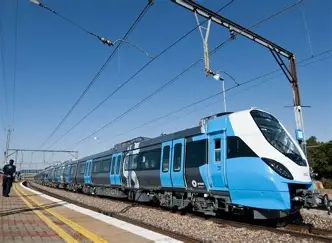
One of the central components of PRASA’s recovery programme is the introduction of modern electric trains.
The new rolling stock is being manufactured at the Gibela facility in Dunnottar, Gauteng.
PRASA Group CEO Hishaam Emeran said in October that more than 320 of the planned 600 trainsets had been delivered.
The new trains form part of a broader programme to modernise South Africa’s passenger railway system.
The programme includes improvements to signalling equipment, electrical infrastructure, stations and railway tracks.
Modern trains can improve passenger comfort and operational efficiency, but their full benefits depend on the availability of reliable infrastructure.
PRASA has therefore been working to restore damaged railway corridors while expanding its fleet.
Cape Town’s Central Line Returns to Service
The Western Cape has been an important focus of the passenger rail recovery programme.
In May 2025, the government reopened the Chris Hani-to-Cape Town section of the Central Line.
The corridor connects communities in Khayelitsha and Mitchells Plain with economic centres, including central Cape Town and Bellville.
The restoration followed extensive infrastructure repairs involving stations, substations, electrical equipment and railway tracks.
At the time, Transport Minister Barbara Creecy said Cape Town’s daily passenger trips had increased from approximately 53,000 in April 2024 to 104,000 following the reopening of Philippi and Nolungile stations.
The government subsequently outlined further expansion targets as additional sections of the network were restored.
The Central Line is particularly important because it provides an affordable transport option for residents travelling between residential areas and employment centres.
However, restoring the infrastructure is only part of the challenge.
Protecting trains, stations and passengers from crime remains essential to sustaining the recovery.
Crime Continues to Threaten Cape Town Rail Services
Theft, vandalism and attacks on trains remain significant risks for South Africa’s passenger railway system.
In the Western Cape, railway operations have historically been disrupted by the theft of cables, damage to electrical equipment and other security incidents.
These problems can result in train cancellations, delays and expensive repairs.
The Railway Safety Regulator’s 2025/26 State of Safety Report identified stone-throwing attacks against moving trains as a particular concern.
The regulator recorded nearly 300 stone-throwing incidents nationwide during the reporting period, representing an increase of approximately 22%.
Gauteng and the Western Cape were identified as prominent areas of concern.
Unlike infrastructure theft, stone throwing directly threatens moving trains and the people travelling in them.
Such incidents can damage windows, injure passengers and crew members, and interrupt services.
The regulator warned that the problem requires targeted security interventions because it is concentrated in particular railway corridors.
More Than 5,700 Security Incidents Recorded
Although overall railway security indicators have improved, the number of incidents remains substantial.
The Railway Safety Regulator recorded 5,710 security-related occurrences during the 2025/26 financial year.
This represented a 33.9% reduction over three years.
Theft of railway assets declined by 10.2%, while incidents involving malicious damage and vandalism fell by 15.1%.
However, theft remained the largest category of security-related incidents.
The regulator recorded approximately 4,050 theft occurrences affecting operational safety.
These incidents can involve signalling systems, telecommunications infrastructure and overhead electrical equipment.
When essential infrastructure is stolen or damaged, services may be interrupted until repairs are completed.
The financial consequences extend beyond replacing the stolen materials.
Railway operators may also face additional security expenses, operational disruptions and reduced passenger confidence.
Railway Fatalities Remain a Serious Concern
The Railway Safety Regulator also reported an increase in fatalities across South Africa’s railway system.
A total of 175 fatalities were recorded during the 2025/26 financial year, representing an increase of 25.9% compared with the previous year.
The number of reported injuries declined by 14.8% to 357.
The regulator indicated that members of the public accounted for the overwhelming majority of fatalities.
These deaths included people struck by trains and individuals found within railway reserves.
The figures relate to the broader railway environment and should not be interpreted as deaths of passengers travelling aboard trains.
Railway safety therefore involves more than protecting commuters inside carriages.
It also requires securing railway corridors, improving pedestrian safety and reducing dangerous behaviour near railway lines.
Affordable Train Fares Offer Relief to Commuters
The return of passenger rail services could provide financial relief for households facing rising transport costs.
According to Transport Minister Barbara Creecy, PRASA passengers generally pay between R12 and R15 for a peak-hour return journey, depending on the distance travelled.
This makes rail an important option for commuters seeking to reduce daily transport expenses.
For workers travelling five days a week, even relatively small differences in daily fares can affect household budgets.
Affordable public transport also helps connect communities with employment, education and business opportunities.
However, the benefits depend on trains operating reliably and commuters being able to access stations safely.
Gauteng Records Strong Passenger Growth
The recovery is also visible in Gauteng.
In October 2026, the Department of Transport reported that combined passenger trips on the Mabopane services increased from approximately 5.2 million in 2024/25 to 7.1 million in 2025/26.
This represented growth of around 36%.
The department also reported improvements in train frequency, punctuality and infrastructure restoration.
Along the Pretoria, Mabopane and De Wildt corridor, substantial investment has been directed towards electrical equipment, signalling systems and telecommunications infrastructure.
The government said these projects were helping restore services that had previously been affected by vandalism.
The improvements demonstrate how infrastructure rehabilitation can translate into increased passenger demand.
PRASA Wants to Reach 600 Million Annual Trips
Despite the recent recovery, South Africa’s passenger rail system remains far below its historical peak.
According to data examined by Africa Check, annual passenger rail journeys exceeded 500 million in 2010.
The collapse of services over subsequent years reduced passenger numbers dramatically.
Government now aims to rebuild the network to support hundreds of millions of journeys annually.
PRASA has identified a long-term ambition of reaching 600 million annual passenger trips within approximately five to seven years.
Achieving this target would require continued investment in infrastructure, operational improvements and reliable security arrangements.
It would also depend on attracting passengers who shifted to taxis, buses and private vehicles during years of railway disruption.
What Must Be Done to Protect the Recovery?
The Railway Safety Regulator has called for stronger cooperation between railway operators, law enforcement agencies, municipalities and surrounding communities.
Its priorities include protecting vulnerable railway corridors, reducing infrastructure theft and improving safety at level crossings.
The regulator has also emphasised the importance of targeted interventions in areas where stone-throwing attacks occur.
PRASA says it has implemented a security strategy involving protection officers, surveillance technology and intelligence-led deployment.
However, maintaining safe railway operations will require continuous investment and effective coordination.
For Cape Town commuters, the success of the Central Line recovery will depend not only on the reopening of stations but also on reliable services and protection from criminal activity.
Conclusion
South Africa’s passenger railway recovery is gaining momentum.
The increase from approximately 10 million passenger trips in 2020/21 to 101 million audited journeys in 2025/26 demonstrates the scale of the progress made.
New trains, restored railway corridors and infrastructure investment are helping bring commuters back to rail.
However, the recovery remains vulnerable to theft, vandalism, attacks on moving trains and safety risks along railway corridors.
The Western Cape’s experience illustrates both the benefits of restoring essential transport infrastructure and the continuing difficulties of protecting it.
For millions of South Africans who depend on affordable transport, the next phase of PRASA’s recovery will be measured not only by passenger numbers but also by safety, punctuality and reliability.