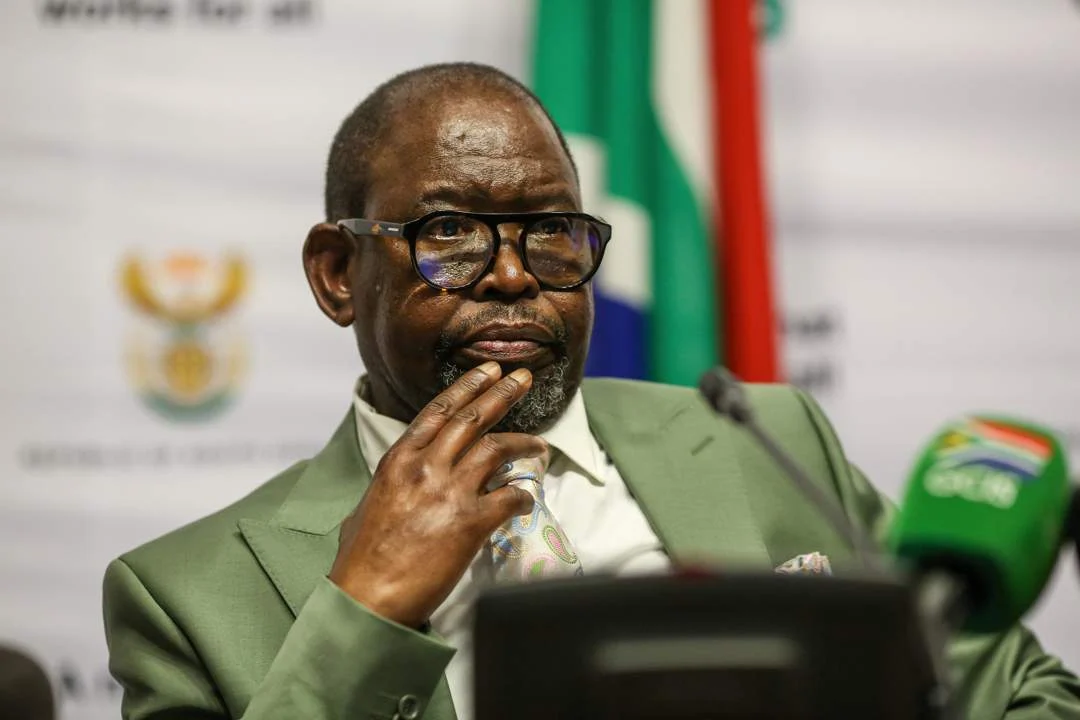
Godongwana Plans Joburg Intervention After Elections
Godongwana to Intensify Johannesburg Intervention After Elections if Financial Failures Persist
JOHANNESBURG, 2 November 2026 — Finance Minister Enoch Godongwana has signalled that National Treasury will intensify its efforts to stabilise the City of Johannesburg after the local government elections, as concerns continue over the municipality’s finances, infrastructure and delivery of essential services.
With South Africans preparing to vote on Wednesday, 4 November, the minister has made it clear that national government’s plans to assist struggling municipalities will continue regardless of which political parties emerge in control.
Johannesburg is already the subject of a proposed three-year turnaround programme involving National Treasury and the Development Bank of Southern Africa (DBSA).
The intervention is intended to address financial instability, weak revenue collection, infrastructure deterioration and persistent service delivery challenges.
However, the government has not announced that Johannesburg will automatically be placed under administration after the election.
The next steps will depend on the city’s financial position, its compliance with legal obligations and the measures adopted by its incoming municipal leadership.
Treasury Plans to Act After Municipal Elections
Godongwana previously told Parliament that Treasury was developing measures to improve financial management across municipalities.
During parliamentary questions on 30 September, the minister explained that the election period made it difficult to implement certain reforms immediately because municipal political leadership could change.
He said Treasury was working with municipal administrations to identify major expenditure pressures and improve spending discipline.
Once newly elected councils and their leadership structures are in place, Treasury intends to intensify implementation.
The proposed measures include reviewing municipal cost drivers, improving budget controls and ensuring that public funds are used for their intended purposes.
This approach means the intervention would focus on municipal institutions and their financial obligations rather than depend entirely on the political party governing a particular city.
Johannesburg Faces Three-Year Turnaround Plan
In September, Godongwana announced that National Treasury was developing a three-year intervention plan for Johannesburg.
The programme would involve cooperation with the DBSA and other relevant institutions.
Its stated purpose is to help restore financial stability and improve the performance of essential municipal services.
Godongwana made clear that the plan would continue beyond the November election, even if a different administration took control of the metropolitan municipality.
The proposed intervention reflects national government’s concern about Johannesburg’s ability to maintain infrastructure, collect revenue and meet its financial commitments.
The DBSA’s involvement could provide technical expertise and support for infrastructure investment and financial recovery.
However, the precise implementation arrangements and funding commitments for the programme have not all been publicly finalised.
Why Johannesburg Is Under Financial Pressure
Johannesburg’s financial difficulties have been a source of concern for National Treasury for several months.
In April, Godongwana warned the municipality about weaknesses in its financial management and the credibility of its budget.
Among the issues raised were revenue projections that Treasury considered unrealistic, rising expenditure and concerns about the city’s ability to meet its obligations.
Treasury also questioned the affordability of a multibillion-rand wage agreement involving municipal employees.
The minister warned that the municipality could face consequences if it failed to correct the identified problems.
These included the possible withholding of transfers under the applicable constitutional and public finance framework.
The warnings highlighted the importance of adopting credible, funded budgets and ensuring that expenditure does not exceed realistically available resources.
Dispute Between Treasury and Mayor Dada Morero
Johannesburg executive mayor Dada Morero has previously rejected suggestions that the city is bankrupt.
In May, Morero defended the municipality’s financial position and maintained that it continued to provide essential services, pay employees and meet its financial obligations.
He acknowledged that cash-flow pressures existed but argued that the municipality remained financially viable.
Morero also disputed some of Treasury’s assessments of the city’s outstanding liabilities.
The disagreement reflected different interpretations of the seriousness of Johannesburg’s financial position.
While Treasury raised concerns about budget credibility and governance, the mayor argued that the administration had measures in place to improve collections and manage expenditure.
The municipality’s position does not eliminate the concerns raised by national government, but it is an important part of the public debate about the city’s finances.
Parliament Questions Johannesburg’s Financial Management
Johannesburg’s financial affairs have also attracted scrutiny from Parliament’s Standing Committee on Public Accounts.
In June, city officials appeared before the committee to answer questions about financial reporting, expenditure and governance.
The Auditor-General had identified weaknesses involving accountability, infrastructure management and expenditure controls.
Among the concerns was unauthorised expenditure of approximately R2.38 billion associated with the municipality’s 2024/25 financial year.
The committee also examined whether the city’s 2026/27 budget was based on credible revenue assumptions.
City manager Floyd Brink maintained that the municipality had adopted a funded budget and was making progress in improving revenue collection.
The exchanges illustrated the continuing disagreement over whether Johannesburg’s financial recovery measures were sufficient.
Water, Electricity and Waste Services Remain Central
Financial recovery is closely connected to Johannesburg’s ability to provide essential services.
Residents have experienced recurring problems involving water interruptions, electricity outages, deteriorating roads and waste collection.
The city’s major service providers include Johannesburg Water, City Power and Pikitup.
These entities depend on effective financial management, infrastructure investment and operational planning to maintain services.
Poor revenue collection can reduce the resources available for repairs and maintenance.
At the same time, deteriorating services can weaken public confidence and make revenue collection more difficult.
Treasury’s proposed turnaround programme is expected to focus partly on improving the governance and financial sustainability of these municipal operations.
However, specific service delivery targets and implementation timelines will need to be established before progress can be measured.
Could Johannesburg Be Placed Under Administration?
The possibility of a stronger government intervention has generated considerable public interest.
South Africa’s Constitution provides mechanisms for intervention when a municipality cannot fulfil its executive obligations or faces serious financial difficulties.
Section 139 sets out circumstances in which provincial authorities may intervene in a municipality, including certain situations involving financial crises.
Section 216 provides for financial controls and circumstances in which Treasury may stop the transfer of funds.
These powers have different legal requirements and consequences.
A Treasury-led financial recovery programme does not automatically mean a municipality has been placed under administration.
Nor does a minister’s warning, by itself, transfer control of a municipality to national government.
Any formal constitutional intervention would have to follow the relevant legal procedures.
As of 2 November, no verified announcement establishes that Johannesburg has been formally placed under administration.
Election Outcome Will Not End Treasury’s Oversight
The 4 November elections could change Johannesburg’s political leadership and council composition.
However, Treasury’s concerns relate to the municipality’s financial position and institutional responsibilities.
Those obligations will remain regardless of the election outcome.
The incoming administration will inherit responsibility for maintaining services, implementing a credible budget and managing municipal debt.
It will also need to address outstanding infrastructure maintenance and improve accountability.
Godongwana has indicated that Treasury intends to work with whichever administration assumes office.
The proposed three-year programme is therefore intended to provide continuity beyond the immediate election cycle.
Municipal Financial Problems Extend Beyond Johannesburg
Johannesburg is not the only municipality facing financial pressure.
National Treasury has previously withheld transfers to municipalities that failed to comply with financial management requirements.
In July, funding was temporarily withheld from 69 municipalities over various compliance concerns.
The problems included unpaid pension contributions and other financial management failures.
Godongwana has warned that several municipalities may require restructuring or stronger financial recovery measures.
The broader challenge includes weak revenue collection, rising debt, poor infrastructure maintenance and inadequate expenditure controls.
The minister’s proposed reforms therefore form part of a wider effort to improve local government finances.
What the Next Johannesburg Administration Must Address
The incoming Johannesburg council will face immediate financial and operational decisions.
These include establishing realistic revenue forecasts, improving collection rates, managing employee costs and prioritising essential infrastructure expenditure.
The municipality will also need to demonstrate that its budget is credible and that spending complies with financial management legislation.
Improved reporting and oversight will be important for rebuilding confidence among residents, suppliers and financial institutions.
The DBSA and Treasury programme could support these efforts, but successful implementation will require cooperation from municipal leadership and officials.
Without measurable improvements in financial controls and service delivery, the city could remain exposed to further regulatory and financial intervention.
What Happens After 4 November?
Following the elections, newly elected councillors will have to establish the municipal council’s leadership and governing arrangements.
Treasury is expected to intensify its engagement with municipalities once those structures are in place.
For Johannesburg, attention will turn to the implementation of the proposed three-year turnaround programme.
Key developments to monitor include formal agreements with the DBSA, budget adjustments, financial recovery targets and any further action taken under public finance legislation.
There is no confirmed date for Johannesburg to be placed under administration, and such an outcome should not be assumed.
Godongwana’s central message is that Johannesburg’s financial problems require sustained attention beyond the election, regardless of which party governs the city.
For residents, the effectiveness of the intervention will ultimately be reflected in whether the municipality can stabilise its finances and deliver more reliable water, electricity, waste collection and other essential services.