Spain Train Crash Kills 68 as Nation Mourns
Spain Mourns 68 Killed in High-Speed Train Disaster
URDA, SPAIN — 29 October 2026 — Spain has entered a period of national mourning following a catastrophic collision between two high-speed trains that killed at least 68 people and injured dozens, in the country’s second major deadly railway accident this year.
The disaster occurred on Wednesday morning, 28 October, near the town of Urda in Toledo province, approximately 130 kilometres south of Madrid.
A high-speed passenger train operated by state-owned Renfe struck the rear of a stationary train operated by private rail company Iryo.
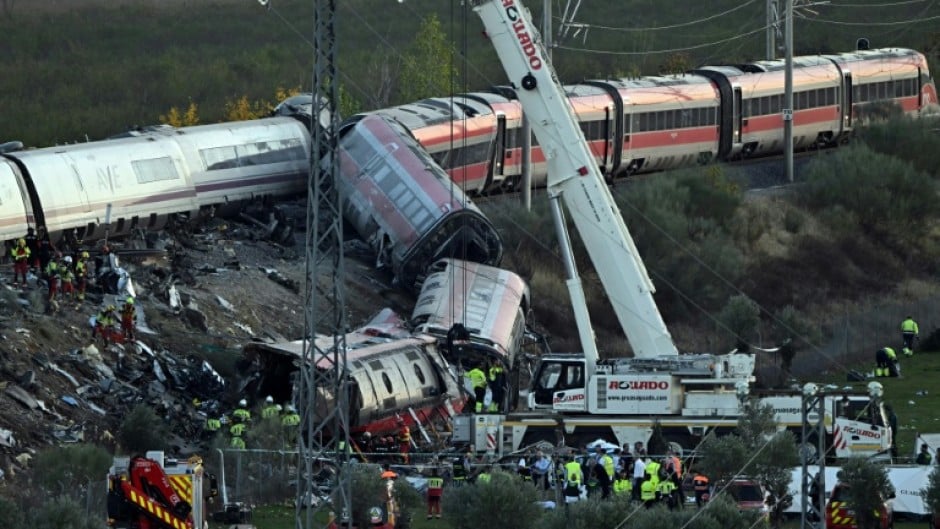
The impact derailed several carriages, sending some down an embankment and leaving passengers trapped among twisted metal and debris.
Prime Minister Pedro Sánchez declared three days of national mourning, beginning Thursday, 29 October, as emergency services continued searching the wreckage and families desperately sought information about missing relatives.
The tragedy has prompted urgent questions about railway safety, signalling systems and decisions made by traffic controllers before the collision.
How the Deadly Train Collision Happened
The two trains were travelling in the same direction on the high-speed railway connecting Madrid with southern Spain.
The Iryo train had stopped on the tracks following a technical problem affecting the railway’s automatic control system.
According to Transport Minister Óscar Puente, the signalling system experienced a malfunction that resulted in trains being halted across a substantial section of the railway.
The system, known as LZB, is designed to help maintain safe distances between trains and prevent collisions.
When the system failed, traffic controllers assumed responsibility for managing train movements.
Despite the unresolved technical problem, the control centre authorised certain trains to resume their journeys.
The Renfe train subsequently travelled approximately 25 kilometres before colliding with the stationary Iryo service.
Puente described the decision to resume traffic as erroneous and said investigators would examine why the situation was not corrected before the collision.
The precise sequence of decisions and responsibility for the crash remain under investigation.
Passengers Describe Terrifying Moments
Survivors described scenes of confusion and devastation as the collision threw passengers from their seats and damaged the carriages.
Some escaped through broken windows or damaged exits, while others required assistance from emergency workers.
One survivor, Pablo Mejia, told reporters that a last-minute change of seat may have saved his life.
He described passengers falling over one another, seats being torn from their positions and luggage scattered throughout the train.
Another passenger, Josimar Medina, said he had been sleeping when the impact suddenly threw him into the air.
Witnesses described bloodied passengers walking away from the wreckage, some receiving assistance from local residents and emergency personnel.
The accounts underline the severity of the impact and the difficulties faced by rescuers trying to reach people trapped inside the damaged carriages.
Rescue Teams Search Through the Wreckage
Emergency services launched a major rescue operation involving firefighters, police officers, medical teams, ambulances and helicopters.
Several carriages were left overturned or severely damaged.
Rescuers worked around unstable wreckage, using specialist equipment to reach inaccessible areas.
The search continued into Wednesday night as officials warned that more victims could be discovered.
Authorities established emergency facilities in nearby Urda to treat injured passengers and support relatives.
Local residents also assisted the response by providing food, drinking water and transport.
The Spanish Red Cross deployed teams to offer psychological assistance to survivors and families.
Death Toll Reaches 68
Officials in Castilla-La Mancha confirmed that at least 68 people had died.
Injury figures varied as emergency services updated their assessments and hospitals admitted patients.
Regional authorities reported approximately 80 injured people, including 15 in critical condition.
Other updates recorded more than 100 people requiring medical attention, with 58 hospitalised.
The different figures reflect varying reporting times and whether the totals include people treated at the scene or in hospitals.
Authorities have warned that the number of fatalities could increase.
Identifying the victims has become another major priority.
Spain’s Civil Guard established offices in Madrid, Toledo, Córdoba and Seville where relatives could provide DNA samples to assist the identification process.
Prime Minister Declares National Mourning
Prime Minister Pedro Sánchez visited the affected area and expressed condolences to the families of those who died.
The government announced three days of official mourning from 29 to 31 October.
Public events and political activities were suspended or postponed as the country responded to the disaster.
King Felipe VI and the Spanish royal household also expressed condolences and support for the victims and emergency workers.
The tragedy has affected communities across Spain, with passengers travelling between major cities for work, family visits and other commitments.
For many families, the mourning period began while they were still waiting for news about missing loved ones.
Signalling Failure Raises Serious Questions
One of the most troubling aspects of the accident is the reported failure of the railway’s automatic control system.
Transport Minister Puente said the malfunction disrupted operations along a section of track and required trains to stop.
The control centre then authorised some services to continue before normal signalling operations had been restored.
The minister indicated that investigators would examine why the Renfe train was allowed to travel towards an occupied section of railway.
A central question is whether established safety procedures were followed when the automated system became unavailable.
Investigators are also expected to examine communications between train drivers and controllers, operational records and the condition of the signalling equipment.
Although officials have described the authorisation to proceed as a serious error, the investigation has not yet produced a final determination of criminal or institutional responsibility.
Second Deadly High-Speed Train Crash in 2026
The latest disaster comes just months after another deadly collision involving high-speed trains in Spain.
In January 2026, 46 people were killed when two trains collided near Adamuz in Andalusia.
That accident involved a train derailing and crossing onto an adjacent track.
The causes of the January disaster remain under investigation.
Sánchez has cautioned against assuming that the two accidents share the same cause.
Nevertheless, the occurrence of two major fatal railway accidents in a single year has intensified scrutiny of Spain’s rail infrastructure and safety systems.
The country operates one of the world’s largest high-speed rail networks, connecting major cities and providing an important alternative to road and air travel.
Railway Maintenance Under Scrutiny
Spain has invested heavily in expanding its high-speed railway network.
However, the latest accident has renewed debate about whether sufficient resources have been allocated to maintaining and upgrading existing infrastructure.
According to Reuters, approximately 16% of relevant railway spending between 2018 and 2022 was allocated to maintenance, renewals and upgrades, with much of the remaining investment directed towards network expansion.
That spending pattern does not establish the cause of Wednesday’s crash.
It does, however, provide context for broader questions about infrastructure priorities and operational resilience.
Railway safety depends on more than track construction.
Reliable signalling, staff training, maintenance, emergency procedures and effective oversight are all essential.
Opposition Calls for Independent Investigation
The disaster has also entered Spain’s political debate ahead of its general election scheduled for 29 November.
Opposition leader Alberto Núñez Feijóo called for an independent investigation and a wider review of the country’s railway infrastructure.
The government has pledged to establish the circumstances surrounding the collision and address any safety failures identified.
Several political parties suspended campaign activities following the disaster.
The competing statements reflect pressure on authorities to provide a transparent explanation of what happened.
At this stage, no final investigative findings establish who bears responsibility for the collision.
Train Services Disrupted
The collision forced the suspension of services on the affected high-speed railway connecting Madrid with southern Spain.
The disruption affected passengers travelling towards destinations including Seville and other cities in Andalusia.
Rail operators and transport authorities are expected to assess infrastructure damage before services can resume safely.
Repair work may include track inspections, signalling checks, removal of damaged rolling stock and verification of the surrounding infrastructure.
Passengers planning to travel on affected routes should consult the relevant railway operators for updated service information.
Spain Faces Difficult Questions
For Spain, the immediate priority remains supporting victims, identifying those who died and assisting the injured.
But once the emergency response concludes, attention will increasingly turn to the safety failures that allowed two trains to occupy the same section of railway.
Investigators must determine whether the accident resulted from human error, technical failure, inadequate procedures or a combination of factors.
The findings could have implications for railway operations beyond Spain, particularly where high-speed systems depend on automated signalling and centralised traffic control.
The deaths of at least 68 people have turned an ordinary Wednesday morning journey into one of Europe’s deadliest railway disasters of recent decades.
As Spain observes three days of mourning, families await answers and authorities face mounting pressure to ensure that a similar tragedy cannot happen again.