
Four South Africans Missing in Nepal Floods
Four South Africans Missing
Four South Africans remain unaccounted for after catastrophic flash floods devastated the Nepal–Tibet border region, leaving more than 155 people dead and hundreds missing.
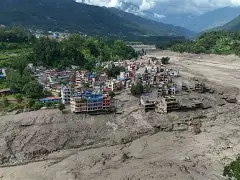
The disaster struck on Wednesday, 26 August 2026, when a massive surge of water, ice, rocks and mud swept through settlements and tourism routes near Nepal’s border with China.
Authorities have warned that the death toll could continue rising as emergency teams reach remote communities cut off by destroyed roads, bridges and communication infrastructure.
Search for four South Africans missing
The four South Africans missing are believed to be among hundreds of international tourists and pilgrims who were visiting the Himalayan region when the disaster occurred.
Their identities had not been publicly released at the time of publication. South African authorities were reportedly working with officials in Nepal to establish their whereabouts and determine whether they had reached emergency shelters.
Nepal’s tourism authorities have been trying to account for visitors from several countries, including South Africa, India, Australia, Britain, Malaysia, South Korea, Canada and the United States.
Families awaiting information have faced uncertainty because power outages, damaged cellphone networks and blocked roads have made it difficult to contact people in the affected region.
Death toll continues rising
Initial reports placed the death toll below 100, but the number increased rapidly as rescue workers recovered more bodies from flooded communities and debris-covered areas.
International reports published on Thursday indicated that at least 165 people had died, although official totals varied as Nepalese and Chinese authorities continued reconciling casualty figures from both sides of the border.
More than 1,000 people may remain unaccounted for across Nepal and Tibet. These figures remain provisional and could change as survivors reach safety and local authorities restore communication with isolated communities.
What caused the Nepal floods?
Early reports suggested that an earthquake might have triggered the disaster. However, subsequent assessments indicated that a partial glacier collapse caused a huge mass of ice, rock and debris to fall into the valley.
The collapse produced a powerful flood that travelled downstream through the Himalayan river system, destroying buildings, vehicles, roads and electricity infrastructure.
The water level reportedly rose dramatically within minutes, giving residents, tourists and pilgrims little time to escape.
Scientists have repeatedly warned that rising temperatures are increasing instability in the Hindu Kush Himalayan region. Melting glaciers can form unstable lakes, weaken frozen mountain slopes and increase the possibility of sudden floods and landslides.
The precise sequence of events behind the latest disaster remains under investigation.
Rescue operations face difficult conditions
Thousands of emergency personnel have reportedly been deployed across the affected areas. Nepalese soldiers, police officers and rescue teams are using helicopters to reach communities inaccessible by road.
Rescue operations remain difficult because of unstable slopes, thick mud, destroyed bridges and the possibility of additional flooding. Authorities are also monitoring lakes and waterways that may have been blocked by landslide debris.
International organisations and neighbouring countries have started providing emergency assistance, including medical supplies, food, shelter and rescue support.
Those rescued are being transported to hospitals and emergency centres, while teams continue searching damaged hotels, villages and pilgrimage routes.
South African families await answers
The disappearance of the four South Africans has brought the international disaster closer to home. Their families are expected to remain in contact with South African diplomatic authorities while search operations continue.
South Africans who cannot contact relatives travelling in Nepal should provide authorities with the missing person’s full name, passport details, travel itinerary, accommodation information and the last known point of contact.
The situation remains fluid, and casualty figures are expected to be revised as emergency teams obtain access to more affected areas.



Pingback: Nepal Flood Death Toll Rises Sharply - Ubuntu99Media