Can Big Business Save Johannesburg From the Quicksand?
Excerpt: Johannesburg is facing a deepening financial, infrastructure and governance crisis. With big business now committing resources to help the city recover, the question is whether corporate South Africa can help turn Joburg around.
Johannesburg is at a critical crossroads.
South Africa’s economic powerhouse is struggling with deteriorating infrastructure, financial pressure, weak service delivery and years of political instability. Now, as government and business deepen their partnership, corporate South Africa is being asked to play a bigger role in helping rescue the city.
The question is no longer whether Johannesburg needs help. It is whether big business can help pull the city out of the quicksand — and whether government can create the conditions for that intervention to succeed.
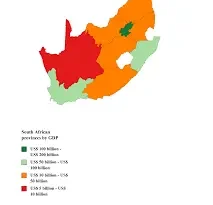
Johannesburg contributes almost 16% of South Africa’s economy and about 40% of Gauteng’s economic output. The city also hosts a significant share of the country’s corporate headquarters and remains a major centre for financial services, mining, manufacturing, property and professional services.
Its problems therefore extend far beyond municipal boundaries.
Johannesburg’s decline has become an economic problem
For years, Johannesburg’s deterioration was often treated primarily as a municipal issue.
Potholes, unreliable water supply, failing infrastructure, electricity problems, waste collection challenges and declining public spaces were experienced by residents and businesses as everyday problems.
But the economic consequences are becoming increasingly difficult to ignore.
The Centre for Development and Enterprise has warned that Johannesburg’s multiplying crises threaten South Africa’s broader prospects for growth, investment and employment. The city accounts for roughly 11% of the country’s jobs, with about 1.91 million people employed in Johannesburg.
That makes the city’s decline a national economic concern.
If businesses cannot rely on functioning infrastructure, efficient municipal services and predictable governance, the cost of operating in Johannesburg increases.
For investors, that can eventually influence one fundamental decision: Is Johannesburg still a competitive place to invest and do business?
Big business is stepping closer
The private sector has already become an increasingly important partner in South Africa’s attempts to address structural economic problems.
That relationship is now moving closer to Johannesburg.
Finance Minister Enoch Godongwana has said the business sector is willing to work with government on the city’s problems and is prepared to contribute resources towards the effort.
The involvement of major property groups such as Growthpoint and Vukile is particularly significant because the property sector has a direct financial interest in Johannesburg’s recovery.
A city that works attracts tenants, shoppers, investors, tourists and workers.
A city that does not work puts pressure on property values, occupancy rates and investment decisions.
That gives major companies a powerful incentive to participate in the turnaround.
But money alone will not fix Joburg
There is an important distinction between supporting Johannesburg and running Johannesburg.
Corporate South Africa can provide capital, technical expertise, management capacity, data, project-management skills and innovative solutions.
But businesses cannot permanently substitute for a functioning municipality.
The city still needs accountable political leadership, competent officials, effective financial management and reliable systems for collecting revenue and paying suppliers.
The Johannesburg crisis is therefore not simply an infrastructure problem.
It is also a governance problem.
The city has experienced nine mayors and eight coalition administrations since 2016, according to the CDE. Political instability has made it difficult to maintain consistent long-term plans and execute reforms.
A business partnership can help provide continuity around specific projects, but political leadership ultimately determines whether municipal institutions function effectively.
The infrastructure crisis is becoming impossible to ignore
One of Johannesburg’s biggest challenges is the state of its infrastructure.
Johannesburg Water has identified an infrastructure renewal backlog of approximately R26.6 billion, while the city is losing more than 226 million litres of water a day through leaks.
The scale of the problem illustrates why the private sector could have an important role to play.
Companies have the ability to bring engineering expertise, project management, financing structures and technology to infrastructure projects.
But there must also be transparency around where money goes, who is appointed and what outcomes are achieved.
The city cannot afford another cycle in which large amounts of money are announced while basic services continue deteriorating.
A recent Eskom payment shows what is possible
There has also been a significant development on Johannesburg’s financial front.
The city has paid off a R5.25 billion debt owed to Eskom, resolving a longstanding dispute and removing the immediate threat of electricity supply restrictions. The settlement was reached through a government-led mediation process.
The development demonstrates that difficult problems can be resolved when national government, municipalities and other stakeholders work together.
It also shows the importance of financial discipline.
A city cannot maintain infrastructure or provide reliable services if its finances are unstable.
Johannesburg still has enormous economic potential
Despite the crisis, writing off Johannesburg would be a mistake.
The city remains one of Africa’s most important commercial centres.
Its financial sector, corporate headquarters, transport networks, universities, property market, entrepreneurial ecosystem and proximity to major industrial and mining operations give it economic advantages that cannot easily be replicated elsewhere.
Johannesburg also remains deeply connected to the wider Gauteng economy.
The CDE estimates that the city contributes almost 16% of South Africa’s GDP and approximately 40% of Gauteng’s economy.
That means restoring Johannesburg is not merely about making the city cleaner or fixing potholes.
It is about protecting one of the country’s most important engines of economic activity.
What should business actually do?
If corporate South Africa is serious about helping Johannesburg, its involvement should go beyond donations and corporate social investment.
Business should focus on measurable interventions that improve the city’s ability to function.
These could include:
- Infrastructure: Supporting projects to repair water, electricity, roads and public infrastructure.
- Financial management: Providing technical expertise to improve municipal financial systems and revenue collection.
- Technology: Using data and digital systems to improve service delivery and detect infrastructure failures.
- Project management: Helping ensure major infrastructure projects are delivered on time and within budget.
- Skills: Supporting the development and retention of technical skills inside municipal institutions.
- Investment: Keeping private-sector capital invested in Johannesburg while creating new opportunities for growth.
- Small business: Connecting township and small businesses to major corporate supply chains.
- Accountability: Making funding and project outcomes measurable and publicly transparent.
The objective should not be to create a parallel government.
It should be to help rebuild a government that can eventually do its job effectively.
Small businesses must be part of the recovery
One risk in any government-business partnership is that the biggest companies receive the biggest opportunities while smaller businesses remain on the sidelines.
That would be a missed opportunity.
Johannesburg’s economic recovery should create opportunities for township enterprises, construction companies, professional services firms, logistics operators, manufacturers, technology companies and other small and medium-sized businesses.
A functioning city creates an economic multiplier.
When roads work, businesses can deliver products.
When water is reliable, factories can operate.
When electricity is stable, retailers and restaurants can trade.
When municipal procurement works properly, small companies can become suppliers.
And when investors have confidence, new businesses are more likely to open.
The danger of treating business as a permanent rescue mechanism
There is also a warning that should not be ignored.
Government must not become dependent on corporate South Africa to perform core municipal functions.
Businesses ultimately have shareholders, commercial objectives and financial constraints.
Their participation should strengthen public institutions rather than allow those institutions to avoid reform.
The private sector can help repair the engine.
It cannot permanently drive the vehicle.
Ultimately, Johannesburg needs a municipality that can collect revenue, manage its finances, maintain infrastructure, deliver services and provide a predictable environment for investment.
The November elections raise the stakes
Johannesburg’s recovery is also unfolding against the backdrop of South Africa’s upcoming local government elections.
The city is expected to be one of the country’s major political battlegrounds, increasing the pressure on political parties to convince residents that they have credible plans to restore service delivery and economic confidence.
For residents, the test will not be the number of conferences held or partnerships announced.
It will be whether the taps work.
Whether the lights stay on.
Whether rubbish is collected.
Whether roads are maintained.
Whether businesses can operate.
And whether the city becomes safer, cleaner and more economically productive.
So, can big business save Johannesburg?
Not by itself.
But big business can potentially help Johannesburg recover if its involvement is structured around clear objectives, measurable outcomes and strong accountability.
The private sector has capital, expertise and an enormous interest in seeing Johannesburg succeed.
Government has the constitutional mandate and democratic accountability to govern the city.
Civil society and residents have a role in demanding transparency and monitoring performance.
The answer may therefore not be whether big business can save Joburg.
The more important question is whether government, business and citizens can work together to save Johannesburg before the city’s economic decline becomes irreversible.
Johannesburg has survived difficult periods before. Its economic importance remains enormous.
But the window for complacency is closing.
The city cannot afford another decade of decline.
The quicksand is real. The question now is whether everyone with a stake in Johannesburg’s future is prepared to pull together before it is too late.