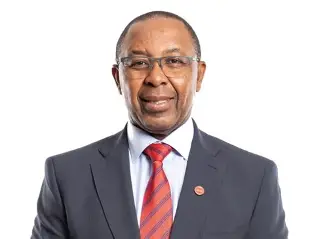
Kenny Fihla: From MK Commander to Absa CEO
From MK Commander to Absa CEO: The Remarkable Career of Kenny Fihla
Kenny Fihla, the chief executive officer of Absa Group, has followed an unconventional path to the top of South Africa’s banking industry.
Long before he became a senior banking executive, Fihla was actively involved in the struggle against apartheid, serving as a unit commander in uMkhonto we Sizwe (MK), the former armed wing of the African National Congress (ANC).
His career has taken him through student activism, underground political structures, local government and corporate banking.
Today, he leads Absa Group, one of South Africa’s major financial institutions, after spending nearly two decades building his career at Standard Bank.
Fihla’s story illustrates the transition of some former liberation activists into leadership positions in South Africa’s democratic institutions and private sector.
Kenny Fihla’s Early Involvement in the Liberation Struggle
Fihla became politically active during his student years, when opposition to apartheid was growing across South Africa.
He joined the Congress of South African Students (COSAS), an organisation that played a significant role in mobilising young people against apartheid-era education policies.
His involvement in student politics eventually saw him rise to the organisation’s national executive committee.
Fihla also participated in the broader Congress youth movement and later became involved in progressive trade union activities.
His political involvement eventually led to his recruitment into underground structures associated with the ANC and its armed wing, uMkhonto we Sizwe.
From Student Activist to MK Unit Commander
During the liberation struggle, Fihla served in MK’s Peter Nchabeleng Unit, where he held the position of unit commander.
The unit was named after Peter Nchabeleng, an anti-apartheid activist whose death in police custody in 1986 became an important part of the liberation movement’s history.
MK was established in 1961 as the armed wing of the ANC and conducted operations against the apartheid government.
Fihla’s participation placed him within the broader movement seeking to end apartheid and establish democratic government.
Importantly, the historical uMkhonto we Sizwe organisation should not be confused with the modern uMkhonto weSizwe Party, commonly known as the MK Party.
The current political party was established in 2023 and is associated with former President Jacob Zuma.
Although the two share a historical name, they are separate organisations.
Fihla’s Political Career After Democracy
Following South Africa’s transition to democracy in 1994, Fihla continued his involvement in politics.
He held several leadership positions within the ANC, including serving as chairperson of the party’s Greater Johannesburg region.
His political responsibilities later extended into local government.
In 2001, he was appointed to Johannesburg’s Mayoral Committee, where he oversaw the Finance, Strategy and Economic Development portfolio.
The role placed him at the centre of municipal financial planning and economic policy.
Fihla was also involved in Johannesburg’s institutional transformation during the early years of democratic local government.
According to the ANC in Gauteng, he contributed to the establishment of the transitional metropolitan governance arrangements that helped shape Johannesburg’s modern municipal structure.
He was also associated with the iGoli 2002 programme, which sought to restructure Johannesburg’s administration and improve its financial sustainability.
The programme was controversial, particularly because of concerns about restructuring and municipal service delivery.
Nevertheless, Fihla’s involvement provided experience in financial management, economic planning and institutional administration.
Moving From Politics Into Banking
Fihla’s transition into the financial services industry began in 2006 when he joined Standard Bank Group.
His first major role was head of Investor Services within the bank’s Corporate and Investment Banking division.
The appointment marked a significant shift from public-sector and political responsibilities to commercial banking.
In 2008, he became head of Transactional Products and Services for Standard Bank’s South African corporate and investment banking operations.
He subsequently moved through increasingly senior leadership positions.
In November 2016, he was appointed deputy chief executive of Corporate and Investment Banking.
By May 2017, he had become chief executive of the division.
He remained in that role until August 2024.
Leading Standard Bank’s Investment Banking Business
During Fihla’s tenure as chief executive of Standard Bank’s Corporate and Investment Banking division, the business recorded substantial earnings growth.
According to Standard Bank, the division’s headline earnings doubled to approximately R20.5 billion between 2017 and 2024.
The bank reported compound annual headline earnings growth of 8.6% during that period.
Corporate and investment banking provides services to major companies, institutional investors and governments.
These services can include corporate lending, investment products, transactional banking and financial advisory solutions.
Fihla’s experience in this division helped establish his reputation as a senior banking executive.
Appointed Deputy CEO of Standard Bank Group
In September 2024, Fihla was appointed deputy chief executive officer of Standard Bank Group and chief executive officer of Standard Bank South Africa.
The dual appointment placed him among the bank’s most senior executives.
As deputy group CEO, he also held responsibilities relating to Standard Bank’s subsidiaries outside South Africa.
However, his tenure in these positions was relatively short.
In March 2025, Absa Group announced that Fihla would leave Standard Bank to become its new group chief executive officer.
The announcement marked another significant development in his corporate career.
Kenny Fihla Takes Over as Absa Group CEO
Fihla officially assumed the position of Absa Group CEO on 17 June 2025.
He succeeded Charles Russon, who had been serving as interim chief executive.
His appointment came during a period of considerable leadership turnover at Absa.
The bank had experienced several permanent and interim CEO changes since Maria Ramos stepped down in 2019.
Fihla became the seventh person to hold the group CEO position during that period, including interim appointments.
Absa’s decision to recruit him from Standard Bank reflected his experience in corporate banking, institutional leadership and African financial markets.
His responsibilities include overseeing the group’s strategy, financial performance, operations and long-term development.
Absa’s Leadership Changes Before Fihla
Absa experienced a succession of leadership transitions before Fihla’s appointment.
Maria Ramos served as group CEO until February 2019.
She was followed by interim CEO René van Wyk, then Daniel Mminele, who took office in January 2020.
After Mminele’s departure in April 2021, Jason Quinn served as interim CEO.
Arrie Rautenbach was appointed in March 2022 and remained in the position until October 2024.
Charles Russon subsequently served as interim CEO until Fihla’s arrival in June 2025.
The repeated leadership changes made executive continuity an important issue for the banking group.
Fihla’s appointment brought a leader with extensive experience managing large financial services businesses.
The R148 Million Remuneration Package
Fihla’s move to Absa also attracted attention because of the remuneration package associated with his appointment.
According to BusinessTech, his total reported remuneration for the 2025 financial year exceeded R148 million.
A substantial portion of this amount related to replacement share-based awards.
Approximately R98 million consisted of buyout awards linked to unvested equity that Fihla forfeited when he left Standard Bank.
These replacement awards are an important distinction.
The reported total should not be interpreted as a R148 million annual cash salary.
Executive remuneration packages can include fixed pay, short-term incentives, long-term share awards and compensation for benefits forfeited when moving between employers.
The structure of such packages can result in particularly large reported remuneration figures during the year in which an executive joins a new company.
What Fihla’s Leadership Means for Absa
Absa operates in a highly competitive banking industry, where major institutions compete for retail customers, business banking relationships and corporate clients.
As group CEO, Fihla is responsible for guiding the bank’s strategic priorities.
These include maintaining financial stability, managing risk, strengthening customer relationships and overseeing the group’s operations across African markets.
His experience at Standard Bank’s Corporate and Investment Banking division provides a background in managing complex financial businesses.
However, the success of his leadership will ultimately be assessed through Absa’s financial performance, customer outcomes, governance and execution of its strategy.
His political background is part of his personal history, but it does not by itself determine how he will perform as a banking executive.
From Liberation Politics to Corporate Leadership
Fihla’s career reflects an important dimension of South Africa’s post-apartheid history.
After the transition to democracy, individuals who had participated in the liberation movement followed different career paths.
Some remained in politics, while others moved into public administration, business, academia and the private sector.
Fihla’s journey has included leadership roles in each of several distinct environments.
He began in student activism, progressed into underground political structures, participated in democratic local government and later built a career in banking.
His appointment to lead Absa demonstrates how experience gained across different sectors can form part of a corporate leadership career.
It also highlights the importance of examining business leaders’ professional histories beyond their current positions.
Who Is Kenny Fihla Today?
As of November 2026, Kenny Fihla serves as group chief executive officer of Absa Group.
His appointment took effect in June 2025, following his departure from Standard Bank.
His banking career spans nearly two decades and includes senior positions in corporate and investment banking, South African banking operations and group executive management.
Before entering financial services, he held political and municipal leadership roles connected to South Africa’s transition to democracy.
His journey from MK unit commander to Absa CEO remains one of the more unusual career paths among the country’s senior banking executives.
Conclusion
Kenny Fihla’s professional journey stretches across several important periods in South Africa’s history.
From student activism and service as an MK unit commander to municipal leadership and senior banking positions, his career has involved significant changes in responsibility and professional direction.
His appointment as Absa Group CEO in June 2025 placed him at the head of one of South Africa’s major banking institutions.
With extensive experience at Standard Bank and a background in public administration, Fihla now faces the responsibilities associated with leading a major financial services group.
His story offers a distinctive example of how careers that began during the liberation struggle have developed within South Africa’s democratic and corporate institutions.