South Africa Says US Raising New Trade Issues
South Africa Says US Is Raising ‘New Issues’ Beyond Trade Talks as Trump Moves to End AGOA Benefits
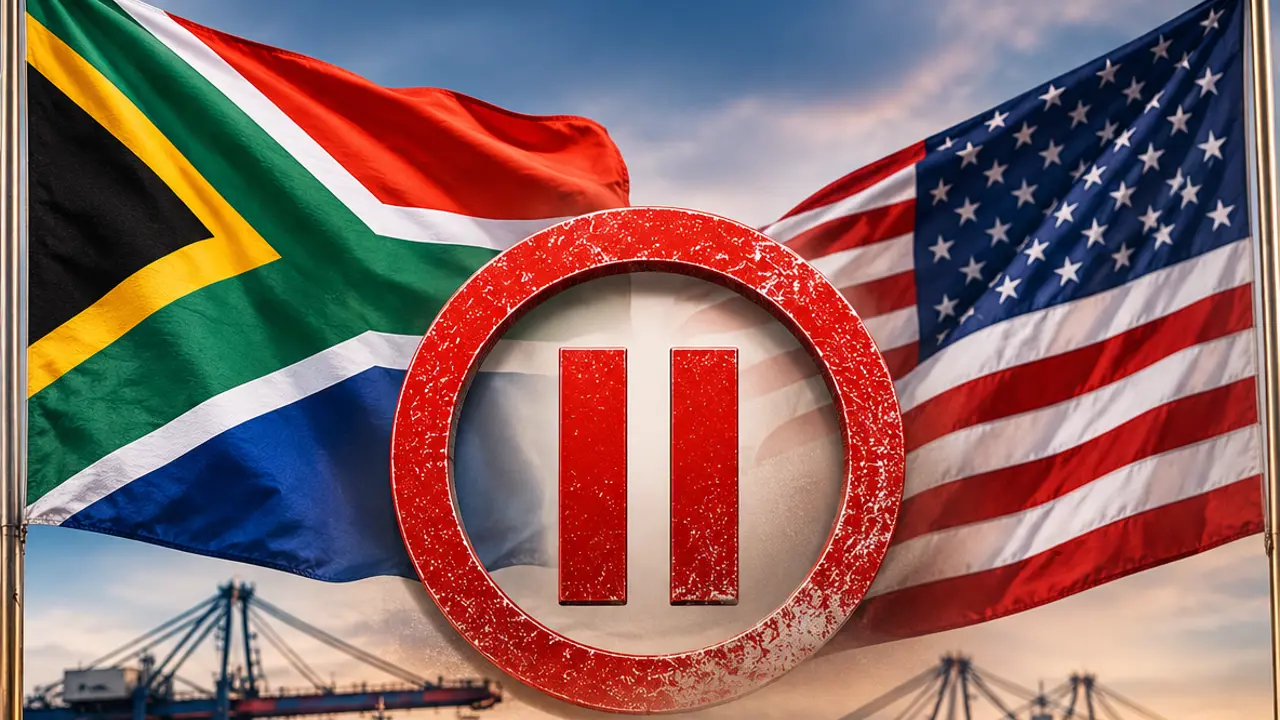
PRETORIA, 3 November 2026 — South Africa has expressed frustration with the United States after Washington announced plans to terminate the country’s preferential trade benefits under the African Growth and Opportunity Act (AGOA), accusing the Trump administration of introducing new concerns that were not previously part of bilateral negotiations.
The announcement, made on Monday, 2 November, follows months of discussions between South African and American officials aimed at resolving disagreements over trade and investment.
US President Donald Trump has notified Congress and the governments of South Africa and Rwanda of his intention to terminate their AGOA eligibility from 1 January 2027.
Washington says the countries have failed to satisfy important eligibility requirements.
However, South Africa maintains that it has engaged constructively with American officials and offered additional concessions to address concerns raised during negotiations.
Minister of Trade, Industry and Competition Parks Tau says Pretoria remains committed to finding a diplomatic solution while protecting South African businesses, workers and exporters.
South Africa Accuses US of Introducing New Demands
In its response to the announcement, the Department of Trade, Industry and Competition said South Africa had made extensive efforts to resolve Washington’s concerns.
The government said it had offered concessions beyond those previously presented during negotiations in 2015.
However, Pretoria expressed disappointment that the United States was introducing issues that had not formed part of the discussions initiated in 2025.
Tau said the new concerns complicated efforts to reach a mutually acceptable trade arrangement.
The government did not provide a comprehensive public list distinguishing every newly raised issue from those previously discussed.
As a result, the precise differences between the earlier negotiating agenda and Washington’s latest objections remain unclear.
South Africa nevertheless maintains that it has acted in good faith throughout the process.
Why Trump Wants South Africa Removed From AGOA
The United States Trade Representative, Ambassador Jamieson Greer, confirmed that Trump had notified the affected governments and Congress of his intention to terminate their participation in AGOA.
According to Greer, the decision followed an annual review of countries receiving preferential access to the American market.
The US administration identified three broad areas of concern regarding South Africa:
- Barriers affecting American trade and investment.
- Corruption and the effectiveness of measures to address it.
- Activities or policies that Washington considers inconsistent with US national security and foreign policy interests.
These are the American administration’s stated grounds for the decision.
South Africa disputes aspects of Washington’s position and argues that the concerns should be addressed through continued engagement.
The US announcement does not establish that South Africa has committed a criminal offence. AGOA eligibility is determined under American trade legislation and its associated conditions.
What Is AGOA?
The African Growth and Opportunity Act is a United States trade preference programme introduced in 2000.
It provides qualifying sub-Saharan African countries with duty-free access to the American market for thousands of eligible products.
The programme is intended to encourage trade, investment and economic development.
South Africa has historically been one of its largest beneficiaries.
Products benefiting from preferential access have included agricultural goods, manufactured products and certain automotive components.
AGOA does not cover every South African export to the United States.
Many goods enter the American market under ordinary tariff arrangements, while some products face separate duties.
Losing AGOA benefits would therefore increase costs for certain exporters without necessarily preventing them from continuing to sell their products in the United States.
How Much Does South Africa Export Under AGOA?
According to figures presented by Tau, South African exports under AGOA were worth approximately $1.7 billion in 2025.
That was substantially lower than the approximately $4 billion recorded in 2024.
The government says AGOA accounted for about 10% of South African exports to the United States in 2025, compared with approximately 28% in 2024.
AGOA exports represented roughly 1% of South Africa’s total global exports.
Bilateral trade between South Africa and the United States reached approximately $28.8 billion in 2025.
Tau argues that these figures demonstrate the importance of distinguishing between AGOA preferences and the broader commercial relationship.
Although the loss of preferential access could seriously affect individual businesses, it would not automatically end trade between the two countries.
Citrus Industry Warns of Job Losses
South African agricultural exporters are among those expressing concern about the decision.
The Citrus Growers’ Association has warned that losing AGOA benefits could threaten jobs in communities dependent on exports to the United States.
Citrus production and packing support employment in parts of the Western Cape and Northern Cape.
The industry is concerned that additional import duties could make South African fruit less competitive against products from countries retaining preferential market access.
Higher tariffs may reduce profit margins, force exporters to absorb additional costs or lead American buyers to reconsider sourcing arrangements.
The extent of the impact will depend on the applicable tariffs, contracts, exchange rates and alternative market opportunities.
There is not yet a verified national figure for the number of jobs that will be lost as a direct result of the announced decision.
Labour Unions Raise Concerns
The Congress of South African Trade Unions (Cosatu) has expressed concern about the implications for workers in agriculture and manufacturing.
The federation warned that communities already experiencing economic pressure could face further difficulties if exporters lose competitiveness.
Some manufacturing operations and agricultural businesses depend on established supply relationships with American customers.
Changes to those relationships can affect production schedules, employment and investment decisions.
However, the impact will differ significantly between sectors.
Some products already face substantial US tariffs and may experience a smaller additional effect from the loss of AGOA preferences.
Other exporters rely more directly on the programme’s duty-free treatment.
US Raises National Security and Foreign Policy Concerns
One of the most contentious aspects of the American decision involves concerns extending beyond conventional market-access questions.
Washington has referred to threats to US national security and foreign policy interests.
The Trump administration has previously criticised South Africa over domestic policies and international diplomatic positions.
Disagreements have included South Africa’s racial transformation policies, land reform and its case against Israel at the International Court of Justice.
South Africa has rejected several accusations made by Washington and maintains that its domestic and foreign policies are consistent with its Constitution and international obligations.
However, the US Trade Representative’s latest statement does not publicly establish that any single one of these disagreements independently caused the AGOA decision.
It would therefore be inaccurate to attribute the termination solely to one diplomatic dispute without further evidence.
More Than 600 US Companies Operate in South Africa
Despite the deterioration in diplomatic relations, economic links between the countries remain significant.
According to the South African government, more than 600 American companies operate locally.
Together, these businesses support approximately 134,600 jobs.
Tau also highlighted investment commitments exceeding $5 billion from American companies during the preceding year.
South Africa supplies several minerals considered strategically important by the United States.
These include commodities used in industrial production, advanced technologies and other supply chains.
The minister said South Africa supplies 12 of the 50 minerals classified as critical by Washington.
The government argues that the economic relationship is mutually beneficial and should not be defined by disagreements over AGOA eligibility.
South Africa Plans to Expand Trade With Other Markets
Pretoria says it will accelerate efforts to diversify export destinations while continuing negotiations with Washington.
The government’s strategy includes expanding trade with countries and regional blocs across Africa, Europe, Asia and Latin America.
Potential markets include the African Continental Free Trade Area, India, China, the European Union, the United Kingdom and Southeast Asia.
Tau said South Africa has already pursued new opportunities for agricultural exports and arrangements intended to protect certain manufactured goods.
However, developing alternative export markets takes time.
Businesses may need to establish new distribution networks, satisfy regulatory requirements and negotiate commercial agreements before replacing existing sales.
For exporters heavily dependent on American customers, diversification may not provide immediate relief.
Can South Africa Reverse the Decision?
The US announcement sets out an intended termination date of 1 January 2027.
The decision follows a formal eligibility review, and Washington has indicated that South Africa could regain benefits if the concerns are adequately addressed.
South Africa has said it remains open to further negotiations.
Tau previously referred to a period during which outstanding concerns could be addressed before suspension took effect.
However, the precise legal and administrative steps available after the formal notification will depend on the applicable US procedures.
The government has not announced a completed agreement that would reverse the decision.
For now, exporters must prepare for the possibility that AGOA preferences will end at the beginning of 2027.
What Happens to South African Exports?
The immediate consequence is increased uncertainty for businesses that rely on duty-free access to the American market.
Exporters will need to examine whether their products qualify for AGOA preferences and what duties would apply if eligibility ends.
Companies may also need to review pricing agreements, supply contracts and shipping arrangements.
Some exporters could absorb additional costs, while others may seek alternative buyers or adjust production.
The effect on consumers and workers will vary by sector.
South Africa’s broader trade with the United States can continue under other applicable trading rules.
Therefore, the announcement should not be interpreted as a complete American trade embargo against South Africa.
Pretoria Insists Diplomatic Engagement Will Continue
Despite the disagreement, Tau has emphasised that the United States remains an important economic partner.
South Africa says it will continue pursuing a negotiated solution while maintaining its constitutional commitments and economic transformation objectives.
Washington, meanwhile, maintains that participating countries must satisfy AGOA eligibility requirements.
The dispute now centres on whether the two governments can reconcile their positions before the intended termination date.
For businesses and workers dependent on preferential trade access, the outcome could have significant financial consequences.
South Africa’s immediate challenge is to protect vulnerable exporters and jobs while continuing discussions with Washington and developing alternative markets.
The coming weeks will be important in determining whether further negotiations can prevent the loss of AGOA benefits on 1 January 2027.