
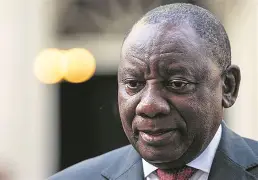
Ramaphosa Interdict Appeal
JOHANNESBURG – The **Constitutional Court has dismissed an application seeking permission to appeal against the interdict that temporarily halted Parliament’s impeachment proceedings against President Cyril Ramaphosa over the Phala Phala matter. R3million cops Ramaphosa protection
The apex court ruled on Wednesday that it was not in the interests of justice to hear the matter at this stage, effectively leaving the Western Cape High Court’s interdict in place.
ConCourt rejects bid to overturn Ramaphosa interdict
The application was brought by the African Transformation Movement (ATM) and other parties seeking direct access to the Constitutional Court to challenge the High Court order.
The applicants wanted the apex court to intervene in the legal dispute surrounding Parliament’s Section 89 impeachment process against Ramaphosa.
The Constitutional Court declined to entertain the appeal at this stage.
The decision means the High Court’s order temporarily preventing the impeachment inquiry from proceeding remains operative.
What did the High Court order say?
The Western Cape High Court granted Ramaphosa an urgent interdict on 24 July 2026, temporarily pausing Parliament’s Section 89 impeachment proceedings.
Ramaphosa had approached the court seeking to stop the process while he pursued a separate review application concerning the independent panel’s report into the Phala Phala matter.
The President’s legal challenge concerns the report that forms the basis of the parliamentary impeachment process.
Ramaphosa has maintained that he respects judicial independence and constitutional accountability.
Phala Phala impeachment process remains on hold
The latest Constitutional Court ruling does not mean that Ramaphosa has been cleared of the allegations surrounding Phala Phala.
Rather, it leaves the interim legal position established by the Western Cape High Court intact while the broader litigation continues.
The distinction is important.
An interdict is a court order providing temporary relief. It does not finally determine the underlying dispute.
The question of whether Parliament can proceed with the impeachment inquiry will therefore remain linked to the outcome of the President’s broader legal challenge.
Parliament had wanted to challenge the interdict
The parliamentary impeachment committee had resolved to approach the Constitutional Court directly after the Western Cape High Court ruling.
Committee chairperson Makashule Gana confirmed in July that the committee would seek to appeal the judgment directly in the apex court.
The application was subsequently opposed by Ramaphosa.
The latest ruling now represents a setback for those seeking to immediately revive the impeachment process.
Why the Phala Phala case matters
The Phala Phala controversy centres on the theft of foreign currency from Ramaphosa’s farm in Limpopo.
The scandal has generated years of political and legal battles, including questions about the source of the money, the President’s handling of the burglary and whether he breached constitutional or legal obligations.
In May, the Constitutional Court ordered Parliament to begin an impeachment inquiry after finding that an earlier parliamentary decision not to adopt the Section 89 independent panel’s report was irrational.
That judgment dramatically revived the impeachment process.
The subsequent High Court interdict has now temporarily interrupted that process.
A complicated legal battle
The latest ruling is another chapter in an increasingly complex legal dispute.
On one side, Parliament and political parties seeking accountability argue that the impeachment process must proceed.
On the other, Ramaphosa is challenging the underlying report through the courts and has successfully obtained temporary relief preventing the inquiry from moving forward while that litigation is considered.
The Constitutional Court’s decision does not finally resolve those competing positions.
What happens next?
The focus will now shift to the outstanding legal proceedings surrounding Ramaphosa’s review application.
The outcome of that case could determine whether Parliament is able to proceed with the Section 89 process or whether the President’s challenge succeeds in setting aside the findings that underpin the impeachment inquiry.
Until then, the Western Cape High Court’s interdict remains an important obstacle to the immediate continuation of the proceedings.
The bottom line
The Ramaphosa interdict appeal has suffered a major setback after the Constitutional Court dismissed the application for direct access to appeal the Western Cape High Court’s decision.
The decision means the order temporarily halting Parliament’s Section 89 impeachment proceedings remains in force.
However, Ramaphosa has not been cleared of the underlying Phala Phala allegations, and the ruling does not bring the broader legal battle to an end.
The next major development will be the outcome of the President’s separate challenge to the independent panel’s report.
For Parliament, opposition parties and Ramaphosa, the stakes remain exceptionally high as the courts continue to determine the path forward for the Phala Phala accountability process.


