Macron Trump French riots
Macron Slams Trump’s Riot Claims
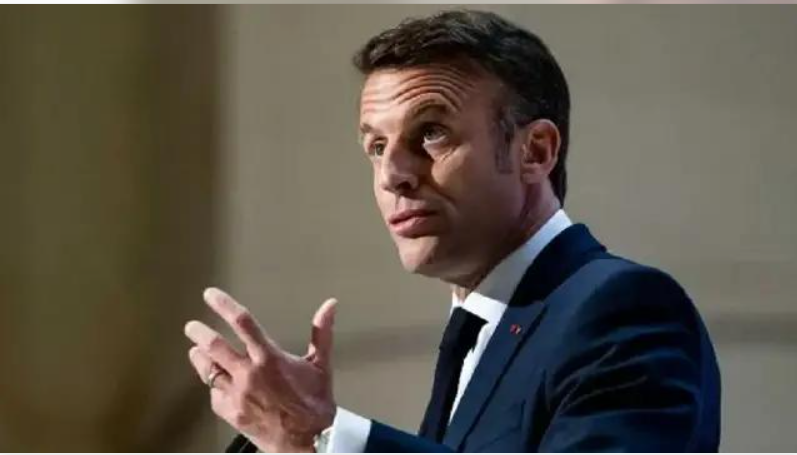
PARIS, 22 October 2026 — French President Emmanuel Macron has sharply criticised US President Donald Trump and other international leaders for blaming recent riots in France on immigration and Muslim communities, accusing them of spreading misleading narratives for political advantage.
Speaking to journalists in Doha, Qatar, on Wednesday, 21 October, Macron described comments made by foreign leaders about the unrest as unacceptable and stupid.
His remarks followed several days of demonstrations over rising living costs, which escalated into violence, looting and confrontations with police in parts of France.
Trump had suggested that immigration was responsible for the disturbances and urged Macron to tighten France’s borders.
However, Macron rejected the suggestion that the unrest was caused by an invasion of migrants or Islamist extremists.
The French president also warned that misleading videos and images generated using artificial intelligence had contributed to false narratives about the protests.
Macron Responds To Trump’s Immigration Claims
The diplomatic disagreement intensified after Trump publicly linked the French unrest to immigration.
Speaking to reporters in Washington on Monday, the US president argued that the disturbances reflected problems associated with immigration rather than economic conditions.
Trump urged Macron to strengthen border controls and suggested that France’s experience should serve as a warning to other countries.
The claims came as Trump continued campaigning ahead of the November 2026 US midterm elections.
Macron responded by accusing some international leaders of using France’s domestic problems to advance their political agendas.
When asked whether his criticism was directed at Trump, Macron replied: “Among others.”
His response made clear that the criticism extended beyond the US president.
French President Condemns Foreign Commentary
Macron said that the unrest had been followed by attempts to manipulate information about what happened.
He argued that some foreign politicians had repeated misleading accounts without sufficiently examining the evidence.
The president expressed particular concern about leaders who portrayed the demonstrations as evidence of an Islamist or migrant takeover.
He rejected that characterisation and accused foreign figures of making political use of France’s difficulties.
Macron also suggested that politicians facing elections in their own countries were using the French situation to appeal to domestic audiences.
The remarks reflect growing tensions between the French government and foreign leaders over how the protests should be interpreted.
What Caused The Riots In France?
The unrest began amid widespread demonstrations over the rising cost of living.
Thousands of people participated in protests organised by trade unions, student organisations and other groups.
Demonstrators raised concerns about expensive fuel, household costs and proposed reductions to public services.
Many of the demonstrations were peaceful.
However, violence erupted on the sidelines of protests on Saturday, 17 October.
Rioting and looting were reported in several cities, including Paris and Marseille.
The disturbances involved clashes with police, property damage and disruption to businesses.
The violence prompted authorities to introduce additional security measures and restrictions in affected areas.
Although the protests were rooted in economic grievances, the authorities are continuing to investigate the specific incidents of violence.
There is no substantiated evidence that migrants or Muslim communities collectively organised or caused the unrest.
AI-Generated Images Fuel Misinformation Concerns
One of Macron’s strongest criticisms concerned the circulation of artificial intelligence-generated material.
The French president said misleading images had appeared online showing events that had not occurred in France.
According to Macron, some of this material was used to support claims that migrants and Islamist extremists were responsible for the unrest.
He warned that such content could distort international understanding of events and intensify political tensions.
Macron did not publicly identify the specific images he was referring to during the reported remarks.
This means the individual examples cannot be independently assessed from his statement alone.
Nevertheless, the controversy highlights the growing challenge posed by synthetic images and videos during major news events.
AI-generated content can resemble authentic footage, making verification particularly important when reporting on protests, violence and politically sensitive developments.
Netanyahu Also Criticised Over Comments
Macron’s criticism was also understood to include Israeli Prime Minister Benjamin Netanyahu.
Netanyahu had described France’s unrest as the consequence of an invasion of extremist Islam.
Speaking during an interview on Tuesday, Netanyahu argued that French authorities had failed to confront extremist influences.
He encouraged French leaders to take a tougher approach.
His remarks drew criticism because the demonstrations involved a broad range of participants protesting economic conditions.
Macron did not specifically name Netanyahu in his initial criticism of foreign leaders.
However, his references to politicians campaigning in the Middle East and across the Atlantic were widely interpreted as directed towards both Netanyahu and Trump.
The Israeli prime minister faces an election in October, while Trump is campaigning ahead of the US midterms in November.
France Rejects Claims Of Foreign Interference In Riots
Macron made an important distinction between foreign interference in the protests themselves and the manipulation of information afterwards.
He did not claim that foreign governments had organised the demonstrations or caused the violence.
Instead, he criticised how international figures had discussed the unrest after it occurred.
This distinction matters because claims about foreign involvement in domestic protests require evidence.
The French president’s concern focused on the spread of misleading information and the political interpretation of events.
French Foreign Minister Jean-Noël Barrot also addressed the controversy.
He said French officials were prepared to provide clarification to foreign governments to prevent the amplification of inaccurate claims.
The government’s response reflects its attempt to challenge international narratives while addressing the underlying domestic crisis.
Macron Promises Tougher Security Measures
While rejecting the foreign commentary, Macron also acknowledged the seriousness of the violence.
The president pledged to prevent further disorder during upcoming demonstrations.
He announced plans to meet intelligence officials and senior ministers on Thursday to review the security situation.
French authorities have introduced targeted curfews and restrictions on gatherings in some areas.
Additional demonstrations are expected on Saturday, 24 October.
The main student union UNEF has called for further rallies, while groups associated with the Yellow Vest movement are also planning demonstrations.
Macron said authorities would take action against individuals seeking to cause further violence.
The government faces the challenge of protecting the right to peaceful protest while preventing looting, assaults and property destruction.
Unions Plan Further Action Over Living Costs
The dispute with Trump comes as France continues to face substantial domestic economic pressure.
Trade unions have criticised the rising cost of living and proposed cuts to public services.
Talks between the government and union representatives have not yet produced an agreement capable of easing tensions.
Unions have announced plans for a general strike on 5 November.
The planned industrial action could affect public services, transport and other sectors.
The demonstrations highlight frustration over household finances and the government’s economic policies.
Higher energy prices have added to the pressure.
France has been seeking additional fuel supplies as international energy markets remain disrupted by conflict in the Middle East.
These economic challenges provide important context for understanding why the demonstrations began.
Macron Secures Additional Diesel Supplies
Macron made his comments during a visit to Qatar as part of a wider diplomatic effort to secure energy supplies.
France has been seeking additional diesel and other petroleum products from Gulf countries.
According to reporting by the Associated Press, the United Arab Emirates agreed to provide an additional 100,000 metric tonnes of diesel per month.
Further volumes have been discussed with Bahrain and Saudi Arabia.
The French presidency said the arrangements could provide approximately 295,000 additional tonnes of diesel per month if the planned supplies are secured.
That would represent more than 10% of France’s monthly diesel consumption.
The agreements are intended to ease supply pressures as energy costs remain a major concern for households and businesses.
However, securing additional supplies does not automatically guarantee immediate reductions in consumer fuel prices.
Trump And Macron’s Relationship Faces New Tensions
Trump and Macron have experienced periods of cooperation and disagreement over several years.
Their relationship has included disputes involving trade, defence spending, international security and diplomatic priorities.
The latest disagreement adds immigration and the interpretation of France’s protests to that list.
Trump has consistently made immigration enforcement a central part of his political messaging.
Macron, meanwhile, has defended France’s right to address its domestic challenges without what he considers misleading commentary from foreign leaders.
The two presidents’ differences reflect broader disagreements over migration, nationalism and the role of political rhetoric.
However, the exchange does not necessarily indicate a change in formal diplomatic relations between France and the United States.
The countries remain important economic and security partners.
Why The Dispute Matters Beyond France
The controversy illustrates how domestic protests can quickly become part of international political debates.
Images of riots and public disorder often circulate widely on social media, sometimes without sufficient context.
Foreign politicians may interpret the same events through different political perspectives.
In this case, Trump and Netanyahu emphasised immigration and extremism, while Macron pointed to economic grievances and misleading online narratives.
The disagreement also raises questions about how political leaders should verify information before making public claims about events in other countries.
The spread of AI-generated material adds another complication.
News organisations and audiences increasingly need to distinguish verified footage from fabricated or misleading content.
This is particularly important when allegations concern religious, ethnic or migrant communities.
What Happens Next?
France is preparing for another round of demonstrations on Saturday, 24 October.
The government is expected to maintain heightened security measures in areas considered vulnerable to further violence.
Macron will also face continued pressure from unions and political opponents to address the cost-of-living crisis.
Meanwhile, the dispute with Trump and Netanyahu may continue as international leaders respond to the French president’s remarks.
The immediate challenge for the French government is to prevent further violence while addressing the economic grievances behind the demonstrations.
The broader diplomatic dispute centres on whether foreign leaders have accurately represented the causes of the unrest.
Macron’s response underscores his government’s position that France’s domestic problems should not be used to support unsubstantiated claims about migrants or religious communities.