Thabo Mbeki TRC inquiry
Mbeki Denies Apartheid Prosecution Interference
JOHANNESBURG, 19 October 2026 — Former President Thabo Mbeki has denied allegations that his administration deliberately prevented the prosecution of apartheid-era crimes, telling the Truth and Reconciliation Commission (TRC) Cases Inquiry that neither he nor his Cabinet instructed prosecutors to abandon investigations.
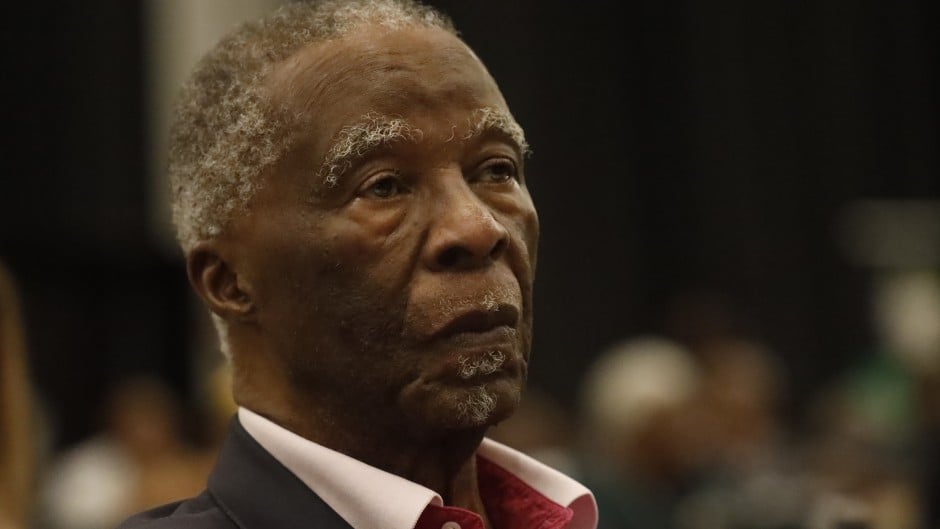
Mbeki appeared before the judicial commission in Newtown, Johannesburg, on Monday, where he responded to claims of political interference in criminal cases referred for prosecution following South Africa’s transition to democracy.
The inquiry, chaired by retired Constitutional Court Justice Sisi Khampepe, is investigating whether political leaders or government officials interfered with efforts to bring perpetrators of apartheid-era crimes to justice.
Mbeki, who served as South Africa’s president from 1999 to 2008, rejected allegations that his administration entered into secret arrangements to protect former apartheid security officials from criminal prosecution.
His testimony comes amid longstanding demands from victims’ families for accountability over cases that remained unresolved for decades.
Mbeki Denies Blocking Apartheid Prosecutions
During his testimony, Mbeki maintained that decisions concerning criminal prosecutions were constitutionally entrusted to the National Prosecuting Authority.
He said neither the president nor Cabinet had the legal authority to instruct prosecutors to pursue or abandon particular criminal cases.
Mbeki rejected allegations that he personally authorised the suppression of investigations or prosecutions involving apartheid-era human rights violations.
He also challenged claims that his administration had developed a political arrangement designed to prevent former security officials from facing criminal charges.
The former president argued that the NPA should explain why certain matters referred by the TRC did not result in prosecutions.
His position places the independence and conduct of prosecuting authorities at the centre of the inquiry’s investigation.
However, the commission has not yet determined whether political interference occurred.
Secret Amnesty Agreement Allegations Rejected
One of the most significant issues raised during the hearings concerns allegations of a secret understanding between ANC leaders and former apartheid-era military and police officials.
Previous witnesses have suggested that discussions took place about protecting individuals from prosecution for politically motivated crimes committed before democracy.
Former NPA official Anton Ackermann has testified about information he received concerning alleged high-level discussions and possible interference in TRC-related prosecutions.
Mbeki strongly disputed the suggestion that he participated in negotiations designed to secure blanket immunity.
He acknowledged that meetings involving former military and police figures had taken place.
However, he said the purpose of those discussions was to encourage participation in the truth and reconciliation process rather than to guarantee immunity from prosecution.
The distinction is important because the TRC’s amnesty process was established by law and required applicants to meet specific conditions.
An informal political agreement would not automatically have provided lawful immunity from prosecution.
ANC’s Collective Amnesty Application Explained
Mbeki also addressed the ANC’s controversial application for collective amnesty involving 37 party leaders.
The application concerned political decisions made during the liberation struggle that could have contributed to human rights violations.
Mbeki denied that the initiative was intended to shield ANC leaders from accountability.
He explained that the party wanted its leadership to account for decisions taken during the struggle and encourage former apartheid leaders to do the same.
According to Mbeki, the ANC believed that participation by its own senior figures could strengthen calls for former President FW de Klerk and members of his administration to engage with the TRC process.
The collective amnesty decision was subsequently overturned by a court because it did not satisfy the legal requirements for individual accountability and disclosure of specific offences.
Mbeki told the inquiry that the ANC accepted the ruling and did not seek executive intervention to restore the collective amnesty.
What Is The Khampepe Commission?
The Khampepe Commission, formally known as the TRC Cases Inquiry, was established by President Cyril Ramaphosa on 29 May 2025.
Its mandate is to investigate allegations that attempts were made to prevent the investigation or prosecution of cases arising from the Truth and Reconciliation Commission.
The inquiry is chaired by retired Constitutional Court Justice Sisi Khampepe.
She is assisted by retired judge Frans Diale Kgomo and Advocate Andrea Gabriel SC.
The commission is examining events involving the criminal justice system, political authorities and decisions taken after the TRC referred cases for further investigation.
Its work includes considering whether prosecutorial independence was compromised and whether officials or political figures contributed to delays.
The inquiry is not itself a criminal trial.
Its role is to investigate the relevant evidence, make findings and provide recommendations.
Why Apartheid-Era Cases Remain Unresolved
South Africa’s Truth and Reconciliation Commission was established in the 1990s to investigate serious human rights violations committed during apartheid.
Chaired by Archbishop Desmond Tutu, the TRC heard testimony from victims, survivors and perpetrators.
The process allowed qualifying applicants to receive amnesty if they made full disclosure of politically motivated offences and satisfied the relevant legal requirements.
However, individuals who did not receive amnesty could still face criminal prosecution.
Approximately 300 cases were referred for further investigation or prosecution.
Only a limited number subsequently resulted in successful prosecutions.
Families of victims have spent decades seeking explanations for the delays.
Some have pursued legal action to establish why investigations stalled and whether political interference prevented prosecutions from proceeding.
Victims’ Families Seek Accountability
For families affected by apartheid-era violence, the inquiry represents an opportunity to establish what happened to cases that were not successfully prosecuted.
Several prominent matters have been revisited through reopened inquests and renewed investigations.
The unresolved cases include deaths and alleged abuses involving apartheid-era security structures.
Families have argued that prolonged delays denied them meaningful opportunities for justice.
The passage of time has also complicated criminal investigations.
Potential witnesses have died, evidence has become harder to obtain, and legal proceedings have been affected by the age of the cases.
These difficulties make the question of whether investigations were deliberately obstructed particularly significant.
The inquiry must distinguish between delays caused by investigative or institutional failures and those resulting from unlawful interference.
Mbeki Challenges Interpretation Of 2003 Speech
Mbeki also addressed questions surrounding a parliamentary statement he made in April 2003 when the TRC’s final report was tabled.
Critics have suggested that political statements and subsequent prosecution policies may have contributed to the failure to pursue apartheid-era cases.
Mbeki rejected interpretations suggesting that his speech authorised a general amnesty or directed prosecutors to abandon cases.
He maintained that the criminal justice system retained responsibility for deciding whether individuals should be prosecuted.
The commission is examining these competing accounts alongside testimony from former prosecutors and other witnesses.
The significance of the 2003 statement will depend on the evidence concerning how it was understood and whether it influenced subsequent decisions.
Former NPA Official’s Evidence Under Scrutiny
Anton Ackermann, a former NPA official involved in apartheid-era investigations, has previously given evidence concerning alleged obstacles to prosecuting TRC cases.
His testimony included claims about discussions involving political figures and former security officials.
He also raised concerns about changes in prosecutorial arrangements and the handling of certain cases.
Mbeki’s appearance provides the commission with an opportunity to examine those allegations against the account of a former head of state.
The inquiry must consider documentary evidence, witness credibility and the responsibilities of different government institutions.
Allegations made by witnesses remain allegations unless supported by findings.
Mbeki’s denials must likewise be considered alongside the broader evidentiary record.
Jacob Zuma Also Expected To Testify
Former President Jacob Zuma is another prominent figure expected to provide evidence before the commission.
Zuma had previously been scheduled to appear on Thursday, 22 October 2026.
However, his appearance has been postponed following his recent hospitalisation, and a new date had not been confirmed at the time of reporting.
Both Mbeki and Zuma previously challenged Justice Khampepe’s continued role as chairperson of the inquiry.
Their efforts to secure her recusal were unsuccessful.
The commission continues to hear evidence as it seeks to establish whether attempts were made to prevent apartheid-era cases from proceeding.
What Happens Next?
Mbeki’s testimony is scheduled to continue on Tuesday, 20 October 2026.
Further questioning may examine the relationship between political authorities and prosecuting officials, the alleged discussions with former apartheid security leaders and the reasons prosecutions did not proceed.
The commission is also expected to consider evidence from other witnesses and government institutions.
Its eventual findings could help clarify whether the failure to prosecute certain apartheid-era crimes resulted from political interference, institutional failures or a combination of factors.
For victims’ families, the central question remains why so many cases were left unresolved despite referrals from the TRC.
The inquiry’s final recommendations could influence how the state approaches outstanding apartheid-era investigations and prosecutions.