SA Organised Crime Council
SA Organised Crime Council
South Africa should establish an independent organised crime council to coordinate the country’s response to criminal syndicates and prevent the infiltration of the justice system, an international expert has told the Madlanga Commission. Madlanga Commission Resumes
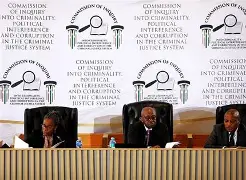
Dr Mark Shaw, an expert on policing, illicit markets and organised crime, presented several short- and long-term recommendations during his appearance before the commission in Pretoria. Madlanga Inquiry Denies Arrests
His central proposal is the creation of an SA Organised Crime Council that would bring government, law enforcement, prosecutors, researchers, businesses, labour organisations, civil society and affected communities into a coordinated national structure.
South Africa among worst-affected countries
Shaw told the commission that South Africa ranks seventh out of 193 countries assessed for organised crime, placing it among the worst-affected nations globally.
He said organised crime had become a serious threat to South Africa’s constitutional democracy, economic stability and public institutions.
The country’s criminal networks are involved in activities including illegal mining, drug trafficking, extortion, construction mafias, kidnapping, wildlife trafficking, illicit tobacco, fuel theft, tender manipulation and the trafficking of firearms.
The challenge is intensified when criminal organisations establish relationships with police officers, prosecutors, politicians or other public officials who can provide protection or access to confidential information.
Council could be created immediately
Shaw recommended that the police minister establish the proposed council through a ministerial directive as a short-term intervention.
This would allow it to begin operating without waiting for Parliament to pass new legislation.
The council could initially be financed from the Police Ministry’s existing budget. However, Shaw stressed that its structure would need safeguards to protect its independence and prevent political interference.
Commission chairperson Justice Mbuyiseli Madlanga indicated that the proposal could be developed further to strengthen the council’s independence.
Who would serve on the council?
The proposed SA Organised Crime Council would include stakeholders from inside and outside government.
Participants could include:
- The South African Police Service;
- The Hawks;
- The National Prosecuting Authority;
- Crime Intelligence and other intelligence agencies;
- Civil society organisations working on policing and governance;
- Academics and independent research institutions;
- Business and organised labour;
- Financial and forensic specialists; and
- Communities directly affected by organised crime.
Including community representatives would ensure that national policy responds to the experiences of people living with extortion, gang violence, illegal mining and other forms of organised criminal activity.
Five proposed council functions
Shaw identified five principal functions for the council.
1. Build political and public support
The council would build support across government and civil society for a coordinated national response to organised crime.
It would also monitor whether government departments and law-enforcement bodies were implementing agreed policies.
2. Include stakeholders outside government
Civil society, businesses, researchers and affected communities would be given a formal platform to participate in policy discussions.
These stakeholders could also contribute practical solutions based on their experience of organised crime at local and industry level.
3. Advise the police minister
The council would advise the police minister on implementing a national organised crime strategy.
Its recommendations would be supported by research, criminal-market analysis and evidence gathered by independent experts.
4. Monitor law-enforcement responses
The council would monitor how police and prosecutors respond to organised crime and the infiltration of public institutions.
It would report its findings to the minister and identify operational weaknesses, coordination failures and areas where investigations were being obstructed.
5. Implement Madlanga recommendations
The council could help implement recommendations arising from the Madlanga Commission after its final report is published.
This would bridge the period between the commission making recommendations and Parliament adopting any necessary remedial legislation.
New offence targeting unexplained wealth
Shaw also recommended that Parliament introduce a specific criminal offence dealing with unexplained wealth held by public officials.
Such a law could require an official to provide a credible explanation when their assets or lifestyle are substantially inconsistent with their legitimate income.
The measure could help authorities act against officials suspected of receiving money or benefits from criminal syndicates, even where investigators struggle to prove the precise origin of every asset.
However, any unexplained-wealth law would need to respect constitutional protections, including the presumption of innocence and the right to a fair trial.
It would also require clear thresholds and strong oversight to prevent selective or politically motivated enforcement.
Fragmented institutions weaken crime fighting
South Africa already has several institutions responsible for investigating crime and corruption, including SAPS, the Hawks, the National Prosecuting Authority, the Financial Intelligence Centre and the Special Investigating Unit.
However, poor coordination, institutional rivalries and compromised officials can prevent intelligence from being shared or translated into successful prosecutions.
Investigations may also fail when agencies pursue separate parts of the same criminal network without a common strategy.
The proposed council would not replace existing law-enforcement institutions. Its role would be to create a unified policy, monitor implementation and ensure cooperation across government and society.
Madlanga Commission examines criminal infiltration
The Madlanga Commission is investigating allegations of criminality, corruption and political interference across South Africa’s criminal justice system.
Evidence before the commission has included claims that criminal networks infiltrated police structures and municipalities, including Ekurhuleni and Tshwane.
The inquiry has also examined alleged relationships between senior police officials, politicians, businesspeople and suspected criminal figures.
Shaw’s evidence provided the commission with an international and comparative perspective on how other countries have responded to deeply entrenched organised crime.
The commission is expected to submit its recommendations to President Cyril Ramaphosa in November 2026.