Ramaphosa Condemns Taliban Women Ban
Ramaphosa condemns Taliban ban on Afghan women
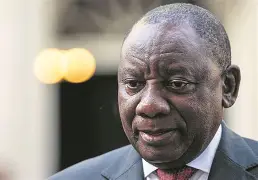
PRETORIA – President Cyril Ramaphosa has spoken out against the Taliban’s restrictions on women and girls in Afghanistan, using South Africa’s Women’s Day commemorations to condemn the exclusion of Afghan women from education, work and public life.
Ramaphosa made the remarks at the Union Buildings in Pretoria during the commemoration of the 70th anniversary of the 1956 Women’s March, held under the theme “Empowered women empower nations.” Nobel Peace Prize laureate Malala Yousafzai was among the prominent guests at the event.
The President’s comments placed Afghanistan’s worsening gender restrictions within a broader discussion about women’s rights, equality and the continuing struggle against discrimination.
Ramaphosa condemns exclusion of Afghan women
Ramaphosa criticised the Taliban’s exclusion of Afghan women from classrooms, workplaces and public life.
The comments come as women and girls in Afghanistan continue to face sweeping restrictions on their participation in society under Taliban rule.
The issue has become one of the world’s most prominent examples of the rollback of women’s rights.
South Africa’s government has previously expressed concern about the systematic restrictions imposed on Afghan women and girls, including limits on education, employment and participation in public life.
Women’s rights take centre stage
The President’s intervention came during a commemoration rooted in South Africa’s own history of women’s resistance.
The 1956 Women’s March saw thousands of women march to the Union Buildings to oppose apartheid-era pass laws.
Seventy years later, the historic event continues to serve as a symbol of women’s political participation and resistance to oppression.
Ramaphosa’s remarks therefore connected South Africa’s own history with the struggle of women elsewhere in the world.
The message was that women’s rights cannot be treated as secondary to political or cultural considerations.
Malala Yousafzai joins South African women
The presence of Malala Yousafzai added international significance to the event.
Yousafzai has spent much of her public life campaigning for girls’ education and women’s rights, after surviving an assassination attempt by the Taliban in Pakistan as a teenager.
During her visit to South Africa, she highlighted the plight of Afghan women and called for solidarity with women facing oppression under Taliban rule.
Her appearance alongside Ramaphosa created a powerful link between South Africa’s historic women’s rights movement and the current international struggle for Afghan women’s freedom.
Afghan girls face education restrictions
One of the most significant Taliban restrictions has been the exclusion of girls from secondary and higher education.
The restrictions have effectively prevented millions of Afghan girls and young women from continuing their education beyond the permitted levels.
The consequences extend beyond classrooms.
Education is closely linked to employment, economic independence and women’s ability to participate meaningfully in society.
The longer restrictions remain in place, the greater the risk that an entire generation of Afghan women will lose access to educational and professional opportunities.
Women pushed out of public life
The restrictions extend beyond education.
Afghan women have faced increasingly severe limitations on employment, movement and public participation.
United Nations discussions have highlighted concerns about Taliban policies that exclude women from humanitarian work and other areas of public life.
The exclusion creates serious humanitarian consequences because women are essential to delivering services to other women and children.
It also reinforces economic dependence and social isolation.
South Africa’s position on women’s rights
Ramaphosa’s remarks are consistent with South Africa’s broader diplomatic emphasis on women’s rights and gender equality.
South Africa has repeatedly positioned itself as a supporter of women’s participation in peace, security and political decision-making.
That position has particular resonance during Women’s Month, when the country commemorates the role women played in opposing apartheid.
The Afghan situation provides an international dimension to that message.
Why the Taliban restrictions matter globally
The situation in Afghanistan is not only an Afghan issue.
The international community has increasingly treated the restrictions as a human rights crisis with broader implications.
The United Nations has warned that discriminatory policies excluding women from society have humanitarian and economic consequences.
Women excluded from education and employment are less able to support themselves and their families.
At the same time, countries lose access to a significant portion of their potential workforce.
The consequences therefore extend well beyond individual rights.
A warning about the cost of exclusion
The Afghan experience illustrates what can happen when women are systematically removed from economic and public life.
Restrictions on education reduce the future pool of doctors, teachers, lawyers, engineers and other professionals.
Restrictions on employment reduce household income and economic activity.
Restrictions on movement and public participation weaken women’s ability to influence decisions affecting their families and communities.
The result is not simply a women’s rights issue.
It becomes a national development issue.
Ramaphosa’s message during Women’s Month
For South Africa, the timing of Ramaphosa’s comments was significant.
Women’s Day commemorates the historic 1956 march, when women challenged discriminatory laws and demonstrated the power of organised resistance.
By speaking about Afghan women during the commemoration, Ramaphosa broadened the message beyond South Africa.
The underlying principle is that women’s rights should be protected regardless of nationality or geography.
The struggle for equality continues
South Africa’s own history demonstrates that progress on women’s rights is not automatic.
The country’s democratic Constitution established equality and human rights as fundamental principles, but social and economic inequality remain challenges.
The situation in Afghanistan demonstrates the extreme consequences that can follow when women are systematically excluded from public life.
Ramaphosa’s comments therefore place the country’s Women’s Day message within a wider global debate about equality and human rights.
The bottom line
President Cyril Ramaphosa has condemned the Taliban’s restrictions on Afghan women, speaking during South Africa’s 70th anniversary commemoration of the 1956 Women’s March at the Union Buildings.
His remarks focused on the exclusion of Afghan women from education, workplaces and public life, while Nobel Peace Prize laureate Malala Yousafzai also used her South African visit to highlight the plight of Afghan women.
The intervention adds South Africa’s voice to international calls for the rights and freedoms of Afghan women and girls to be restored.
As South Africa celebrates the legacy of the women who marched to the Union Buildings in 1956, the message from Pretoria is clear: women’s rights remain a global struggle, and the fight for equality does not end at national borders.