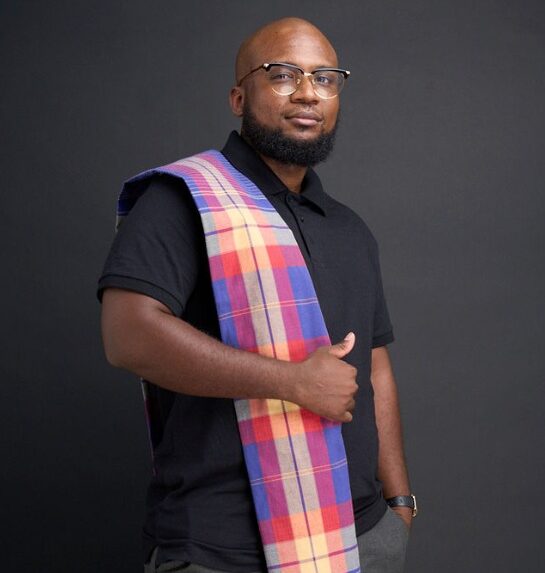
Hlokomela Tackles Healthcare Access
Hlokomela Tackles Healthcare Access: How Moses Tjege is Building a Digital Health Platform for South Africa
JOHANNESBURG – For many South Africans, the biggest challenge in accessing healthcare is not necessarily the absence of healthcare services. It is getting to them.
Appointments can still involve fragmented booking processes, long waits and information spread across different systems. Smaller and independent healthcare practices can also lack the digital infrastructure available to larger healthcare networks.
It is this gap that Moses Tjege, founder of Knockturnal (Pty) Ltd, identified as an opportunity to build something specifically for the South African market.
His answer is Hlokomela, a digital health platform designed to connect patients, healthcare providers and administrators through one system.
Building Hlokomela around South Africa’s reality
For Tjege, the starting point was access.
After years of building cloud systems, he says he repeatedly encountered the same problem: healthcare exists, but reaching it can be unnecessarily difficult.
Booking systems can be fragmented and analogue, while patients may have to navigate disconnected information and processes.
At the same time, smaller healthcare practices can be left without the digital tools that larger networks take for granted.
Tjege saw an opportunity to apply technology that already exists to everyday healthcare in South Africa.
That became the foundation for Hlokomela.
How Hlokomela works
Hlokomela is designed to bring different parts of the appointment journey into one platform.
Patients can search for healthcare providers, view real availability and book appointments. They can then receive confirmations and reminders through SMS and email.
If circumstances change, patients can also reschedule appointments.
For healthcare providers, the platform allows them to manage availability and bookings, accept or decline requests, conduct consultations and collect patient feedback.
Administrators have a separate role, including coordinating operations and verifying that healthcare providers listed on the platform are legitimate.
The objective is to connect the process from the initial appointment through to follow-up rather than leaving patients and providers to manage disconnected systems.
Four South African problems Hlokomela is designed to solve
What makes Hlokomela particularly interesting from a technology and business perspective is that its design is based on constraints that are common in South Africa.
Tjege identifies four major considerations: connectivity, affordability, data sovereignty and language.
1. Connectivity
Hlokomela is designed to reach patients through SMS, meaning access is not dependent entirely on having a smartphone or high-speed internet connection.
The company is also engineering the platform to work offline in areas where connectivity is unreliable.
This is a significant technical consideration for a healthcare platform because digital services cannot be genuinely accessible if they only function effectively in areas with strong internet connectivity.
2. Affordability
The platform is intended to be accessible to smaller and independent healthcare practices rather than focusing exclusively on large medical networks.
This creates a different commercial proposition for the business.
Instead of building primarily for organisations with significant technology budgets, Hlokomela is targeting practices and communities that may have fewer resources but still need reliable digital infrastructure.
3. Data sovereignty
Patient information is another critical component.
Tjege says Hlokomela keeps patient data in South Africa under the country’s own data-protection framework.
For a digital healthcare business, data governance is not simply an administrative consideration. Patient information is highly sensitive, making security, privacy and responsible data management fundamental to building trust.
4. Language
Multilingual support is also on Hlokomela’s roadmap.
Tjege argues that a platform designed for South Africans should ultimately be able to communicate with South Africans in the languages they use.
The company’s approach is therefore not to treat these issues as optional features added after development.
They are part of the reasoning behind the product itself.
Why healthcare technology is different
Tjege’s move into healthcare technology follows Knockturnal’s broader focus on building digital products for the South African market.
But he says healthcare has taught him an important lesson: trust and reliability matter more than features.
That changes how a technology company approaches product development.
Healthcare users need confidence that systems will work when they need them.
For Tjege, this has also meant learning to build with healthcare providers rather than simply for them.
The result is a product shaped by how practitioners actually work.
He describes the process of designing around South Africa’s limitations differently from the way limitations are often viewed in technology.
For Hlokomela, constraints around cost, connectivity and language are not merely obstacles.
They are part of the innovation challenge.
The difficult journey from idea to healthcare platform
Turning the concept into a functioning platform has not been straightforward.
One of the biggest technical challenges is developing genuinely for offline and low-connectivity environments.
According to Tjege, that requires serious engineering rather than simply adding an offline feature at the end of development.
Funding presents another challenge.
A healthcare platform requires time to establish trust, infrastructure and adoption before it can achieve significant scale.
Tjege says securing investors who understand the need for patient capital has required persistence.
Then there is the challenge of adoption.
Healthcare providers are busy, and introducing new technology means asking them to change established routines.
For Hlokomela, reliability and demonstrable benefits therefore become critical to convincing practices to make that change.
Hlokomela’s three-to-five-year ambition
Tjege has a significant ambition for Hlokomela over the next three to five years.
His vision is for the platform to become a trusted part of how South Africans access healthcare.
That includes building a large network of healthcare providers and making the platform available offline and in multiple languages.
He also sees potential for Hlokomela to work across both private healthcare and, through interoperability with national systems, the public sector.
The longer-term ambition extends beyond South Africa.
Tjege believes the challenges Hlokomela is attempting to solve — particularly access, connectivity and affordability — are shared across many African countries.
But there is a clear order to that expansion strategy.
South Africa comes first.
His intention is to prove the model at home before taking it into other African markets.
More than an appointment-booking platform
At first glance, Hlokomela could be viewed simply as a digital healthcare appointment platform.
But Tjege’s description suggests a broader objective.
The underlying problem is not simply booking an appointment.
It is the friction that can prevent a person from reaching healthcare that already exists.
That includes connectivity, affordability, fragmented systems, communication and access to reliable information.
The technology is therefore being designed around the patient journey rather than around technology for its own sake.
The business opportunity
Hlokomela also represents an example of how South African technology companies can build products around local market conditions instead of simply adapting solutions designed elsewhere.
Its target market includes patients, independent healthcare providers and administrators.
For smaller practices, digital tools can potentially help improve appointment management and communication without requiring the infrastructure of a large healthcare network.
For patients, the value proposition is simpler access to healthcare providers and appointment information.
For the broader healthcare ecosystem, the opportunity lies in connecting systems that have traditionally operated separately.
Moses Tjege’s bigger message
For Tjege, the project ultimately comes down to two words: access and dignity.
He argues that too many South Africans struggle to reach healthcare that already exists because the path to accessing it is broken.
Hlokomela is his attempt to address that gap through technology built specifically around South African realities.
The ambition is straightforward: make getting healthcare simpler, fairer and more accessible, regardless of where someone lives or what type of phone they carry.
What comes next for Hlokomela?
The next phase will be critical.
Hlokomela must demonstrate that its technology can work reliably in real-world conditions, convince healthcare providers to adopt the platform and establish the trust required to operate in a sensitive industry.
The company also has ambitions around offline functionality, multilingual support, interoperability and eventual expansion into other African markets.
Those ambitions will require technology, funding, partnerships and sustained execution.
For now, however, Tjege’s focus remains firmly on South Africa.
The company’s proposition is built around a simple idea: technology should adapt to the realities of the people it is intended to serve.
And for Hlokomela, that means designing healthcare technology around the South African patient — not expecting the patient to adapt to the technology.
About Moses Tjege and Knockturnal
Moses Tjege is the founder of Knockturnal (Pty) Ltd and the driving force behind Hlokomela.
The company is developing Hlokomela as a South African digital health platform focused on improving access to healthcare through technology.
Hlokomela’s launch event is scheduled for 27 August 2026.