South Africa’s Agriculture Minister in Court
South Africa’s Agriculture Minister in Court Battle Over Foot-and-Mouth Disease Vaccine Policy Amid Limpopo and KZN Outbreaks
South Africa’s Minister of Agriculture, John Steenhuisen, is facing mounting pressure as a legal battle unfolds in the Gauteng High Court in Pretoria—while foot-and-mouth disease (FMD) continues to spread across key farming provinces including Limpopo, KwaZulu-Natal, and Free State.
The convergence of a worsening outbreak and a high-stakes court case has placed South Africa’s livestock industry on edge.
Outbreak Hotspots: Limpopo, KZN and Free State Under Pressure
The current FMD outbreak has intensified in major agricultural regions:
- Limpopo – A critical cattle farming hub, now experiencing repeated outbreaks and strict movement controls
- KwaZulu-Natal – One of the earliest epicentres, with ongoing containment challenges
- Free State – A key beef-producing province now facing rising infection risks
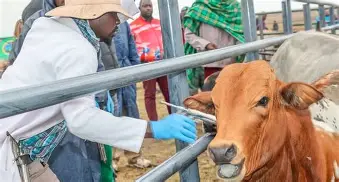
Veterinary authorities have implemented quarantine zones, but farmers say the measures are not enough without rapid vaccine access.
Farmers Take Government to Court Over Vaccine Access
Agricultural groups have taken the government to court, arguing that current vaccine policies are too restrictive during a crisis.
The case in Pretoria centers on whether farmers should be allowed to independently import and administer vaccines in outbreak zones like Limpopo and KZN.
Farmers warn that delays in vaccine approvals are costing millions and increasing the risk of further spread.
High Court Ruling Adds Pressure on Government
The Gauteng High Court has refused urgent relief but ordered the Agriculture Ministry to act swiftly.
The court:
- Ordered a national vaccination plan
- Set a deadline of 17 April 2026
- Postponed the matter to 28 April 2026
- Placed legal cost pressure on government
This ruling has intensified urgency, especially in outbreak-heavy provinces.
Minister Steenhuisen Defends Centralised Control
Minister John Steenhuisen maintains that centralized vaccine control is essential to protect national biosecurity.
He argues that allowing uncontrolled vaccine use in provinces like Limpopo and KZN could:
- Disrupt disease tracking systems
- Lead to incorrect vaccine strain usage
- Undermine export credibility
Economic Impact Hits Rural Provinces Hard
The outbreak is hitting rural economies in Limpopo, Free State, and KZN the hardest.
Farmers in these regions face:
- Loss of income due to restricted livestock movement
- Rising feed and operational costs
- Reduced access to local and export markets
South Africa’s beef export sector has already taken a significant hit, with trade partners imposing restrictions.
Vaccine Supply Challenges in High-Risk Areas
Although South Africa has made progress in developing local vaccines, supply remains inconsistent—especially in remote and high-risk provinces.
Farmers in Limpopo and KZN argue that:
- Distribution is too slow
- Rural areas are underserved
- Private sector support is being limited
What Happens Next: All Eyes on April Deadline
As the case heads back to court on 28 April 2026, attention is focused on whether the government can deliver a workable vaccination plan—particularly for outbreak hotspots.
The outcome will directly affect farmers in Limpopo, KZN, and Free State, where the disease continues to threaten livelihoods.
Conclusion: A National Crisis with Regional Consequences
The ongoing legal battle and the spread of foot-and-mouth disease across South Africa highlight a critical moment for the country’s agricultural sector.
With provinces like Limpopo, KwaZulu-Natal, and Free State at the center of the crisis, the government’s response in the coming weeks will determine whether the outbreak is contained—or escalates further.