Julius Malema’s Court Day
Julius Malema’s Court Day: What to Know About the Firearm Judgment
Introduction
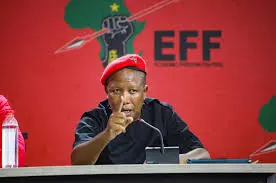
Today, 29 September 2025, South Africa watches closely as Julius Malema, leader of the Economic Freedom Fighters (EFF), and his co-accused Adriaan Snyman await judgment in a long-running firearms case. The East London Magistrate’s Court is set to issue its verdict, capping years of legal wrangling.
Background: The Firearm Discharge Case
- The case stems from an incident in July 2018, during the EFF’s 5th anniversary rally at Sisa Dukashe Stadium in Mdantsane, Eastern Cape.
- Malema is accused of unlawfully discharging a firearm, possessing a firearm and ammunition illegally, and reckless endangerment.
- Snyman, his former bodyguard, is charged with supplying the firearm, failing to take precautions, and related offenses.
- Malema’s defense has consistently argued the firearm was a prop or blank-firing weapon, not a live weapon, and that the state’s evidence is weak or circumstantial.
What Is Happening Today: The Judgment
- The East London Magistrate’s Court is expected to deliver its verdict today.
- The court will decide whether Malema and Snyman are guilty or not on the charges brought against them.
- If convicted, Malema faces serious consequences, potentially up to 15 years in prison (depending on sentencing and which counts are upheld).
- A large number of EFF supporters are gathering outside the courthouse to witness the outcome.
Key Arguments & Evidence in the Trial
Prosecution’s Case
- The state relies heavily on video footage, eyewitness reactions (crowd panic), and evidence of spent cartridges, arguing these show the firearm was discharged and posed danger.
- Prosecutors argue that the way the crowd reacted (people scattering) indicates fear and risk.
Defense’s Case
- Malema and his lawyers argue no witness has testified to seeing a live round or damage caused by it, despite a large crowd.
- They challenge the authenticity or conclusiveness of the video evidence.
- They maintain that if no one was harmed, no damage done, and no credible eyewitnesses, the case for a live firearm is not proven beyond reasonable doubt.
What’s at Stake & Implications
- Legal precedent: The verdict will have ramifications for how firearm control laws and evidence standards are enforced in South Africa.
- Political dimension: Malema has framed the case as a politically motivated prosecution, arguing it’s intended to weaken or silence him.
- Public perception: The outcome could influence how the public views accountability, the justice system, and fairness in high-profile political cases.
- Sentence severity: If convicted, the court must weigh factors — whether to impose full maximum sentences or more moderate penalties.
Possible Outcomes & What Happens Next
| Possible Verdict | Likely Consequences |
|---|---|
| Not Guilty | Malema and Snyman are cleared, reinforcing defense claims, possibly boosting Malema’s political standing. |
| Guilty (some counts) | The court may convict on fewer charges than those alleged, reducing maximum exposure. |
| Guilty (all counts) | Major sentencing decision, possibly long prison term or alternative sentencing (fine, suspended sentence). |
- After the verdict, both sides can consider appeals or further legal challenges depending on findings.
- The public reaction and political fallout will likely be closely watched across media, social platforms, and among political parties.
Conclusion
Today’s court judgment marks a pivotal moment in Julius Malema’s legal battles. For years, his firearm discharge case has been mired in controversy, delay, and political rhetoric. Whether he is found guilty or acquitted, the decision will resonate well beyond the courtroom — influencing perceptions of South Africa’s justice system, political accountability, and how evidence in high-profile trials is evaluated.