ANC Loses Ground in 2026 Elections as Support Falls
ANC Loses Significant Ground in 2026 Local Government Elections as Support Falls to 30.76%
The African National Congress (ANC) has suffered a major electoral setback in South Africa’s 2026 local government elections, with its national aggregate municipal vote falling to 30.76%, marking a significant decline in support for the country’s former dominant governing party.
The results, announced by the Electoral Commission of South Africa (IEC) on Sunday evening, 8 November 2026, confirm that the ANC remains the largest political party nationally despite losing considerable ground to opposition parties.
In the 2021 municipal elections, the ANC received 45.59% of the vote. Its latest performance represents a decline of 14.83 percentage points over five years.
The results have also reshaped the balance of power in municipal councils, with 127 municipalities requiring coalition arrangements or other agreements because no single party secured an outright majority.
ANC Records Historic Decline in Electoral Support
The ANC’s 30.76% national vote share represents its lowest result in a democratic election since 1994.
The party secured 3,246 council seats nationally, according to results published by SAnews following the IEC announcement.
Although it retained the largest share of the national municipal vote, the ANC achieved outright control in only 53 municipalities.
It also emerged as the leading party in 128 municipalities, although being the leading party does not necessarily mean it can govern without support from others.
The result continues a broader decline in the ANC’s electoral support.
The party lost its outright parliamentary majority in the 2024 national elections, leading to the establishment of the Government of National Unity.
The 2026 municipal elections have now demonstrated that its declining support also extends across local government.
DA Secures Second Place as MK Party Gains Ground
The Democratic Alliance (DA) finished second nationally with 24.64% of the vote, securing 1,695 council seats.
Former President Jacob Zuma’s uMkhonto weSizwe Party (MK Party) received 9.76% and secured 785 council seats.
The Economic Freedom Fighters (EFF) obtained 6.22%, while ActionSA received 5.67%.
Other political parties and independent candidates collectively accounted for the remaining share of the vote.
The distribution reflects a fragmented political environment in which several parties hold significant representation.
The MK Party’s performance is particularly notable because it contested its first local government elections after emerging as a major political force during the 2024 national elections.
The results also indicate that political competition has intensified in municipalities previously dominated by the ANC.
ANC Loses Ground in Major Metropolitan Municipalities
One of the most significant developments is the ANC’s declining position in major cities.
The party failed to finish first in six of South Africa’s eight metropolitan municipalities.
The DA emerged as the leading party in five metros, while the MK Party secured the largest vote share in eThekwini.
In Johannesburg, the DA received approximately 35% of the vote, compared with roughly 20% for the ANC, according to Reuters.
However, no party secured an outright majority in Johannesburg, meaning the formation of the next municipal administration will depend on council negotiations.
The results also create new political circumstances in Tshwane and Ekurhuleni.
Municipal leadership positions will be determined through the appropriate council procedures rather than directly by the national vote percentages.
More Than 100 Municipalities Face Coalition Negotiations
The IEC reported that 127 of South Africa’s 213 municipal councils were hung following the election.
A hung council occurs when no political party secures more than half of the available council seats.
Such councils may require coalition agreements, minority administrations or other arrangements to elect municipal leaders and conduct council business.
The growing number of hung municipalities means that coalition negotiations will play a major role in determining the country’s next local government administrations.
Political parties will need to negotiate arrangements involving leadership, budgets, service delivery and municipal governance.
The negotiations may also involve parties that have previously been political opponents.
However, coalition agreements are not guaranteed, and the composition of each municipal administration will depend on the decisions made by elected councillors.
Fikile Mbalula Acknowledges Serious Electoral Setback
ANC secretary-general Fikile Mbalula has described the party’s election performance as catastrophic.
His comments reflect growing concern within the organisation about the scale of its declining support.
The ANC now faces questions about its electoral strategy, internal organisation and ability to regain public confidence.
The party will also need to determine how it approaches coalition negotiations in municipalities where it can no longer govern independently.
Its response to the election outcome will be closely watched as preparations begin for the next municipal council terms.
Ramaphosa Calls for Humility and Accountability
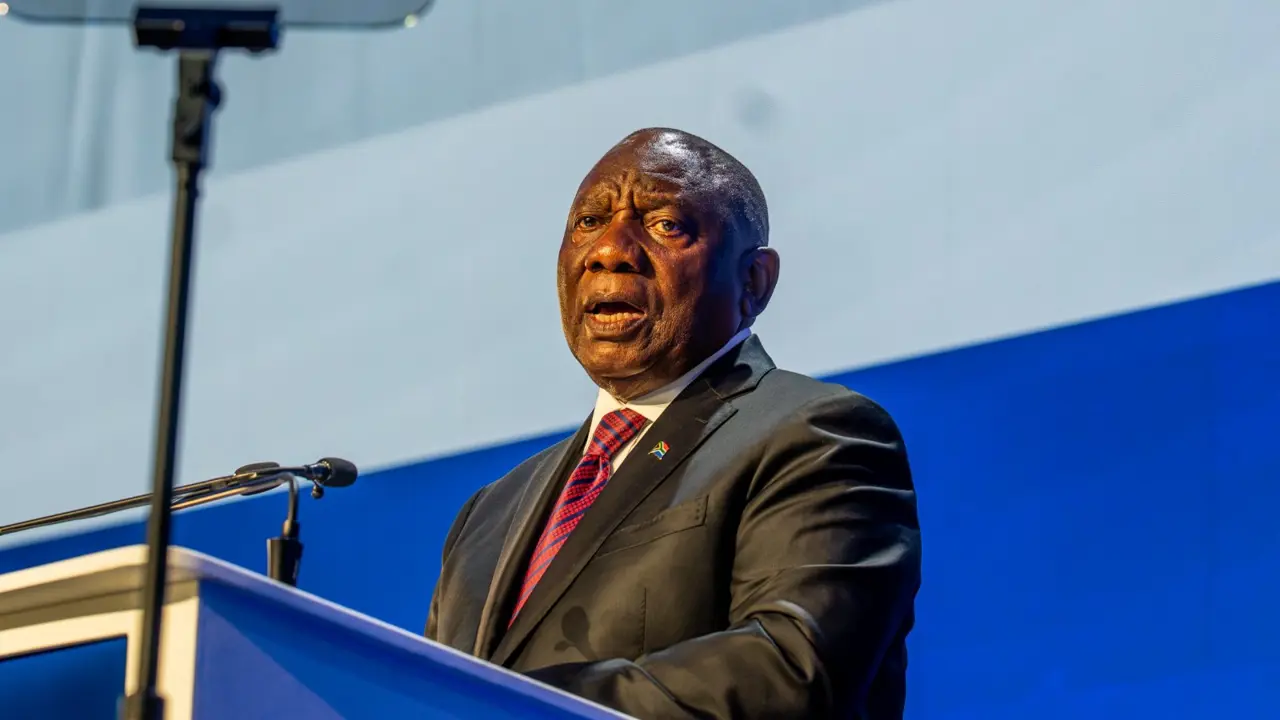
President Cyril Ramaphosa attended the IEC’s official results announcement in Midrand on Sunday evening.
During the event, he acknowledged the ANC’s declining electoral support and emphasised the importance of political leaders listening to voters.
The President urged elected representatives to place public interests above political power struggles.
His remarks came as parties began assessing the implications of the election results.
For the ANC, the outcome creates a need to consider both its organisational challenges and its performance in government.
Service Delivery Concerns Remain Central
The ANC’s declining support has occurred against a background of dissatisfaction with municipal services.
Across South Africa, communities have raised concerns about water interruptions, electricity supply, deteriorating roads, waste collection and municipal financial management.
These concerns have featured prominently in political campaigns and public debate.
However, electoral behaviour differs across municipalities, and no single issue can explain every change in party support.
Local political leadership, candidate selection, economic conditions and competition from other parties may also influence voting patterns.
The election results nevertheless place renewed attention on the performance of municipal governments and their ability to deliver essential services.
Voter Turnout Increases to 52%
The IEC reported that approximately 14.9 million South Africans participated in the 2026 municipal elections.
National voter turnout reached 52%, compared with 45.9% in 2021.
This represents an increase of approximately 6.1 percentage points.
A total of 29.2 million voters were registered for the elections.
IEC chairperson Mosotho Moepya declared the elections free and fair during Sunday’s official announcement.
The commission also confirmed that a revote would be required at a voting station in Siyancuma Municipality in the Northern Cape after ballot papers were destroyed.
The increased turnout indicates that a larger proportion of registered voters participated than in the previous municipal elections.
What Happens Next for the ANC?
The ANC faces several immediate decisions following the results.
Its leadership must assess the party’s declining support while preparing for negotiations in municipalities where it does not hold an outright majority.
The party will also need to consider how it intends to address concerns raised by voters.
At municipal level, elected councillors will participate in the formation of new councils and the election of leadership structures.
The Municipal Structures Act requires the first meeting of a newly elected municipal council to take place within 14 days after the council has been declared elected.
Coalition negotiations will therefore be an immediate priority for political parties.
The outcome of these discussions will determine who governs several of South Africa’s largest cities.
Conclusion
The 2026 local government elections represent a significant change in South Africa’s municipal political landscape.
The ANC remains the largest political party nationally but has seen its vote share decline from 45.59% in 2021 to 30.76% in 2026.
The DA, MK Party, EFF, ActionSA and other political formations will play important roles in the formation of new municipal administrations.
With 127 hung councils, negotiations between political parties will be central to determining the next phase of local government.
For South Africans, the immediate focus will shift from election results to the ability of newly elected councils to provide stable leadership, manage public resources and improve essential services.