Ramaphosa Expected at IEC Final Results Tonight
President Cyril Ramaphosa Expected at IEC Results Centre Tonight as South Africa Awaits Final Election Results
By Ubuntu9Media Political Desk
MIDRAND, GAUTENG | Sunday, 8 November 2026
President Cyril Ramaphosa is expected to attend the official announcement of South Africa’s 2026 Local Government Election results on Sunday evening, as the Electoral Commission of South Africa (IEC) prepares to conclude the counting and verification process.
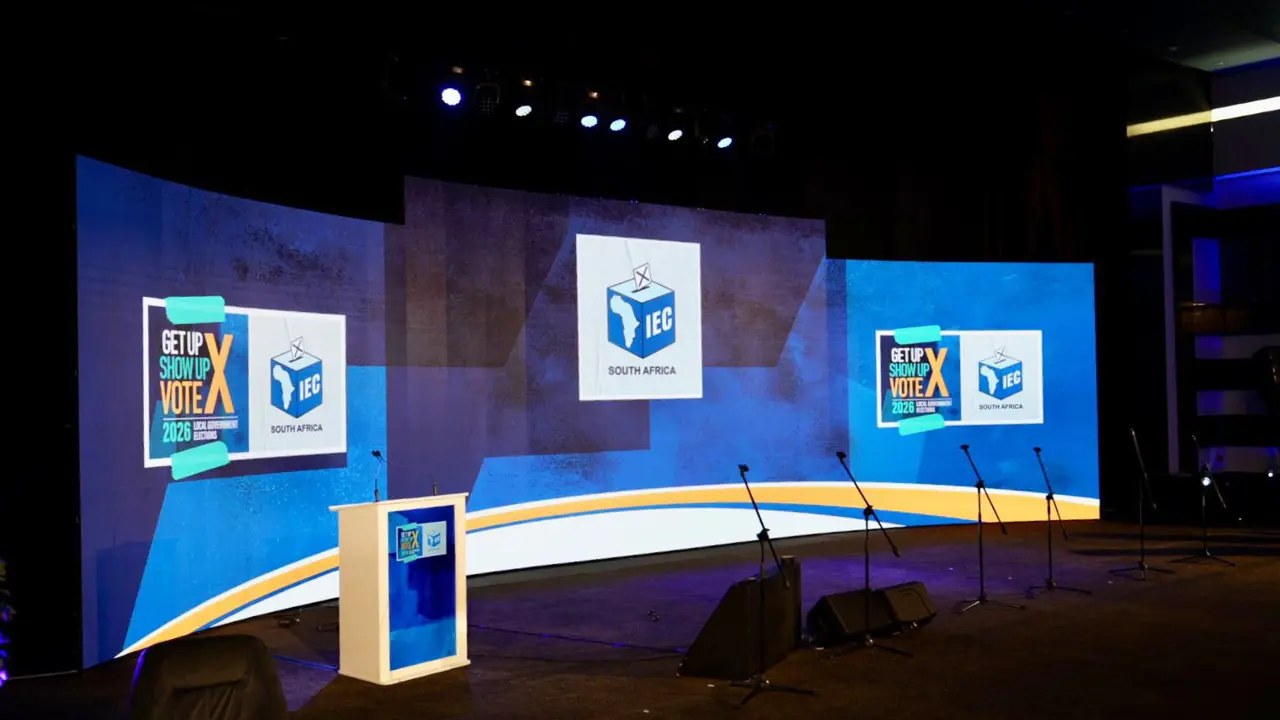
The announcement is scheduled for 18:00 at the National Results Operations Centre at Gallagher Convention Centre in Midrand, Gauteng.
Ramaphosa is expected to deliver the traditional keynote address, with representatives of political parties and election officials attending the event.
The occasion marks an important stage in South Africa’s democratic process following municipal elections held on Wednesday, 4 November 2026.
The final results will determine the composition of municipal councils across the country and establish the basis for negotiations in municipalities where no political party has secured an outright majority.
Security Preparations Underway Ahead of Ramaphosa’s Arrival
Security arrangements have been intensified at the IEC’s National Results Operations Centre ahead of the President’s expected arrival.
According to Eyewitness News, police officers arrived at the venue on Sunday morning to conduct security preparations and a sweep of the facility.
Inside the centre, IEC officials and technical teams were preparing equipment and making final logistical arrangements for the announcement.
The Results Operations Centre has served as the central location for monitoring, capturing and verifying election results since voting concluded.
The President’s expected attendance comes as the IEC prepares to formally declare the results after several days of electoral administration.
IEC to Announce Final Results at 18:00
The IEC confirmed that the official results announcement would take place at 18:00 on Sunday.
The declaration follows the completion of voting on 4 November and the subsequent counting and verification of ballots.
Electoral officials have been working to finalise outstanding results, resolve objections and ensure the accuracy of the final figures.
IEC chairperson Mosotho Moepya previously expressed confidence that the commission would complete the necessary processes ahead of the scheduled announcement.
The results will establish how council seats are distributed among political parties and independent candidates.
They will also determine which municipalities have outright majorities and which will require agreements between different political parties to establish governing administrations.
IEC Receives 197 Election Objections
The finalisation process has included objections submitted by political parties and other election participants.
During a briefing on Saturday, 7 November, the IEC confirmed that it had received 197 objections by 15:00.
At that stage, 54 objections had been dismissed, eight had been withdrawn and two had been upheld.
The commission ordered recounts in five wards after considering objections that could materially affect election results.
The affected wards included two in Tshwane, one in Mangaung, one in Thaba Chweu and one in Breede Valley.
The IEC emphasised that provisional results and seat allocations could change where objections or recounts justified adjustments.
The commission has been working to resolve outstanding matters before the formal declaration.
Vote Processing Reaches Final Stages
By Saturday afternoon, results processing had been completed in six provinces.
These were the Eastern Cape, Free State, Limpopo, Mpumalanga, Northern Cape and Western Cape.
The remaining work was concentrated in Gauteng, North West and KwaZulu-Natal.
Municipalities identified as requiring final processing included Johannesburg, Ekurhuleni, Emfuleni, Rustenburg, Msunduzi and eThekwini.
The IEC reported that approximately 98% of results processing had been completed during Saturday’s briefing.
The commission expected the remaining administrative work to be concluded ahead of Sunday’s announcement.
ANC Faces Declining Electoral Support
Provisional national results reported on Sunday indicated a significant decline in support for the African National Congress.
According to Reuters, with approximately 99% of votes counted, the ANC had secured around 31% of the national aggregate municipal vote.
The Democratic Alliance followed with approximately 25%, while the uMkhonto weSizwe Party had around 10%.
These figures were provisional and did not represent the final certified outcome.
The results also reflected changes in political support across several municipalities.
ANC secretary-general Fikile Mbalula described the party’s performance as a serious setback and indicated that the organisation would need to examine the reasons behind its losses.
The final results will provide a more complete picture of how political support has shifted across the country.
More Than 100 Municipal Councils Face Coalition Discussions
One of the most important developments emerging from the election is the number of municipalities in which no political party appears to have secured an outright majority.
Eyewitness News reported that more than 100 municipal councils were expected to be hung.
A hung council occurs when no party controls more than half of the seats.
In such circumstances, parties may negotiate coalition agreements or other arrangements to secure sufficient support to elect municipal leadership and conduct council business.
These negotiations will be particularly important in major metropolitan municipalities.
Johannesburg, Tshwane and Ekurhuleni are among the municipalities where the final seat allocations will shape discussions about future leadership.
However, the declaration of election results will not automatically determine who becomes mayor in a hung council.
Those decisions will follow the legally prescribed council processes.
What Happens After the Final Results Are Announced?
Once the IEC declares the results, attention will shift to the formation of new municipal councils.
Under the Local Government: Municipal Structures Act, newly elected councils must hold their first meetings within 14 days after being declared elected.
During these meetings, councillors will elect council speakers and, where applicable, executive mayors or other municipal leadership structures.
Political parties may use the intervening period to negotiate governing agreements.
Such agreements can address leadership positions, policy priorities, budgets and administrative responsibilities.
The process will be closely watched in municipalities where coalition governments have previously experienced changes in political leadership.
Service Delivery Remains a Major Concern
The election results come against a background of public concern about municipal service delivery.
Residents in different parts of South Africa have raised concerns about water interruptions, electricity supply, road maintenance, sanitation and municipal financial management.
These issues have featured prominently in election campaigns and public debate.
The newly elected councils will face the responsibility of addressing these challenges while maintaining financial stability and complying with local government legislation.
Political parties entering coalition agreements will also need to determine how they intend to implement their policy commitments.
The effectiveness of the next municipal administrations will ultimately be assessed through governance and service delivery.
Ramaphosa’s Address Expected to Mark a Democratic Milestone
President Ramaphosa’s expected keynote address will form part of the official results announcement.
The event represents the conclusion of the election results process and the beginning of the next phase of local government formation.
The President’s remarks are expected to take place before an audience that includes political representatives, electoral officials and other invited participants.
However, the specific contents of his address have not yet been confirmed.
No remarks should be attributed to the President until they have been delivered or formally released.
South Africans Can Follow the Results Live
The IEC has indicated that the announcement will be available through its official online platforms.
Members of the public can follow the proceedings and access verified results through the commission’s digital channels.
The electoral body has also encouraged voters to rely on official information rather than unverified social media claims.
The final results will provide the basis for the allocation of council seats and the establishment of municipal governments.
Conclusion
South Africa is preparing for the official declaration of its 2026 Local Government Election results, with President Cyril Ramaphosa expected at the National Results Operations Centre in Midrand on Sunday evening.
The IEC has spent several days counting votes, verifying results and considering objections following the 4 November elections.
The announcement is scheduled for 18:00 and will provide clarity on the composition of municipal councils across the country.
While the declaration will conclude the results process, it will also open the next stage of political negotiations in municipalities without outright majorities.
For residents, attention will soon turn from election results to the formation of municipal governments and their ability to deliver essential services.
Ubuntu9Media will continue covering the official results announcement, President Ramaphosa’s address and coalition developments across South Africa.