IEC Captures Over 60% of 2026 Election Results
IEC Captures More Than 60% of 2026 Election Results as 65 Municipalities Complete Processing
The Electoral Commission of South Africa (IEC) has confirmed significant progress in processing the 2026 local government election results, with more than 60% of expected results captured nationwide by 17:00 on Thursday.
The announcement marks an important milestone following Wednesday’s municipal elections, in which South Africans voted to elect councillors responsible for local governance and essential service delivery.
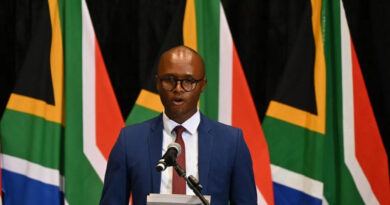
Speaking at the National Results Operations Centre in Midrand, IEC chairperson Mosotho Moepya said the commission was making steady progress with the capturing, verification and auditing of results.
Of the 66,073 expected results slips, approximately 40,202 had been scanned, while 32,238 had undergone independent auditing.
The IEC expects the results collation process to be concluded by the weekend.
Northern Cape Leads Election Results Capturing With 87%
The Northern Cape has emerged as the province making the fastest progress in capturing election results.
According to the IEC’s latest provincial breakdown, the Northern Cape had captured 87% of its results by Thursday afternoon.
The Western Cape followed with 69%, while the Free State reached 64% and the Eastern Cape stood at 60%.
Mpumalanga had processed 52%, followed by KwaZulu-Natal at 37%.
Gauteng and North West were both at 35%, while Limpopo recorded the lowest capture rate at 23%.
IEC Results Capture by Province
| Province | Results captured |
|---|---|
| Northern Cape | 87% |
| Western Cape | 69% |
| Free State | 64% |
| Eastern Cape | 60% |
| Mpumalanga | 52% |
| KwaZulu-Natal | 37% |
| Gauteng | 35% |
| North West | 35% |
| Limpopo | 23% |
These percentages indicate how far the IEC has progressed in capturing results. They do not represent the percentage of votes received by any political party.
65 Municipalities Complete Results Processing
The IEC also confirmed that 65 municipalities had completed the capturing, scanning, auditing and exception-management processes.
This represents approximately 31% of the 213 municipalities included in the commission’s municipal completion report.
The Northern Cape led this measure as well, with 21 of its 26 municipalities having completed processing.
The Western Cape followed with 14 of 25 municipalities, while the Eastern Cape had completed nine of 33.
In the Free State, seven of 19 municipalities had completed processing.
KwaZulu-Natal had completed six of 44 municipalities, while Mpumalanga had completed five of 17.
North West had completed two of 18 municipalities, and Limpopo one of 22.
Gauteng had not yet completed the full processing procedure for any of the nine municipalities included in the report.
Municipalities With Completed Results Processing
| Province | Completed municipalities |
|---|---|
| Northern Cape | 21 of 26 |
| Western Cape | 14 of 25 |
| Eastern Cape | 9 of 33 |
| Free State | 7 of 19 |
| KwaZulu-Natal | 6 of 44 |
| Mpumalanga | 5 of 17 |
| North West | 2 of 18 |
| Limpopo | 1 of 22 |
| Gauteng | 0 of 9 |
Completion of processing does not automatically mean that all electoral objections have been resolved or that the final political composition of every council has been formally declared.
Gauteng’s Major Metropolitan Municipalities Remain in Focus
Although Gauteng had captured 35% of its results, attention remains firmly on Johannesburg, Tshwane and Ekurhuleni.
These three metropolitan municipalities are among the country’s most closely watched electoral contests.
Political parties are competing for influence over councils responsible for water provision, electricity distribution, roads, waste management, municipal finances and local economic development.
The eventual council seat allocations will determine whether individual parties can secure outright majorities or whether coalition agreements will be required.
In Tshwane, earlier provisional results showed the DA leading with 30.6%, followed by ActionSA with 22.8% and the ANC with 21.9%.
Those figures were reported around lunchtime on Thursday and should not be treated as the final municipal result.
KwaZulu-Natal Results Could Reshape Municipal Politics
KwaZulu-Natal remains another important province to monitor as the IEC processes outstanding results.
The province had captured 37% of its results by 17:00.
Political competition includes the ANC, Inkatha Freedom Party, Democratic Alliance, uMkhonto weSizwe Party and Economic Freedom Fighters.
Particular attention is focused on eThekwini, Msunduzi, Newcastle and uMhlathuze.
The performance of the MK Party will be closely watched because the 2026 elections mark its first participation in local government elections.
The eventual distribution of council seats will determine whether municipalities can be governed by single parties or require coalitions.
Western Cape: DA Leads Early Vote as Municipal Coalitions Emerge
The Western Cape had captured 69% of its election results by Thursday afternoon.
Earlier reporting indicated that, with approximately half of the province’s voting districts counted, the DA had secured 53.4% of the provincial vote.
The ANC followed with 14%, while the Patriotic Alliance stood at 11.1% and the Freedom Front Plus at 5.4%.
However, results across individual municipalities were producing different political outcomes.
By Thursday evening, reporting indicated that the DA had secured majority control of at least four Western Cape local councils, while at least 13 councils were heading towards coalition arrangements.
These developments illustrate why provincial party percentages cannot be used to determine the governing party in every municipality.
IEC Explains Why Capturing Is Different From Counting
The IEC has clarified that the physical counting of votes has largely concluded.
The current process involves transferring voting-station results into the commission’s central system and subjecting them to verification procedures.
Ballots are counted at voting stations, where results are recorded on official slips.
These slips are subsequently captured into the IEC’s results system.
The process includes duplicate capturing, scanning and independent auditing to detect discrepancies before results are finalised.
Therefore, the announcement that more than 60% of results have been captured does not mean that 40% of ballots are still waiting to be physically counted.
It means the administrative process of recording and verifying election results is still under way.
IEC Urges Political Parties to Avoid Premature Victory Claims
The commission has cautioned political parties, independent candidates and the public against treating provisional figures as final outcomes.
Partial results can change as outstanding voting districts are processed.
The IEC has also emphasised the importance of resolving objections that could materially affect election outcomes.
This is particularly relevant in municipalities where parties are separated by small margins or where the final allocation of council seats could determine whether a coalition government becomes necessary.
More Than 1,000 Election Issues Resolved
The IEC has also reported progress through its enhanced election Issue Tracker.
The system was introduced to assist electoral officials and political contestants in reporting matters that could affect the election process.
According to the commission, more than 1,000 cases logged since the beginning of special voting have been resolved.
The platform forms part of the IEC’s wider election management and verification arrangements.
When Will the IEC Announce Final Election Results?
The IEC anticipates concluding the results collation process by the weekend.
However, finalisation remains subject to the completion of verification, independent auditing and the resolution of relevant objections.
Once the process is completed, the final results will establish the distribution of seats across municipal councils.
This will also provide greater clarity on which political parties can govern independently and which municipalities may require coalition agreements.
Conclusion
The IEC’s confirmation that more than 60% of election results have been captured represents substantial progress in South Africa’s 2026 municipal elections.
With the Northern Cape leading the processing rate and 65 municipalities having completed their results procedures, attention is shifting towards the remaining municipalities and the formation of new councils.
For voters, the most important outcomes will be the final allocation of council seats and the ability of newly elected municipal administrations to deliver reliable services.
Ubuntu9Media will continue monitoring official IEC announcements and municipal election results across all nine provinces.