Ramaphosa: Immigration Concerns Cannot Justify Crime
Concerns About Illegal Immigration Cannot Justify Criminality, Ramaphosa Warns
DURBAN, 29 October 2026 — President Cyril Ramaphosa has condemned violence, intimidation and attacks on businesses linked to anti-immigration protests in KwaZulu-Natal, warning that legitimate concerns about illegal immigration must never be used to justify criminal behaviour.
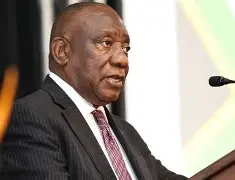
Speaking at the Durban Chamber of Commerce and Industry’s 170th anniversary gala dinner on Wednesday evening, the president said government would take the necessary steps to protect communities, businesses and public safety.
His remarks follow weeks of unrest in Durban, where protests over immigration enforcement have been accompanied by reports of looting, intimidation and attacks on foreign nationals.
Ramaphosa acknowledged that South Africans have concerns about immigration, employment and access to public services. However, he stressed that these concerns must be addressed through lawful processes rather than violence.
Ramaphosa Draws the Line on Lawlessness
Addressing business leaders, Ramaphosa warned that criminal elements were exploiting public frustration over illegal immigration to create instability.
He said recent incidents of violence and attacks on businesses were unacceptable, regardless of the grievances motivating demonstrations.
The president emphasised that economic recovery depends on communities feeling safe and businesses being able to operate without threats or intimidation.
He also warned against allowing immigration-related tensions to divide communities.
The message was directed at a growing climate of confrontation in parts of Durban, where demonstrations have disrupted commercial activity and raised fears about further violence.
Government Promises to Protect Businesses
Ramaphosa assured the business community that government would protect lawful commercial activity.
He said businesses could not prosper where people feared violence or where criminal conduct went unchecked.
His remarks followed reports that small businesses in eThekwini had been targeted during recent unrest.
Some traders have experienced looting, vandalism and intimidation, while police have investigated violent attacks on individuals.
The president said protecting businesses was essential not only for public safety but also for employment and investor confidence.
Durban is an important economic centre, with its port, tourism sector, manufacturing operations and commercial districts supporting substantial economic activity.
Continued instability could undermine efforts to attract investment and create jobs.
March and March Protests Under Scrutiny
The president’s warning comes as the March and March movement faces legal action over protests in Durban.
The movement has campaigned for stronger enforcement of immigration laws and greater economic opportunities for South African citizens.
Its activities have attracted public attention amid concerns about undocumented migration, employment practices and access to business opportunities.
However, recent demonstrations have also prompted allegations of intimidation, attacks on businesses and interference with public services.
Acting Police Minister Firoz Cachalia has approached the Durban High Court seeking an urgent interdict against the movement and certain leaders.
The application seeks restrictions on unlawful conduct, including intimidation, disruption of government institutions and damage to property.
The matter is expected to be heard on Friday, 30 October.
The allegations in the application remain subject to the court process, and responsibility for specific criminal incidents must be established through investigations and evidence.
Soldiers Deployed to KwaZulu-Natal
The government has also authorised the deployment of 510 South African National Defence Force members to support police operations in KwaZulu-Natal.
The deployment falls under Operation Prosper and is scheduled to continue until 30 November 2026.
The reported cost is approximately R34 million.
Soldiers are expected to assist the South African Police Service in maintaining public order and protecting communities.
Ramaphosa said the government was taking precautions to prevent further instability.
The deployment comes amid heightened concerns following incidents of looting, violence and the reported killing of a foreign national in Durban’s central business district.
Investigations into individual incidents remain the responsibility of law enforcement authorities.
President Recalls July 2021 Unrest
Ramaphosa drew comparisons with the July 2021 unrest, which caused widespread destruction in KwaZulu-Natal and Gauteng.
That period saw businesses looted, infrastructure damaged and significant disruption to economic activity.
The president said the events demonstrated the consequences of instability and the importance of protecting democratic institutions.
He urged communities not to allow current tensions to develop into further disorder.
His remarks also reflected concern about the impact of unrest on KwaZulu-Natal’s ongoing economic recovery.
The province has faced major setbacks in recent years, including the 2021 violence and devastating floods in 2022.
Illegal Immigration Concerns Must Be Addressed Lawfully
The president has previously acknowledged that concerns about undocumented migration, unemployment and pressure on public services are legitimate matters requiring government attention.
In his June 2026 national address on migration, Ramaphosa outlined plans to strengthen immigration enforcement, improve border management and address corruption in immigration systems.
He also emphasised that only authorised state officials may enforce immigration laws.
Members of the public are not entitled to demand identity documents from people on the street or determine someone’s immigration status based on appearance or nationality.
South African law provides mechanisms for investigating immigration violations, unlawful employment practices and criminal activity.
The government maintains that these mechanisms must operate within constitutional and legal safeguards.
Human Rights and Immigration Enforcement
South Africa’s Constitution protects fundamental rights, including human dignity and equality.
Those protections apply to people within the country’s borders, although particular immigration and employment rights may depend on legal status.
The government has a responsibility to enforce immigration legislation while respecting constitutional protections and international obligations.
Ramaphosa’s position is that these responsibilities are not mutually exclusive.
The state can investigate unlawful immigration, enforce labour legislation and address criminal activity without permitting attacks on foreign nationals.
The distinction is particularly important where public anger is directed at entire communities rather than individuals suspected of specific offences.
Durban’s Economic Recovery at Stake
During his address, Ramaphosa also highlighted progress in KwaZulu-Natal’s economic recovery.
He referred to R124.5 billion in investment commitments secured at a recent provincial investment conference.
The president also pointed to improvements in tourism and port operations as signs of economic momentum.
However, he acknowledged that challenges remain, particularly infrastructure backlogs and municipal service delivery problems.
Water supply difficulties in eThekwini continue to affect residents and businesses.
Ramaphosa argued that economic progress would be difficult to sustain without public safety, functioning infrastructure and confidence in local institutions.
Business Community Faces Continued Uncertainty
For business owners, the immediate concern is whether commercial activity can continue without disruption.
Violence and intimidation can discourage customers, interrupt deliveries and increase operating costs.
Small businesses may be particularly vulnerable because they often have limited resources to recover from damage or prolonged closures.
The Durban Chamber of Commerce and Industry’s anniversary gathering provided a platform for the president to reassure investors and local businesses.
His commitment to protect lawful enterprises comes as authorities attempt to prevent further confrontations in the city.
The effectiveness of those measures will depend on policing, cooperation with communities and the lawful resolution of disputes.
What Happens Next?
Attention now turns to the Durban High Court proceedings involving March and March, alongside ongoing police operations in KwaZulu-Natal.
Authorities will also need to investigate reported assaults, looting and property damage.
At the same time, government faces pressure to demonstrate progress on immigration enforcement and economic concerns raised by residents.
Those issues include border control, compliance with labour legislation, unemployment and the regulation of businesses.
Ramaphosa’s message is that immigration concerns may be raised and addressed, but they cannot excuse criminal conduct or attacks on communities.
The challenge for government is to enforce the law, protect constitutional rights and restore confidence among residents and businesses.