
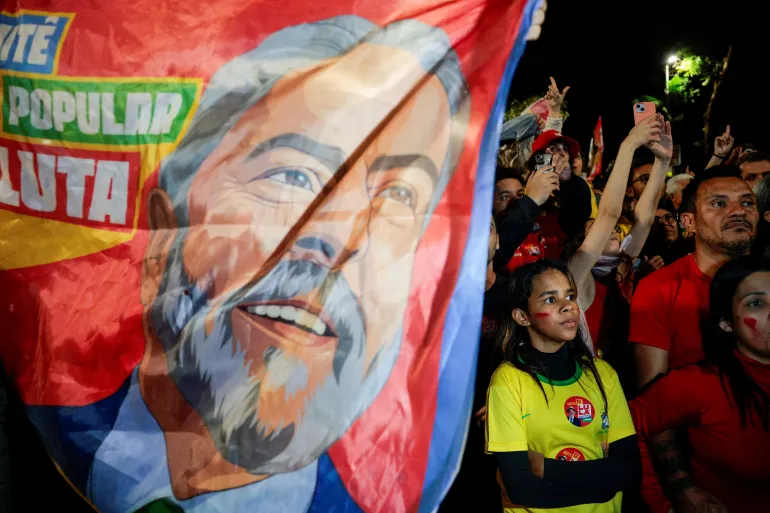
Lula Victory Reshapes BRICS Outlook
Lula Victory Reshapes BRICS Outlook
BRASÍLIA, BRAZIL — 27 October 2026 — Brazilian President Luiz Inácio Lula da Silva’s re-election has sent a significant political signal across the BRICS alliance, with analysts suggesting that his fourth term could preserve Brazil’s commitment to the grouping at a time of growing geopolitical tensions.
Lula defeated right-wing Senator Flávio Bolsonaro in Sunday’s presidential runoff, securing 51.79% of valid votes against Bolsonaro’s 48.21%.
The result followed a closely contested election in Latin America’s largest economy and marked a comeback for Lula, who had trailed his opponent in the first round of voting.
Beyond Brazil, the outcome has attracted attention because of its implications for international trade, emerging-market cooperation and relations with the administration of United States President Donald Trump.
For BRICS members, including South Africa, the result provides greater clarity about Brazil’s expected foreign-policy direction.
Why Lula’s Victory Matters To BRICS
Brazil is one of the five founding members of BRICS, alongside Russia, India, China and South Africa.
The grouping has since expanded to include additional emerging economies and has increasingly focused on reforming international financial institutions, promoting trade and strengthening the influence of developing countries.
Lula has been closely associated with BRICS since its early development.
His administration has consistently supported cooperation among emerging economies and greater representation for the Global South in international decision-making.
Analysts say his re-election reduces uncertainty about Brazil’s continued participation in the alliance.
Esmat Zaidan, a professor of public policy at Hamad Bin Khalifa University in Qatar, told Al Jazeera that Lula’s victory was important for BRICS’ political continuity.
However, Zaidan cautioned that the election does not eliminate disagreements among member countries.
BRICS members have different economic priorities, strategic interests and relationships with major international powers.
The grouping’s ability to achieve common objectives will therefore depend on negotiations and practical cooperation rather than political alignment alone.
What A Bolsonaro Presidency Could Have Meant
Lula’s main challenger, Flávio Bolsonaro, is the son of former Brazilian President Jair Bolsonaro.
Flávio’s political position has generally been more closely aligned with Donald Trump’s administration than Lula’s.
During the election campaign, questions emerged about whether a Bolsonaro presidency would reconsider Brazil’s relationship with BRICS.
Analysts interviewed by Al Jazeera suggested that such a change could have complicated the alliance’s efforts to maintain a common international agenda.
However, a Bolsonaro victory would not automatically have resulted in Brazil leaving BRICS.
Any withdrawal or major change in participation would have required political decisions by a new administration.
The distinction matters because BRICS cooperation includes economic and diplomatic relationships that extend beyond individual political leaders.
Lula’s re-election removes that immediate uncertainty while leaving broader disagreements within the grouping unresolved.
South Africa Welcomes Lula’s Re-Election
South African President Cyril Ramaphosa was among the international leaders who welcomed the Brazilian election result.
According to reports of his response, Ramaphosa described Lula’s victory as significant for the Global South and international cooperation.
South Africa and Brazil share membership in BRICS and the G20, providing several platforms for diplomatic and economic engagement.
Both countries have advocated reforms to global governance institutions and greater participation by developing economies.
International relations analyst Oscar van Heerden told 702 and CapeTalk that Lula’s victory represented an important development for BRICS.
Van Heerden argued that a Bolsonaro administration could have faced pressure from Washington to reconsider Brazil’s participation in the grouping.
That interpretation reflects the analyst’s assessment rather than a confirmed policy plan by the United States.
For South Africa, continuity in Brazil’s BRICS engagement could support existing cooperation on trade, development finance and multilateral diplomacy.
However, the practical economic benefits will depend on future agreements and implementation.
Trump Administration Reacts To Election Result
The election has also highlighted tensions between Brazil’s political leadership and Washington.
President Donald Trump questioned the result on Monday, suggesting that the election appeared irregular.
Flávio Bolsonaro initially refused to concede defeat and indicated that he would seek to challenge the outcome following a court-authorised extension of voting hours.
The extension had been introduced because of transport disruptions and severe weather affecting some voters.
Brazilian electoral authorities maintained that the additional voting period did not change the election outcome.
On Monday, Bolsonaro’s Liberal Party acknowledged the runoff result, even though the candidate himself had challenged it.
The election dispute has attracted international attention, but Lula’s victory has been recognised by numerous foreign governments.
China, India And Russia Congratulate Lula
Leaders from several BRICS countries congratulated Lula following the election.
Indian Prime Minister Narendra Modi expressed his intention to deepen cooperation between India and Brazil.
India currently holds the BRICS chairmanship, making its relationship with Brazil particularly relevant to the grouping’s ongoing agenda.
China also welcomed the result, indicating its willingness to continue developing bilateral cooperation.
Russia praised Lula’s contribution to relations between Moscow and Brasília, as well as his involvement in BRICS.
The diplomatic responses reflect the importance of Brazil’s role within the alliance.
However, congratulations from international leaders do not necessarily indicate agreement on every foreign-policy issue.
Could BRICS Reduce Dependence On The US Dollar?
One of the major questions surrounding Lula’s re-election concerns the future of trade in national currencies.
BRICS countries have explored ways to reduce transaction costs and facilitate trade without relying exclusively on the US dollar.
Lula has supported efforts to expand the use of local currencies in international transactions.
Brazil and China have previously pursued arrangements allowing some bilateral trade to be settled in their respective currencies.
Supporters argue that such mechanisms could reduce exchange costs and exposure to dollar-related financial risks.
However, analysts caution that replacing the dollar’s central role in global trade would be difficult.
International businesses require reliable payment systems, liquid financial markets and predictable regulatory arrangements.
The BRICS grouping has also moved away from proposals for a single common currency, placing greater emphasis on practical payment and settlement cooperation.
Lula’s continued leadership could provide political support for these initiatives, but their success will depend on commercial demand and financial infrastructure.
BRICS Still Faces Internal Challenges
Despite the diplomatic significance of Lula’s re-election, BRICS remains a diverse grouping.
Its members have different political systems, economic structures and strategic relationships.
India maintains important economic and security relationships with Western countries.
China is a major global trading power with its own economic priorities.
Russia faces international sanctions and continuing geopolitical tensions.
South Africa and Brazil must balance their international ambitions with domestic economic challenges.
These differences can complicate efforts to reach agreement on trade, finance and diplomatic issues.
The alliance’s future therefore cannot be determined by the outcome of a single national election.
What Lula’s Fourth Term Means For Brazil
Lula’s election victory comes at a time when Brazil faces significant domestic challenges.
The president must address public concerns about living costs, crime, government spending and economic performance.
He will also need to work with a Congress containing substantial opposition representation.
This could complicate efforts to implement parts of his domestic programme.
His fourth non-consecutive presidential term is scheduled to begin on 5 January 2027.
The administration’s ability to pursue international initiatives will partly depend on its capacity to manage these domestic pressures.
Foreign-policy continuity does not automatically translate into stronger economic growth or improved living conditions.
What Happens Next For BRICS?
The next phase will test whether BRICS members can translate their diplomatic objectives into practical economic cooperation.
Important areas include cross-border payment systems, development financing, trade arrangements and cooperation between emerging markets.
The New Development Bank, established by BRICS members, remains an important institution for financing infrastructure and sustainable development.
The grouping will also need to manage its relationship with Washington while maintaining cooperation among countries with different foreign-policy priorities.
Lula’s re-election provides continuity for Brazil’s participation, but the direction of BRICS will continue to depend on decisions made collectively by its members.
A Significant Election Beyond Brazil
The Brazilian election has consequences extending beyond South America.
For BRICS, Lula’s victory reduces uncertainty surrounding one of its founding members.
For Washington, it means continued engagement with a Brazilian administration that has frequently emphasised strategic independence and multilateral cooperation.
For South Africa and other emerging economies, the result creates an opportunity to continue existing diplomatic and economic initiatives.
Lula’s re-election does not guarantee greater unity within BRICS, but it preserves an important political relationship at a time when the grouping is navigating significant international pressures.


