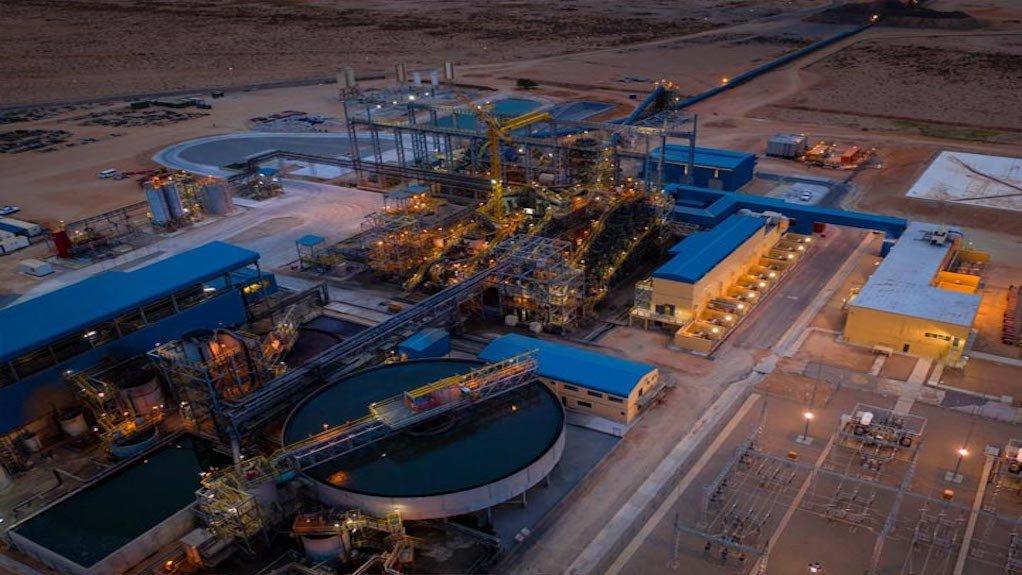
Anil Agarwal zinc smelter South Africa
South Africa Backs Zinc Smelter
AGGENEYS, NORTHERN CAPE, 19 October 2026 — Indian mining billionaire Anil Agarwal’s plans to establish a zinc smelter in South Africa have received a significant endorsement from President Cyril Ramaphosa, as the government seeks to increase the economic value generated from the country’s mineral resources.
Ramaphosa expressed support for the proposed smelter during the official inauguration of Vedanta Zinc International’s R10 billion Gamsberg Phase II concentrator expansion on Friday, 16 October.
The project, situated near Aggeneys in the Northern Cape, forms part of Vedanta’s broader ambition to develop an integrated zinc industry that extends beyond mining and concentrate production into refining and downstream manufacturing.
The president said the proposed smelter could help South Africa move further along the zinc value chain, creating opportunities for industrial development, local procurement and employment.
However, the government acknowledged that the project would require reliable infrastructure and electricity at commercially competitive prices.
R10 Billion Gamsberg Expansion Completed
The newly inaugurated Gamsberg Phase II concentrator represents one of South Africa’s major recent mining investments.
The expansion doubles the operation’s annual ore capacity from approximately four million tonnes to eight million tonnes.
It also increases annual zinc-in-concentrate production capacity to approximately 500,000 tonnes.
This positions Gamsberg among the world’s significant zinc-producing operations and provides a stronger foundation for future mineral-processing investments.
The mine is located approximately 20 kilometres east of Aggeneys in the Khâi-Ma Local Municipality, within the Namakwa District.
Vedanta holds a 74% interest in the operating entity, while South African mining company Exxaro owns the remaining 26%.
Gamsberg forms part of the Black Mountain Complex, which includes the Deeps and Swartberg operations.
The expanded production capacity is expected to support Vedanta’s longer-term industrial development plans in the region.
Ramaphosa Wants More Minerals Processed Locally
South Africa has historically exported substantial quantities of minerals and mineral concentrates for processing overseas.
This means that some of the economic value associated with refining, manufacturing and the production of finished goods is generated outside the country.
Ramaphosa used the Gamsberg inauguration to emphasise the government’s intention to change that pattern.
The president said South Africa needed to move beyond exporting raw and semi-processed commodities and develop more domestic smelting, refining and manufacturing capacity.
A zinc smelter in the Northern Cape would allow locally produced zinc concentrate to be converted into refined metal.
That refined zinc could then support industries such as galvanised steel production, construction, transport and manufacturing.
The government believes expanding domestic mineral processing could help create skilled employment and stimulate demand for South African engineering, maintenance and industrial services.
Electricity Costs Remain The Biggest Challenge
Despite the government’s support, electricity pricing remains a major obstacle to the proposed zinc smelter.
Smelting and refining facilities require reliable electricity, and their operating costs are sensitive to energy tariffs.
South Africa’s industrial electricity prices have increased substantially over the past two decades, placing pressure on energy-intensive industries.
Several ferrochrome smelters have suspended or reduced operations because of rising power costs and international competition.
The difficulties facing the ferrochrome industry illustrate why access to competitively priced electricity is essential for new mineral-processing projects.
Ramaphosa acknowledged that a zinc smelter would require commercially viable electricity and dependable infrastructure.
Electricity and Energy Minister Kgosientsho Ramokgopa also expressed support for Vedanta’s plans, indicating that discussions about electricity pricing would be important.
However, the government has not announced a final electricity tariff agreement for the proposed smelter.
Who Is Indian Billionaire Anil Agarwal?
Anil Agarwal is the founder of Vedanta Resources, an international natural resources group with interests in metals, mining, energy and related industries.
He built the business from a small scrap-metal operation into a major resources company with investments across several countries.
Vedanta’s African interests include zinc operations in South Africa and copper assets in Zambia.
In South Africa, the group has invested heavily in the development of Gamsberg and other operations within the Black Mountain Complex.
Vedanta’s long-term strategy includes increasing mineral production while developing processing and refining capacity closer to its mining operations.
The proposed Northern Cape zinc smelter would represent another stage in that strategy.
Vedanta Targets One Million Tonnes Of Zinc
Vedanta Zinc International has outlined a longer-term ambition to establish an integrated zinc business with annual capacity of approximately one million tonnes.
The vision includes expanded mining, additional processing capacity, smelting facilities and downstream manufacturing.
Priya Agarwal-Hebbar, a member of the Agarwal family and a director of Vedanta Resources, highlighted the importance of developing higher-value mineral products in South Africa.
She said the company’s investments reflected confidence in the country’s resources, industrial potential and workforce.
Vedanta also aims to support development within the Namakwa Special Economic Zone.
The proposed zinc smelter is intended to form part of this broader industrial ecosystem.
However, the one-million-tonne ambition remains a future target and should not be confused with the 500,000-tonne annual zinc-in-concentrate capacity associated with Gamsberg Phase II.
Namakwa Special Economic Zone Could Benefit
The Namakwa Special Economic Zone is intended to attract investment in mineral processing, manufacturing and related industries.
Vedanta’s Gamsberg operation is an important anchor investment for the zone.
The Department of Trade, Industry and Competition has welcomed the Phase II expansion as evidence of investor confidence in South Africa’s industrial development plans.
The department sees the project as an opportunity to encourage further investment in processing facilities, logistics, energy infrastructure and supporting businesses.
If the proposed zinc smelter proceeds, it could strengthen the business case for other manufacturers to establish operations nearby.
Potential benefits include demand for local suppliers, technical services, transport companies and engineering contractors.
However, the scale of those benefits will depend on the final project design, investment commitments and operating arrangements.
Jobs And Local Business Opportunities
The Gamsberg expansion has already supported employment during construction and created additional opportunities linked to the mine’s operation.
Government and company statements have highlighted the importance of local recruitment, skills development and procurement.
The Department of Trade, Industry and Competition reported that the expansion supported more than 400 direct jobs.
Further industrial investment could create opportunities for artisans, technicians, engineers and local service providers.
Businesses involved in equipment maintenance, fabrication, logistics, construction and industrial supplies could also benefit.
However, projected employment from a future smelter should not be treated as guaranteed until the investment is finalised and its construction and operating plans are confirmed.
Why Zinc Matters To The Global Economy
Zinc is an important industrial metal used primarily to protect steel from corrosion through galvanising.
Galvanised steel is widely used in construction, infrastructure, vehicles, energy installations and industrial equipment.
Zinc is also used in alloys and other manufacturing applications.
Demand for infrastructure development and industrial products supports the metal’s importance in global supply chains.
For South Africa, producing refined zinc domestically could create opportunities to capture additional value from its mineral resources.
The economic benefits would depend on the cost of production, market demand, international zinc prices and the availability of competitive transport and energy services.
South Africa Faces A Mineral Processing Dilemma
South Africa possesses extensive mineral resources but faces challenges in converting those resources into finished industrial products.
The ferrochrome industry provides a prominent example.
Despite holding a substantial share of the world’s chrome reserves, South Africa has lost smelting competitiveness as electricity costs have risen.
China has expanded its processing capacity while benefiting from large-scale industrial infrastructure.
The experience highlights the importance of developing a commercially sustainable operating environment rather than relying solely on access to mineral deposits.
For Vedanta’s proposed zinc smelter, long-term competitiveness will depend on electricity, feedstock, infrastructure, financing and access to buyers.
Government support is an important development, but it does not remove these commercial requirements.
Is The Zinc Smelter Approved?
Ramaphosa’s announcement represents political and policy support for Vedanta’s proposed investment.
It does not establish that construction has been authorised, financing secured or an electricity agreement concluded.
The project would still need to satisfy applicable regulatory, environmental and commercial requirements.
The final investment cost, construction schedule and operating capacity of the proposed smelter have not been confirmed in the latest government announcement.
Vedanta has previously examined zinc smelting and refining options at Gamsberg, but those earlier proposals should not be treated as the final specifications of the current project.
What Happens Next?
Vedanta and the South African government are expected to continue discussions about the conditions required to make the zinc smelter commercially viable.
Electricity pricing and reliable infrastructure are likely to remain central to those discussions.
Further progress will depend on whether the parties can establish a sustainable investment framework.
The completed Gamsberg Phase II expansion provides a stronger production base for the proposed project.
For the Northern Cape, the development presents an opportunity to attract additional industrial investment and strengthen local economic activity.
For South Africa, it reflects a broader ambition to generate more value from minerals before they leave the country.
Whether that ambition translates into a new zinc smelter will depend on the investment decisions and practical arrangements that follow the government’s endorsement.