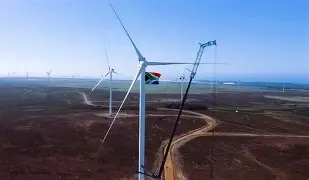
Transforming South Africa’s Grid with Wind Energy
South Africa wind energy is transforming the power grid
JOHANNESBURG – South Africa wind energy is becoming an increasingly important part of the country’s electricity future as new wind farms come online and major investments are planned to strengthen the national transmission grid.
Wind power is no longer simply an alternative source of electricity. It is increasingly being positioned as a central part of South Africa’s efforts to diversify its energy mix, improve energy security and reduce its dependence on ageing coal-fired power stations.
However, generating more renewable electricity is only part of the challenge. South Africa must also build a stronger and more flexible grid capable of transporting wind power from where it is generated to where it is needed.
New wind projects are changing South Africa’s energy landscape
South Africa’s wind energy sector has continued to expand, with major projects demonstrating the country’s growing ability to develop large-scale renewable infrastructure.
One example is a wind project completed in June 2026 after more than a decade of planning and development. The project is now owned and operated by Enel Green Power South Africa, highlighting continued private-sector investment in South Africa’s renewable-energy future.
South Africa’s wind sector passed the 4 GW installed-capacity milestone in late 2025, according to the South African Wind Energy Association. This marks a significant shift in the country’s electricity mix and demonstrates that wind energy has become an established part of the national power system.
The power grid is the key to unlocking more wind energy
One of the biggest obstacles facing South Africa wind energy is not necessarily a shortage of wind resources or investor interest.
It is the availability of transmission infrastructure.
Many of South Africa’s strongest wind resources are located far from major centres of electricity demand. This means the country needs new transmission lines and substations to connect wind farms to the national grid.
The National Transmission Company South Africa and other stakeholders are focusing on expanding the grid, while energy-sector reforms aim to create a system capable of accommodating a much larger share of renewable energy.
Grid expansion could unlock billions in investment
The scale of South Africa’s renewable-energy development pipeline shows just how much investment could be unlocked by improving grid access.
The 2025 South African Renewable Energy Grid Survey identified 72 GW of wind and solar projects at advanced stages of development that could potentially be ready to connect to the grid within seven years.
That does not mean all these projects will necessarily be built. But it demonstrates the depth of investor interest and the importance of transmission infrastructure in determining how much of that potential becomes reality.
For developers, grid access can be the difference between a project moving forward and remaining on paper.
Wind energy can support a more diversified electricity system
South Africa has historically relied heavily on coal for electricity generation.
Wind energy provides an opportunity to diversify the country’s generation mix and reduce the risks associated with depending too heavily on a single source of power.
Wind farms can also be developed relatively quickly compared with some large conventional power stations.
The growth of renewable generation could therefore help South Africa add new electricity capacity while supporting the country’s long-term energy transition.
According to industry data based on Eskom’s published generation figures, wind power has become a meaningful contributor to grid supply, although coal remains dominant in South Africa’s electricity mix.
A stronger grid is needed for a renewable future
Integrating larger amounts of wind and solar energy requires more than simply adding new generation projects.
The grid must become more resilient, flexible and capable of handling changing electricity flows.
South Africa has already moved to strengthen international and domestic cooperation around grid development. In June 2026, Eskom, the National Transmission Company South Africa, RTE International and the Agence française de développement announced technical cooperation aimed at addressing the challenges created by the growing integration of renewable energy.
This includes preparing the electricity system for new patterns of generation and demand.
Energy reforms could accelerate investment
South Africa’s electricity sector is also undergoing significant structural reform.
The government has moved towards establishing an independent Transmission System Operator, with the objective of creating a more competitive electricity market, unlocking investment and strengthening energy security.
For the wind sector, reforms that improve transparency and provide clearer rules for grid access could make South Africa more attractive to long-term investors.
The South African Wind Energy Association has argued that the focus for 2026 has shifted from policy design towards implementation, including resolving grid constraints and improving connection timelines.
Wind power is also creating opportunities beyond electricity
The expansion of wind energy has the potential to support economic activity beyond the electricity sector.
New wind projects can create opportunities in construction, engineering, maintenance, logistics and manufacturing.
South Africa’s energy transition could also support skills development and new industrial capacity if more components and services are sourced locally.
A major recent example is the Ummbila Emoyeni project in Mpumalanga. The first phase entered commercial operation in 2026, with its wind generation being wheeled through Eskom’s transmission network to supply mining operations. The broader hybrid project is expected to combine wind, solar and battery storage.
The challenge of balancing reliability and renewable growth
Wind energy is variable because electricity generation depends on weather conditions.
This means South Africa’s future electricity system will require a combination of different technologies, including flexible generation, storage and stronger transmission infrastructure.
The goal is not simply to replace one source of electricity with another.
Instead, the transformation of the grid involves building a system where different sources of power can work together to deliver reliable electricity.
That will require careful planning as South Africa increases the share of renewable energy connected to the grid.
South Africa’s energy transition is gaining momentum
The country’s wind-energy industry believes the foundations for significant growth are now in place.
Policy reforms, a growing development pipeline and rising private-sector investment have created momentum. The biggest test will be whether South Africa can build transmission infrastructure quickly enough to match the pace of new generation development.
If the grid does not expand, projects could face delays and valuable renewable resources could remain stranded.
If transmission development accelerates, however, South Africa could unlock substantial investment while strengthening its long-term electricity supply.