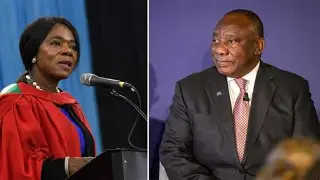
Mandela Ramaphosa Trial
Mandela went on trial, why not Ramaphosa? Judge questions President’s legal challenge in Phala Phala saga
Cape Town – A Western Cape High Court judge has drawn a striking comparison between South Africa’s democratic past and present, asking why former President Nelson Mandela stood trial while President Cyril Ramaphosa is seeking to stop Parliament’s impeachment process over the Phala Phala scandal.
The remarks came during Wednesday’s hearing in the Western Cape High Court, where President Ramaphosa is asking the court to urgently interdict Parliament’s Section 89 impeachment committee from beginning its work while his broader judicial review application is still pending.
Judge André le Grange questioned Ramaphosa’s legal team over the principle of accountability, asking why Mandela was prepared to face the courts despite the political circumstances of his time.
“Mandela went on trial, why not Ramaphosa?” the judge asked during proceedings, challenging the president’s legal argument that Parliament’s impeachment process should be paused.
Court questions president’s position
Representing the president, Advocate Wim Trengove SC argued that Ramaphosa is not attempting to avoid accountability but is instead seeking to ensure that Parliament does not proceed on the basis of what he contends is a flawed Section 89 panel report.
Judge Le Grange, however, expressed concern that the president appeared to believe his own version of events should carry greater weight than the evidence relied upon by those seeking the impeachment inquiry.
The judge remarked that he was left with the impression that Ramaphosa believed his evidence should outweigh what he described as hearsay presented by his accusers.
Background to the Phala Phala dispute
The legal battle follows the Constitutional Court’s landmark judgment in May, which ruled that Parliament had acted unlawfully when it declined to establish an impeachment inquiry into the Phala Phala matter.
The apex court directed Parliament to reconsider the Section 89 panel’s findings, paving the way for the establishment of an impeachment committee to determine whether President Ramaphosa committed serious violations of the Constitution or the law.
Ramaphosa has since launched two separate legal challenges.
The first seeks to review and set aside the Section 89 panel’s report, while the urgent application currently before the Western Cape High Court asks that Parliament’s impeachment committee be prevented from commencing its work until that review has been decided.
Presidency maintains review is lawful
The Presidency has consistently maintained that the court applications are intended to ensure the impeachment process is based on legally sound findings rather than to frustrate Parliament’s constitutional oversight role.
Opposition parties, however, argue that the legal challenges amount to delaying tactics designed to postpone accountability over the 2020 theft of foreign currency from the president’s Phala Phala game farm in Limpopo.
What happens next?
The full bench of the Western Cape High Court is expected to determine whether Parliament’s impeachment committee should be temporarily halted while Ramaphosa’s review application proceeds.
The outcome could significantly influence the timing of South Africa’s first full impeachment inquiry against a sitting democratic president.