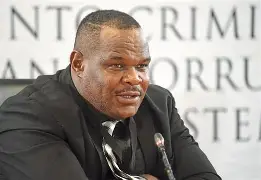
Fannie Nkosi Weakest Link
Fannie Nkosi Weakest Link In Big 5 Case?
Introduction
The Fannie Nkosi weakest link question is gaining traction as the high-profile “Big 5” case begins to unfold in court. While prosecutors appear confident, emerging details suggest that Nkosi’s role could become a critical vulnerability in what is shaping up to be a complex legal battle. Fannie Nkosi Court Appearance
Who Is Fannie Nkosi?
At the centre of the Fannie Nkosi weakest link debate is Fannie Nkosi, one of the key figures in the so-called “Big 5” group. The case, still in its early stages, involves multiple accused individuals facing serious allegations, drawing national attention.
However, legal analysts are increasingly focusing on Nkosi—not necessarily as the strongest pillar of the case, but potentially its most fragile.
Cracks In The Case
The Fannie Nkosi weakest link narrative stems from early courtroom observations and legal commentary. Sources close to proceedings suggest inconsistencies in statements and questions around the strength of evidence directly linking Nkosi to the core allegations.
Unlike other accused individuals, whose roles appear more clearly defined, Nkosi’s involvement is reportedly less straightforward. This ambiguity could become a focal point for defense strategies.
Legal experts speaking to News24 have noted that cases involving multiple accused often hinge on the “weakest link,” where one individual’s defence can disrupt the entire prosecution strategy. https://www.sabcnews.com/
A Strategic Target For Defence
The Fannie Nkosi weakest link angle is not just speculation—it could become a calculated legal strategy. Defence teams may attempt to isolate Nkosi’s role, arguing that the state’s case lacks cohesion.
If Nkosi’s connection to the alleged crimes cannot be proven beyond reasonable doubt, it may create reasonable doubt across the broader case. According to analysts cited by Mail & Guardian, this tactic has been used in several high-profile South African cases with mixed results.
Internal Dynamics Of The “Big 5”
Another layer to the Fannie Nkosi weakest link theory lies in the internal dynamics of the accused group. In multi-accused trials, differences in roles, influence, and evidence often lead to fractures.
Investigative sources suggest that Nkosi may not hold the same level of influence or operational involvement as others in the group. If proven, this could position him as either:
- A peripheral figure, or
- A potential state witness under certain legal conditions
Such developments could dramatically alter the direction of the case.
What The Prosecution Faces
The Fannie Nkosi weakest link concern also raises questions for the prosecution. Building a cohesive narrative in a multi-accused case requires consistency, strong evidence, and clear roles for each individual.
If Nkosi’s role remains unclear or weakly supported by evidence, it could:
- Undermine the credibility of the overall case
- Provide defence teams with leverage
- Delay proceedings through legal challenges
Updates from SABC News suggest that prosecutors are still consolidating evidence as the case progresses.
What Happens Next
As proceedings continue, the Fannie Nkosi weakest link debate will likely intensify. Key moments to watch include:
- Bail hearings and further court appearances
- Disclosure of evidence by the prosecution
- Cross-examination strategies by defence teams
These stages will determine whether Nkosi remains a peripheral figure—or becomes central to the case’s outcome.
Conclusion
The Sgt Nkosi weakest link question is more than courtroom speculation—it may define the trajectory of the entire “Big 5” case. If Nkosi’s position proves fragile, it could open the door to broader challenges that reshape the prosecution’s strategy.
For now, the case remains in its early stages. But one thing is clear: in complex trials, the outcome is often decided not by the strongest evidence—but by the weakest link.